
Last updated November 16, 2026
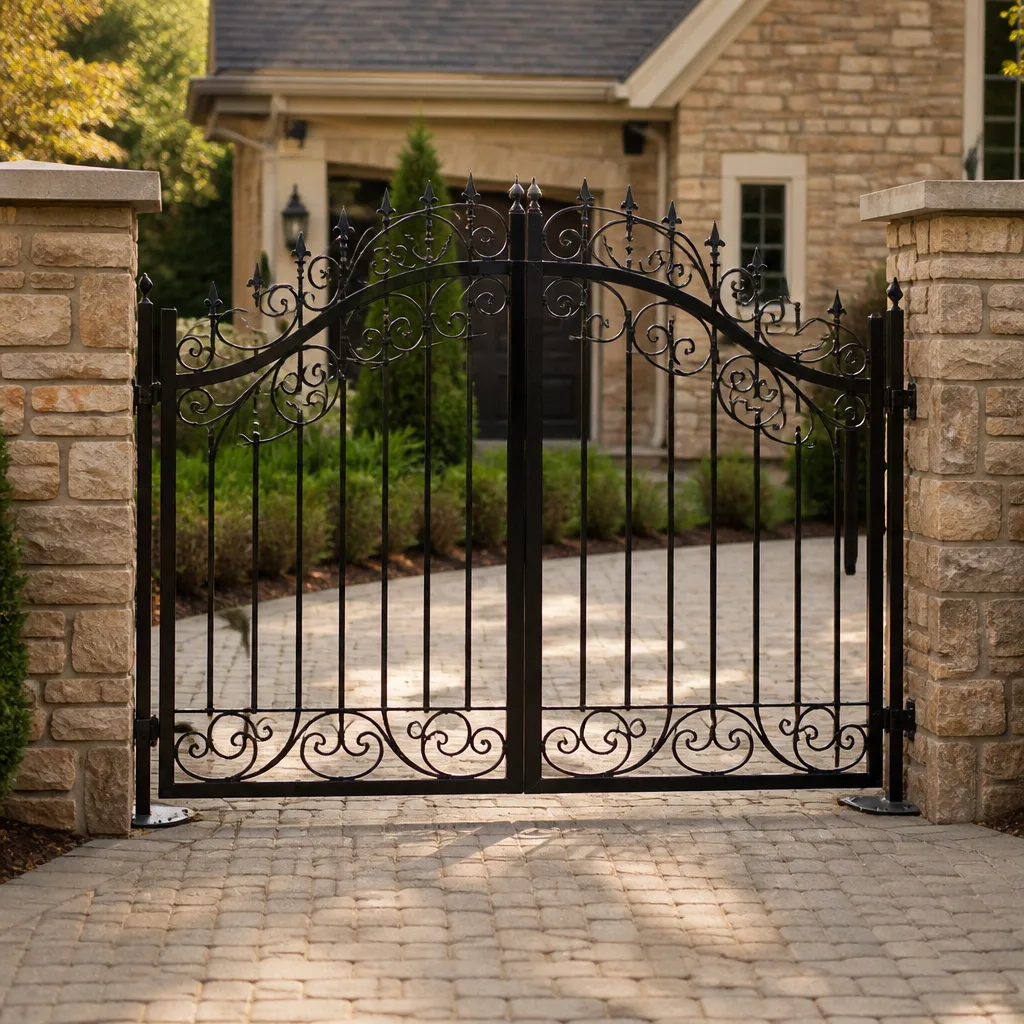 Wrought iron
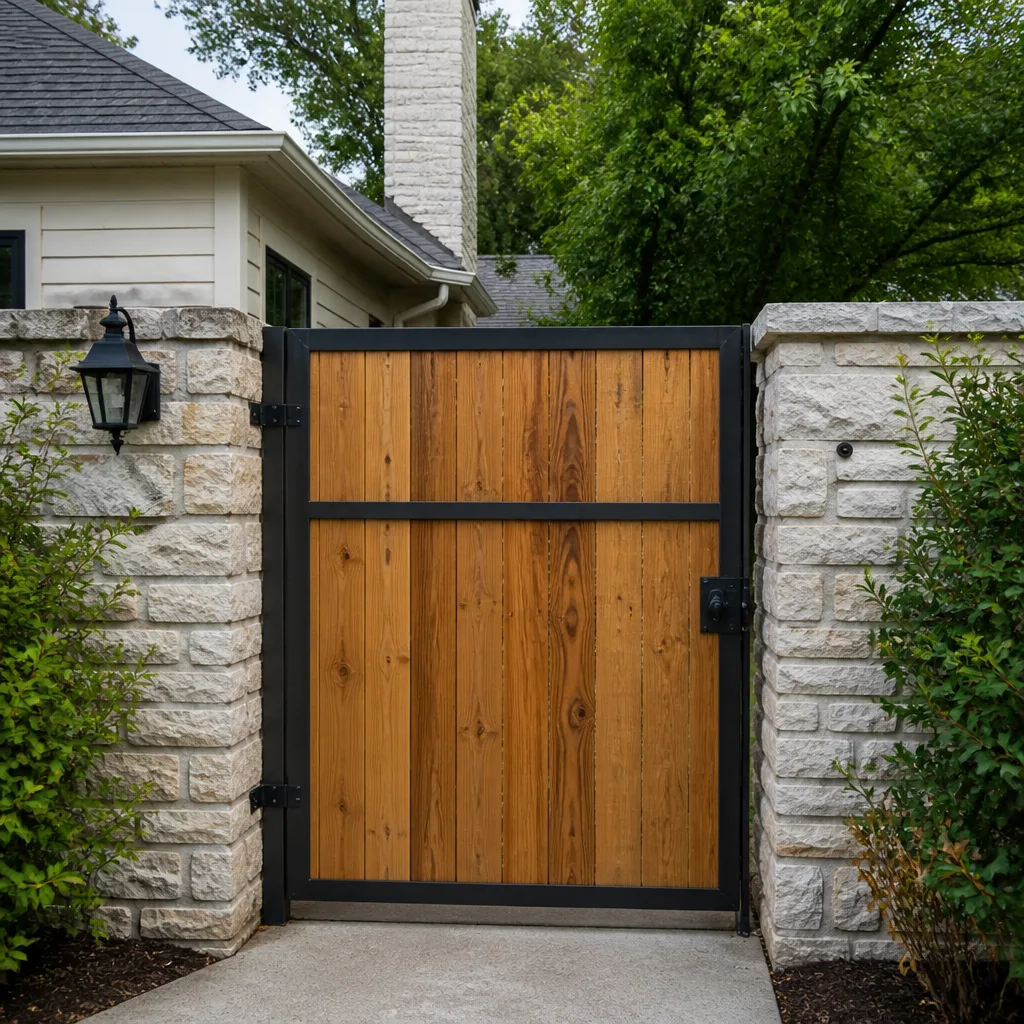 Wood & steel frame
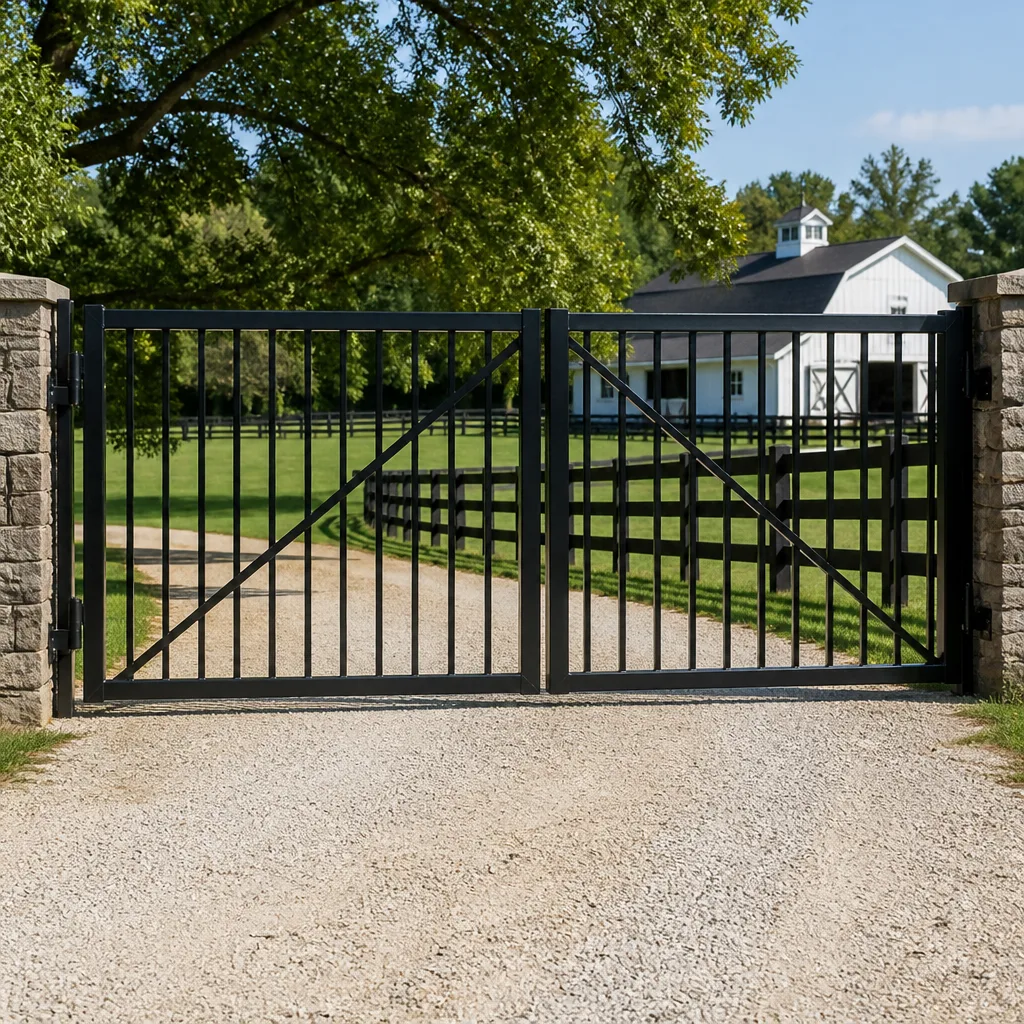 Farm & ranch
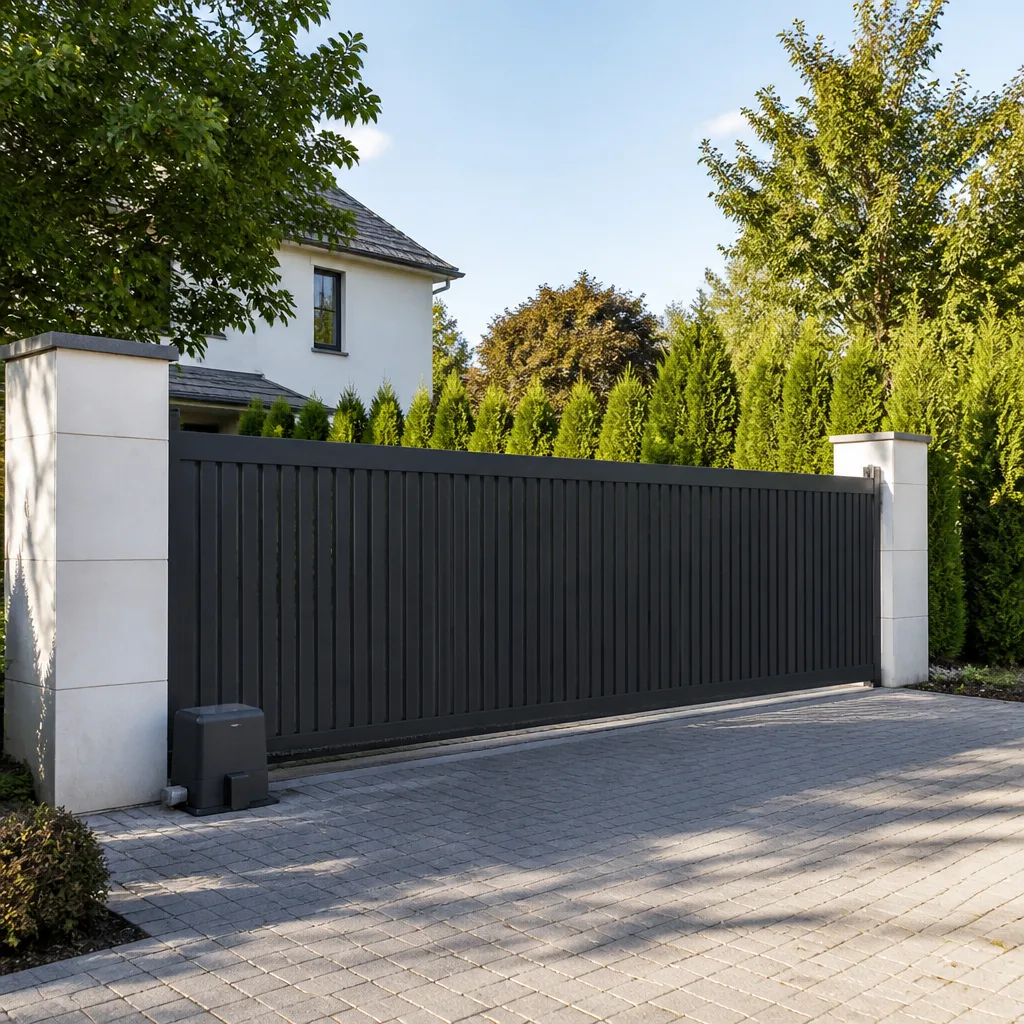 Sliding driveway gates
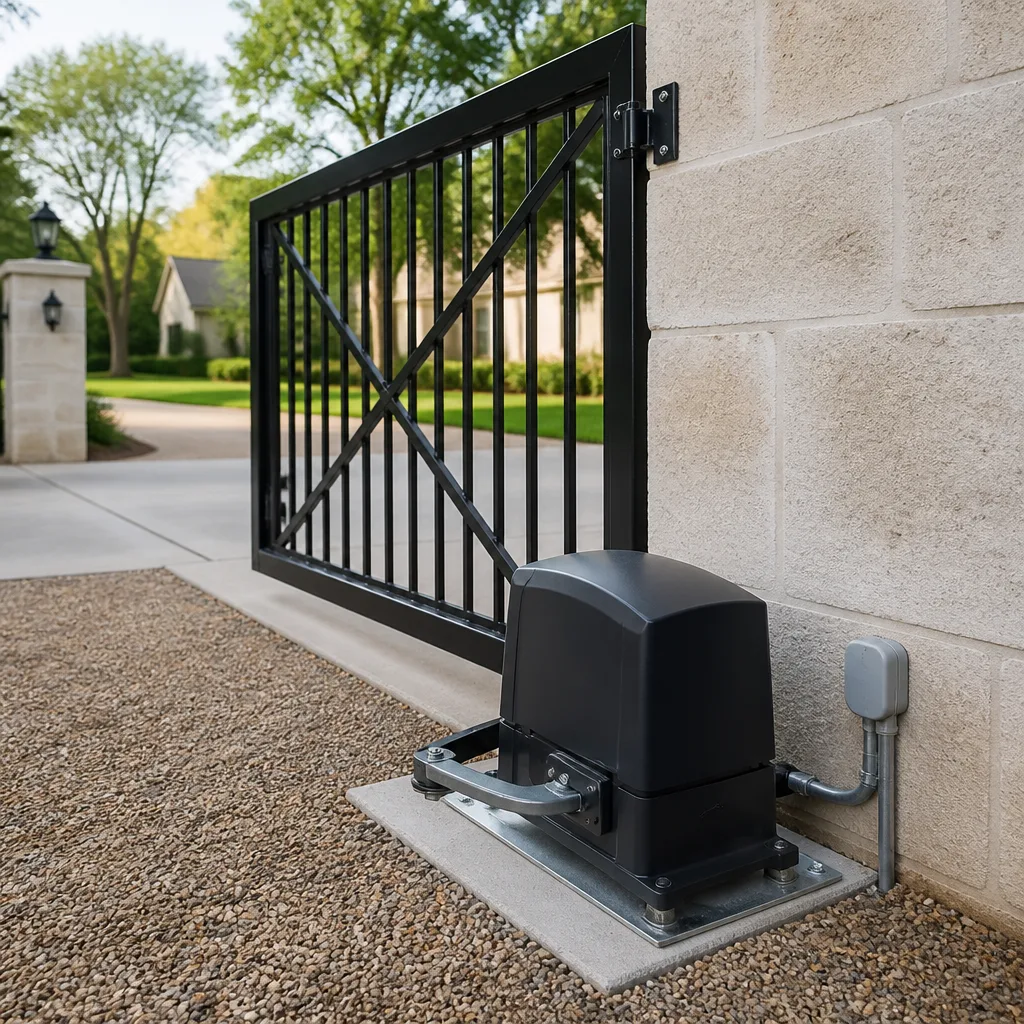 LiftMaster operators
Free on-site gate assessment - hinges, posts, and your LiftMaster or Nice gate operator checked before anything is quoted
The assessment is free and the quote is the invoice.
Get your free estimateGate Repair Cost Breakdown: The Hampton Homeowner’s Reference for 2026
Two licensed contractors can quote the exact same hinge replacement on the same gate in Hampton and land $300 apart. That gap isn’t usually greed, and it’s rarely a mistake. It comes down to which parts they source, how they account for diagnostic time, and whether the technician in your driveway is actually rated for your brand’s hardware. Most homeowners walk into a gate repair quote with no reference points at all, so a number feels either fine or outrageous with nothing in between. This guide fixes that. We’ll walk through component-level cost ranges for 2026, explain how labor works in the Hampton Roads market, and show you how to read a quote line by line instead of accepting or rejecting it blind.
Quick Answer
Gate repair in Hampton typically runs $150 to $550 for mechanical work like hinges, rollers, and post repairs, and $250 to $1,200 or more for electric gate repair involving motors, control boards, sensors, or keypads. Residential systems sit at the low end; heavy commercial operators and multi-door access control systems sit at the top. The written estimate sets the final price, and the numbers below are the framework you use to judge whether a quote is fair.
Styles & brands we work with
- Wrought iron
- Wood & steel frame
- Farm & ranch
- Sliding driveway gates
- LiftMaster operators
Table of Contents
- What Does a Gate Repair Cost Framework Look Like in 2026?
- Component-Level Cost Ranges: Residential vs. Commercial
- How Labor Rates in Hampton Compare to the Broader Hampton Roads Market
- The Parts Markup Question: OEM vs. Aftermarket
- Cost Traps: The “Quick Fix” That Costs You Twice
- Repair vs. Replace: The Honest Break-Even Calculation
- How to Read a Gate Repair Quote: 6 Steps
- Common Mistakes to Avoid
What Does a Gate Repair Cost Framework Look Like in 2026?
A useful cost framework breaks every gate repair into three layers: parts, labor, and diagnosis. When you separate those layers on a quote, you can spot which one is inflated. A quote that’s high on parts but reasonable on labor is a sourcing question. A quote that’s low on parts but high on labor is usually a diagnosis charge in disguise. A quote that lumps everything into “gate repair – $890” tells you nothing, and that’s the quote you should push back on.
Homeowners often assume the gate itself is the expensive part. In our experience, the opposite is closer to the truth on automated systems. A welded steel gate panel can cost more to fix than the operator that runs it, but the operator is where most failures actually live. Electric gates fail at the control board, the motor, the loop detector, or the safety edge far more often than they fail at the hinge. When a quote points entirely at mechanical parts on a gate that won’t open, ask whether the operator was tested.
Here’s the framework in plain terms:
- Parts: the physical component being replaced, priced by grade and by brand
- Labor: the hours the job reasonably takes, plus travel within Hampton Roads
- Diagnosis: the time a technician spends tracing an intermittent fault, which is often the most valuable part of the visit
- Access: how hard it is to reach the component, which matters more on commercial sites with operator housing inside a concrete pad
If a Hampton quote you receive doesn’t break out at least parts and labor, ask for it separated before you sign. A contractor who can explain the split is usually a contractor who understands the job. When a gate is stuck, we diagnose the system before we quote the fix, which is why we can usually tell a homeowner within the visit whether the job is a $200 hinge or a $600 control board. If your gate has stopped moving and you need a real reference point now, start with a free estimate. Call (855) 686-7069. We answer 24/7. Fast dispatch from 7am to 7pm, Sunday through Friday.
Component-Level Cost Ranges: Residential vs. Commercial
These are the 2026 ranges we use as a reference point in Hampton. They assume a standard residential or light commercial gate, ordinary access to the component, and parts of the appropriate grade. Heavy commercial systems, dual-gate installations, and systems with integrated access control will sit above these ranges.
| Component | Residential Range | Commercial Range |
|---|---|---|
| Hinge replacement (per hinge) | $150 – $350 | $250 – $550 |
| Roller replacement (per roller) | $120 – $280 | $200 – $450 |
| Gate operator / motor replacement | $600 – $1,500 | $1,200 – $3,500+ |
| Control board replacement | $250 – $650 | $450 – $1,100 |
| Keypad or entry device | $200 – $500 | $350 – $850 |
| Safety sensors / photo eye / loop detector | $180 – $450 | $350 – $900 |
| Post repair or reset | $300 – $900 | $600 – $1,800+ |
| Intercom or call box | $350 – $800 | $600 – $1,500 |
Notice that the residential-to-commercial jump isn’t uniform. Hinges and rollers scale moderately because the labor is similar and the parts differ mainly in duty rating. Operators, control boards, and post work scale steeply because commercial gate systems carry heavier panels, higher cycle counts, and often more complex access logic behind the operator. A DoorKing system at a Hampton commercial entrance can involve a control board tied to loop detectors, a telephone entry system, and safety edges all in one repair, and the pieces add up.
One thing this table can’t capture is brand availability. Some brands are easier to source locally than others. We work with nine gate automation brands, including Linear, Viking, Ghost Controls, and DoorKing, and part of what we do on any repair visit is source the right part for the specific unit rather than substitute whatever happens to be in stock. That gets you an accurate price and a fix that holds.
How Labor Rates in Hampton Compare to the Broader Hampton Roads Market
Labor rates for gate work in Hampton track fairly closely with the broader Hampton Roads market. There isn’t a dramatic premium for working inside the city versus Virginia Beach or Newport News. The variability homeowners see usually comes from three sources, and only one of them is really about the rate.
- Specialization. A technician trained on automated gate systems will charge more per hour than a general handyman, and the difference is usually worth it. Someone who diagnoses a control board correctly on the first visit saves you the second visit.
- Diagnostic depth. An intermittent gate fault, where the gate works one day and fails the next, can take an hour of methodical testing to isolate. A contractor who skips that hour and swaps a part on a guess is passing you a gamble, not a repair.
- Access and site conditions. A gate set back on a long residential driveway is straightforward. A gate on a commercial property with the operator housed in a below-grade vault or inside a sealed pad is genuinely slower work, and that shows up in labor.
What legitimately justifies a premium: brand-specific knowledge, proper diagnostic equipment for electric gates, and the ability to source the correct part without a special order delay. What doesn’t justify a premium: a vague “gate specialist” rate with no diagnostic step behind it. A good check is to ask what the technician will actually test before replacing anything. If the answer doesn’t mention the motor, the control board, and the safety devices on an automated gate, you’re speaking with a generalist.
Hampton’s climate adds a specific wrinkle. The area’s humidity and summer heat put steady load on operator motors and outdoor control enclosures, and the seasonal swings we get here tend to expose weak batteries and marginal control boards more often than a dry climate would. That’s a reason to choose a technician who knows how to test for heat-related motor issues rather than just replacing the board and hoping. For electric systems specifically, a proper electric gate repair visit should include the motor, the control board, the loop detector, and the safety edge, not just a visual check of the panel.
The Parts Markup Question: OEM vs. Aftermarket
Parts markup is the least discussed and most misunderstood line on a gate repair quote. Every contractor marks up parts. The question isn’t whether there’s a markup, it’s whether the markup reflects real sourcing work or is simply an add-on to a cheap part. Here’s how to ask about it in a way that gets you a straight answer.
Ask three questions before work starts:
- “Is this part original equipment from the manufacturer, or an aftermarket equivalent?”
- “What’s the lead time on the OEM part versus the aftermarket one?”
- “Why is this the right choice for my gate?”
The honest answers are usually more nuanced than “always OEM” or “always aftermarket.” Original equipment parts fit correctly, carry the manufacturer’s tolerance spec, and are the right call on control boards, motors, and safety devices, where a small mismatch can cause an intermittent fault you’ll chase for months. Aftermarket parts can be perfectly reasonable on hinges, rollers, and mechanical hardware, where the tolerances are looser and the price gap is meaningful.
Brand matters here too. A Ghost Controls residential opener and a Viking heavy-duty swing operator don’t share parts, and a contractor who hasn’t worked across multiple brands may not know which aftermarket option is actually compatible. This is where being brand-capable makes a real difference in the price you see. We work with LiftMaster, FAAC, BFT, Linear, Viking, Ghost Controls, DoorKing, Elite, and Mighty Mule, and the reason that range matters to you is simple: the right part gets identified on the first visit, not the second.
What you want to avoid is a quote that shows a parts price without a part number or description. Ask for the specific part and its origin. A contractor confident in their sourcing will give you that line without hesitation. If they won’t, treat the parts line as unverified.
Cost Traps: The “Quick Fix” That Costs You Twice
The most expensive gate repair is the one you pay for twice. In our experience in Hampton, the pattern is consistent: a technician replaces a visible, easy-to-reach part to make the gate cycle again, the gate works for a few weeks, then fails again, and the second call reveals the original diagnosis was incomplete. You’ve now paid for two visits and the gate still isn’t fixed.
Here are the cost traps we see most often:
- Replacing a motor when the control board was the fault. A failed control board can make a motor look dead. If the technician replaces the motor without testing the board, the gate may run briefly, then fail again.
- Substituting an undersized hinge or roller. A cheap hinge that fits but isn’t rated for the gate weight will wear out faster than the original, and you’ll be back on the phone within a year.
- Ignoring the safety edge. A gate that reverses unpredictably is often a safety edge or sensor issue, not a mechanical one. Replacing hinges won’t fix a sensor logic fault.
- Skipping the post check. If a gate sags because the post has shifted, replacing the hinges is a temporary fix. The post needs addressing, or the gate will sag again.
- No diagnosis on an intermittent fault. The gate that fails once a week and works the other six days is the hardest to diagnose and the easiest to guess at. A technician who guesses will charge you for a part swap, not a repair.
One way to protect yourself is to ask, before work starts, what the technician will test and what the diagnosis will cover. On any automated gate, a diagnostic step should touch the motor, the control board, the safety devices, and the access hardware. On a heavy commercial system from DoorKing or a similar brand, that should extend to the loop detector and the entry system. A quote that includes diagnosis is a quote that’s less likely to result in a second call.
Ask too about the warranty on the work and the part. A repair that fails within a reasonable window should generally be covered, and if a contractor won’t put that in writing, the “quick fix” price is misleading. If your gate is already misbehaving and you want an honest diagnosis, gate repair starts with a free estimate and a written recommendation. Call (855) 686-7069. We answer 24/7. Fast dispatch from 7am to 7pm, Sunday through Friday.
Repair vs. Replace: The Honest Break-Even Calculation
The repair-vs-replace decision for a Hampton gate comes down to a simple test: how much of the system’s cost are you about to spend on repairs, and how much of the system’s useful life is left? A common rule of thumb is to consider replacement when a single repair costs more than a third of a full replacement, or when you’ve had three or more repairs on the same operator within a few years. That’s not a strict rule, but it’s a useful reference point.
The honest break-even calculation has four inputs:
- Repair cost: what this repair will cost, all in
- Replacement cost: what a new system of the same grade would cost, including installation and access hardware
- Expected remaining life: how many more years the current system is realistically likely to run after the repair
- Reliability cost: what a second or third repair in the next two years is likely to cost you, weighted by how often the gate has already failed
If the repair is a mechanical part with predictable life left in the system, repair almost always wins. If the repair is a control board or a motor on a system that’s already been repaired a few times, replacement often wins on cost per year of service. The calculation isn’t designed to push you toward a new installation. It’s designed to keep you from spending $600 on a control board for an operator that will need a motor next year.
Property value is worth factoring in, but carefully. In Hampton’s housing market, a well-functioning automated gate is part of a home’s curb appeal, and a broken operator that makes the entrance unusable detracts from it. A repair that restores full function usually preserves value. A replacement provides a fresh piece of the system, but it’s not a home improvement that pays for itself quickly. The more useful test is whether the repair buys you a reasonable number of years, not whether it adds to resale.
If you’re facing this decision and want a second opinion, we diagnose the system before we recommend either path, and we’ll tell you honestly if a repair is the right call. For a full-system view that covers residential and commercial, see Gate Repair Hampton.
How to Read a Gate Repair Quote: 6 Steps
Reading a quote like a professional means checking five or six specific things in a specific order. This is the checklist we’d hand a homeowner who’s comparing two estimates and wants to know which one is honest.
- Check the diagnosis step. Does the quote include a clear statement of what was tested and what failed? A quote that jumps straight to a part without diagnosis is guessing.
- Check the parts line. Does it name the part, the brand, and whether it’s OEM or aftermarket? If it doesn’t, ask before you sign.
- Check the labor line. Is the labor broken out, and does it match the job you’re watching happen? Labor that’s twice the fair range on a $200 job is a markup in disguise.
- Check the warranty. Is there a warranty on the part, on the work, or both, and how long? Get it in writing.
- Check the second-visit risk. Does the quote address the root cause or just the symptom? If the gate sagged because the post shifted, does the quote include post work?
- Check the total against the framework. Compare the total to the component table above. If the number is dramatically above the range for the work, ask what justifies the difference.
One more step worth taking: ask whether the technician is trained on your brand. This is not a trick question, and a good contractor will answer it directly. A LiftMaster swing operator and a FAAC system have different diagnostic paths, and a technician who works across all of them will generally get to the right answer on the first visit. That reduces the chance of a second call, and it’s often the difference between a repair and a repeat repair.
If you’re comparing quotes and want an independent read on one, we’re happy to look at it as part of a free estimate. We work on residential and light commercial systems across Hampton and the surrounding area, and the diagnosis comes first, always.
Common Mistakes to Avoid
- Accepting a verbal estimate. A verbal price is not a quote. Ask for it in writing with parts and labor separated before any work begins, and treat anything else as a discussion, not a commitment.
- Choosing the lowest bid without comparing scope. The cheapest quote is often for the smallest amount of work. If one quote includes diagnosis and post repair and another is $200 cheaper without either, you’re not comparing the same job.
- Assuming the motor is the problem. On an electric gate in Hampton, we see control board failures, loop detector faults, and safety edge failures misdiagnosed as motor failures regularly. Ask how the technician confirmed the motor.
- Skipping the safety edge check on an automated gate. A gate that reverses unpredictably is a safety issue, not just a convenience issue. Don’t accept a repair that doesn’t address it.
- Letting a post problem slide. In Hampton’s soil, a shifted post will keep shifting. Repair the hinges without fixing the post and you’ll be back within a season.
- Paying for undiagnosed intermittent repairs. If the gate fails intermittently, ask explicitly what diagnostic steps will isolate the fault. Guessing at an intermittent fault is the most expensive way to repair a gate.
- Over-paying for aftermarket parts priced as OEM. Ask for the part origin before you sign. A legitimate contractor will tell you whether the part is original equipment or an equivalent.
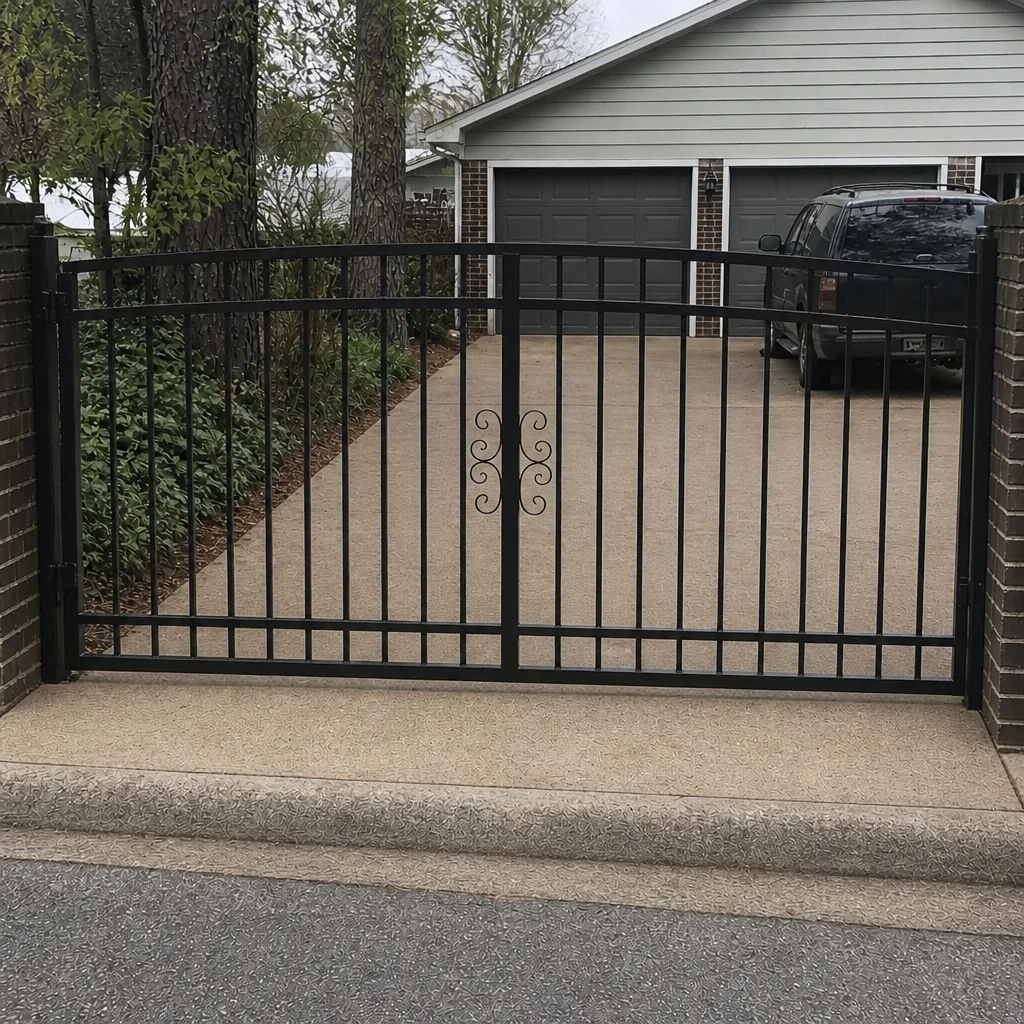
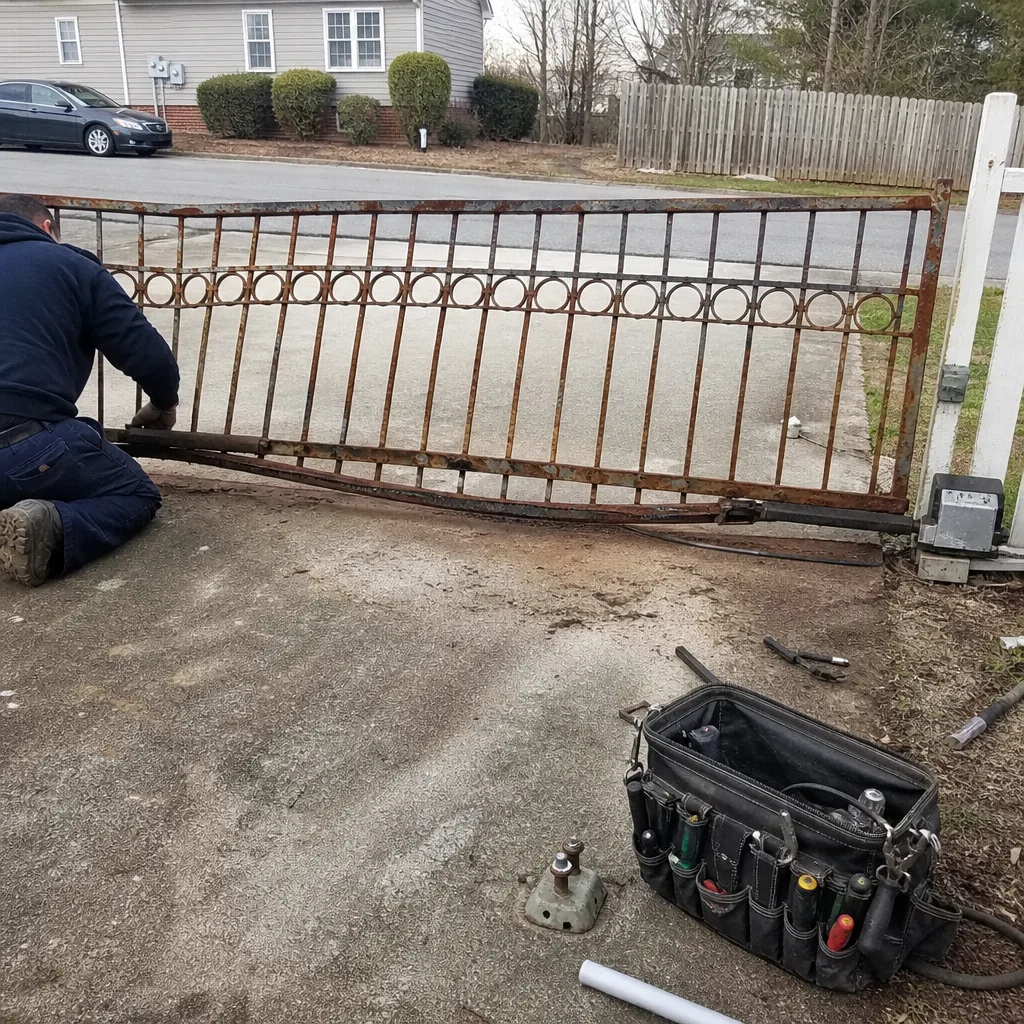
See the difference
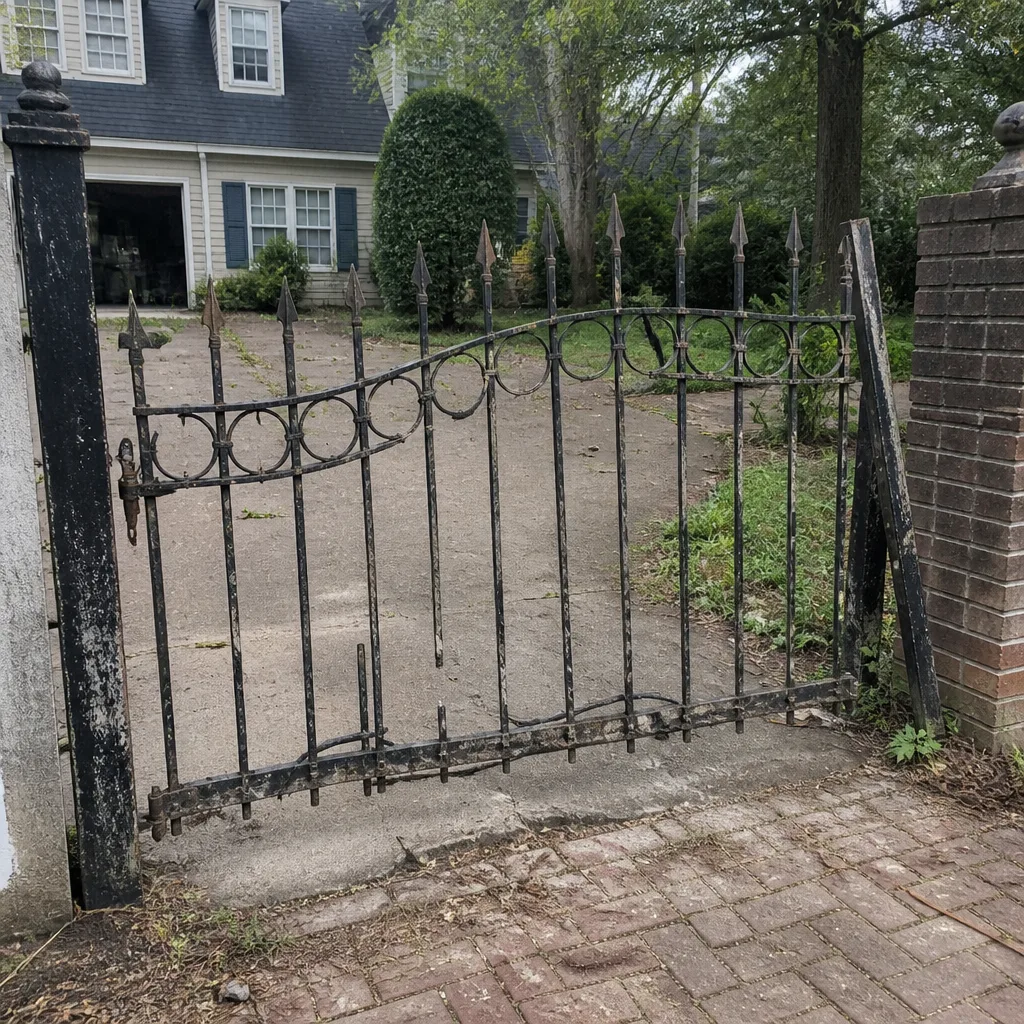 Before
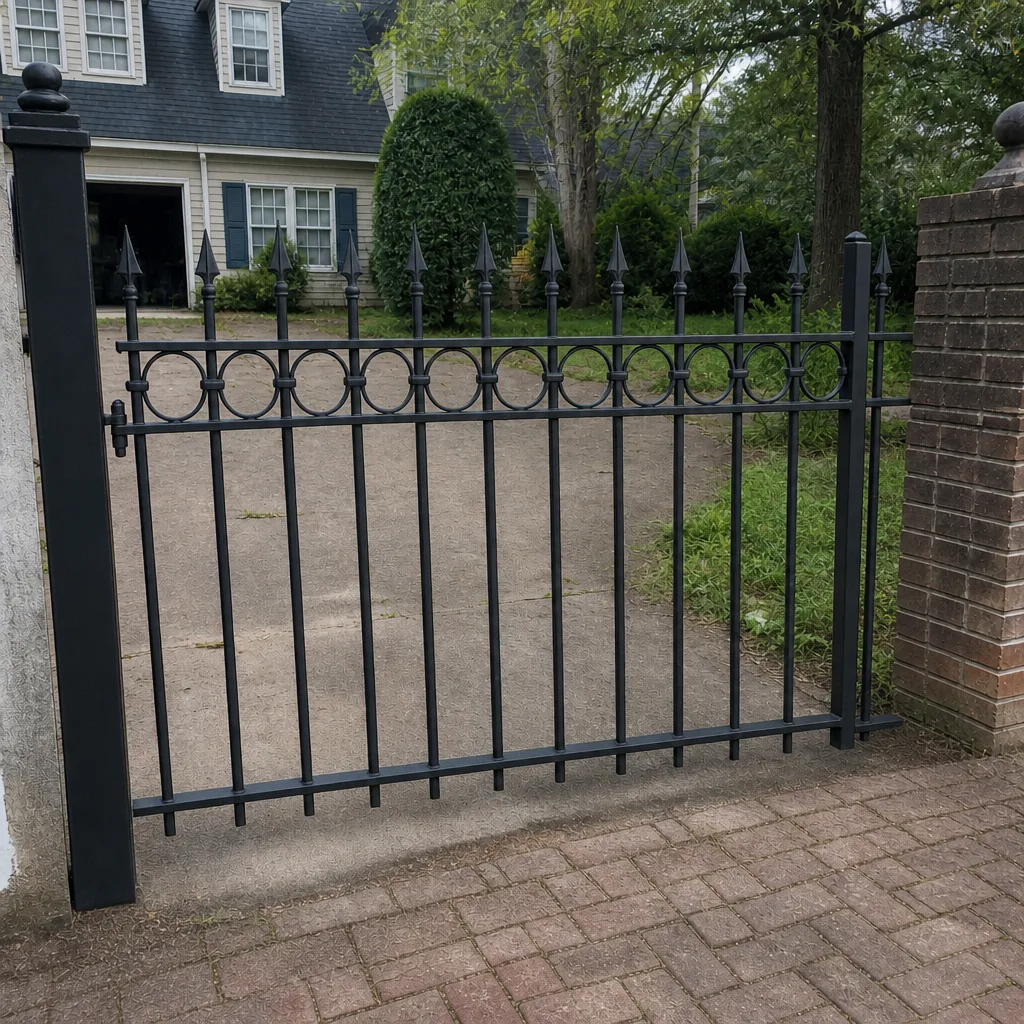 After
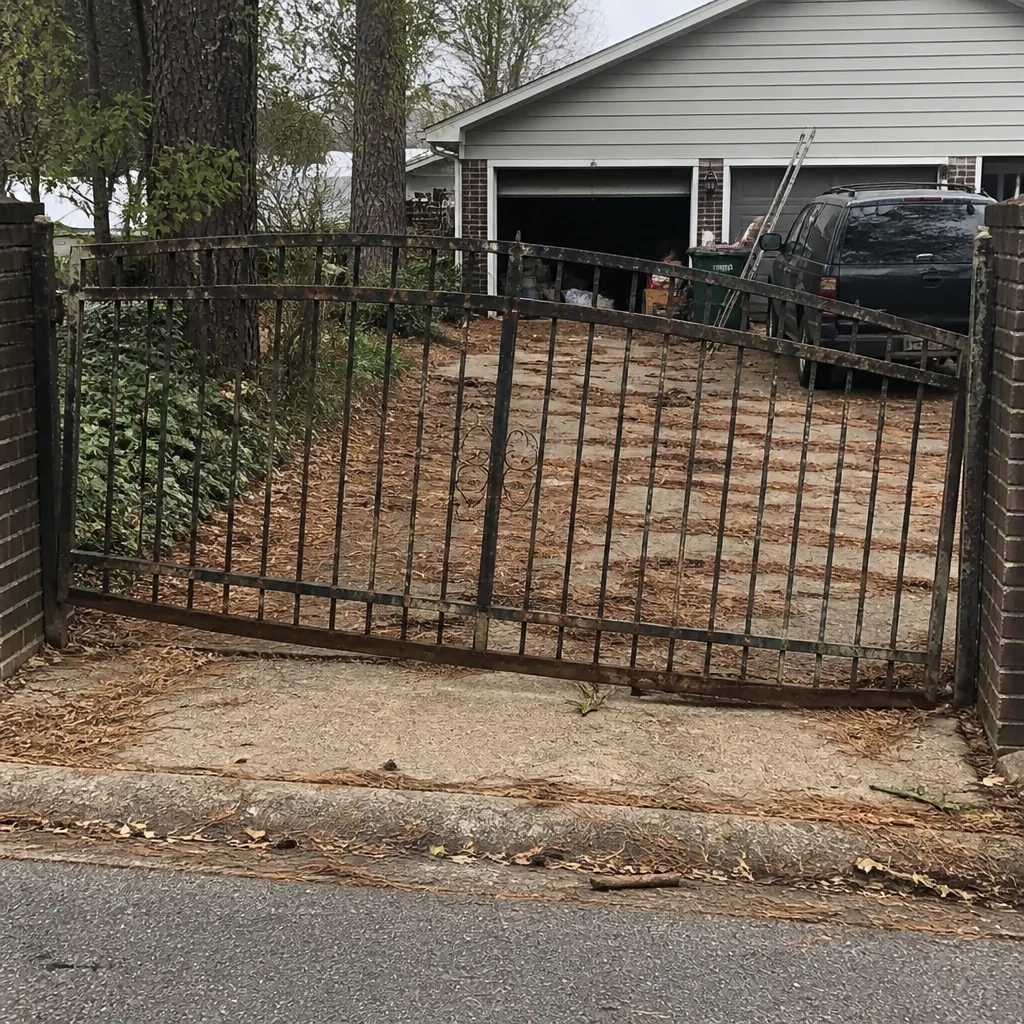 Before
 After
 Before
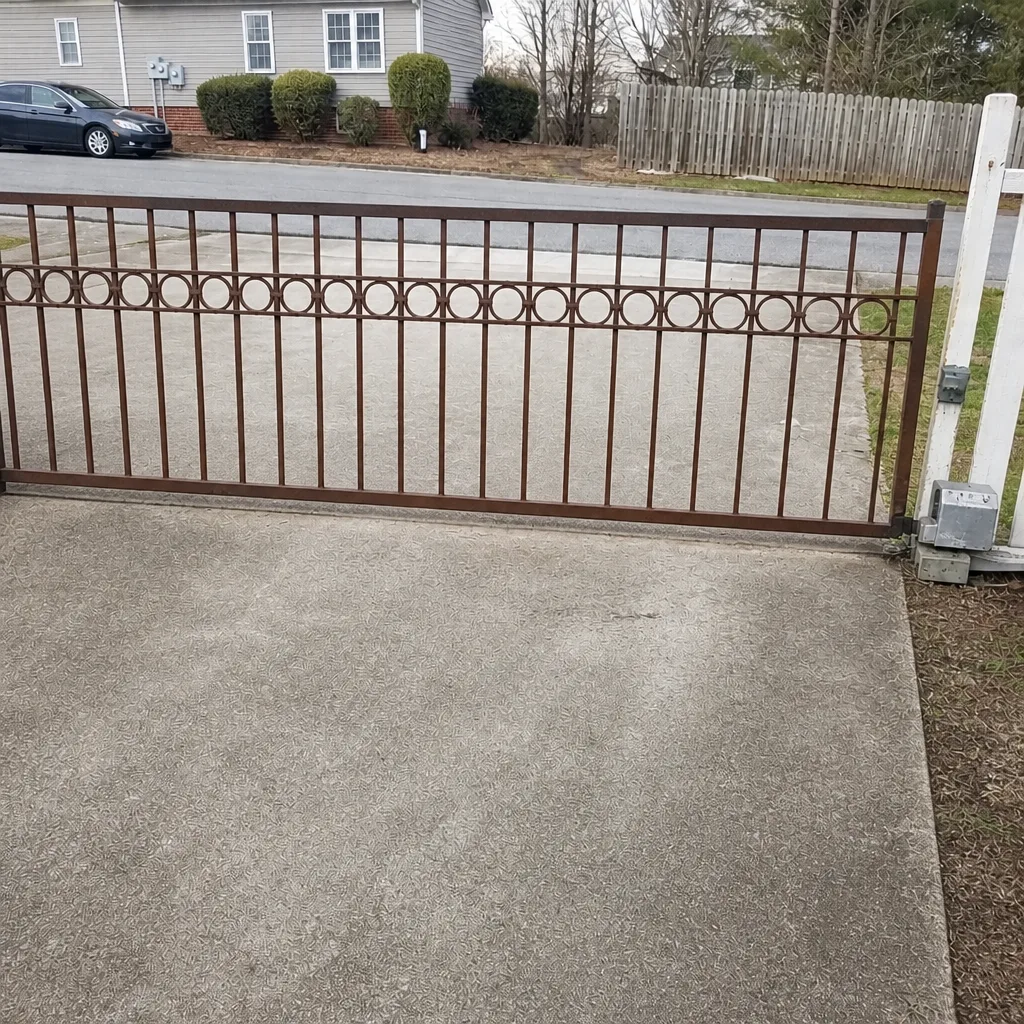 After
When to Call a Professional
Some gate repairs are safe to evaluate yourself and unsafe to fix yourself, and automated gate systems sit firmly in the second category. The operator runs on line voltage, the control board and wiring carry real current, the safety edge and sensors are tied into the system, and a heavy gate panel that moves unexpectedly can crush. If your gate stops, reverses unpredictably, makes a grinding noise from the operator housing, or the keypad stops responding, that’s a call for a trained technician, not a weekend project. We answer 24/7. Fast dispatch from 7am to 7pm, Sunday through Friday. Gate Repair Hampton offers free estimates in Hampton. Call (855) 686-7069 for a written price before any work starts.
Frequently Asked Questions
Gate repair in Hampton typically ranges from $150 to $550 for mechanical work and $250 to $1,200 or more for electric gate repairs involving motors, control boards, sensors, or keypads. Commercial systems run higher. The written estimate sets the final price, and the estimate is free. Call (855) 686-7069 for an exact quote.
Often yes. We offer same-day service for gate failures and electric gate faults, with fast dispatch from 7am to 7pm, Sunday through Friday. We answer 24/7, and a call outside dispatch hours is booked into the next opening. Call (855) 686-7069 and we’ll tell you what’s available.
The difference is usually parts sourcing, diagnostic time, and whether the technician is trained on your specific brand. One quote may include diagnosis and OEM parts; another may skip both. Compare the parts line, the labor line, and the diagnostic step before you compare the totals. Call (855) 686-7069 if you want a second read on a quote.
We work on LiftMaster, FAAC, BFT, Linear, Viking, Ghost Controls, DoorKing, Elite, and Mighty Mule systems, covering residential openers through heavy commercial access systems. If your system is one of those, we diagnose it directly. Call (855) 686-7069 with your brand and we’ll confirm before we come out.
Repair usually wins if the fault is mechanical and the system has useful life left. Replacement is worth considering when one repair costs more than a third of a full replacement, or when the same operator has been repaired three or more times. We diagnose first and give you an honest recommendation either way. Call (855) 686-7069 for an estimate.
Yes. We work on residential and light commercial gate systems, including multi-door access control and heavy-duty operators from brands like DoorKing and Viking. That makes us a single source for property managers who need one reliable contact for both residential and commercial gates in Hampton. Call (855) 686-7069 to schedule an on-site estimate.
The Bottom Line
Gate repair quotes in Hampton vary because homeowners are missing reference points, not because the work is unusually complex. Use the component table above to sanity-check any number you’re given, ask about parts sourcing and warranty before you sign, and treat diagnosis as a real line item rather than a rounding error. When a quote includes a clear diagnostic step, names the part and its origin, and breaks out labor, it’s usually honest. When it doesn’t, it’s worth a second call. And when a repair crosses into the territory where replacement makes more sense, run the break-even calculation before you commit to either path. Call (855) 686-7069 for a free estimate. We answer 24/7. Fast dispatch from 7am to 7pm, Sunday through Friday.
Written by the team at Gate Repair Hampton.