
Last updated November 16, 2026
 Wrought iron
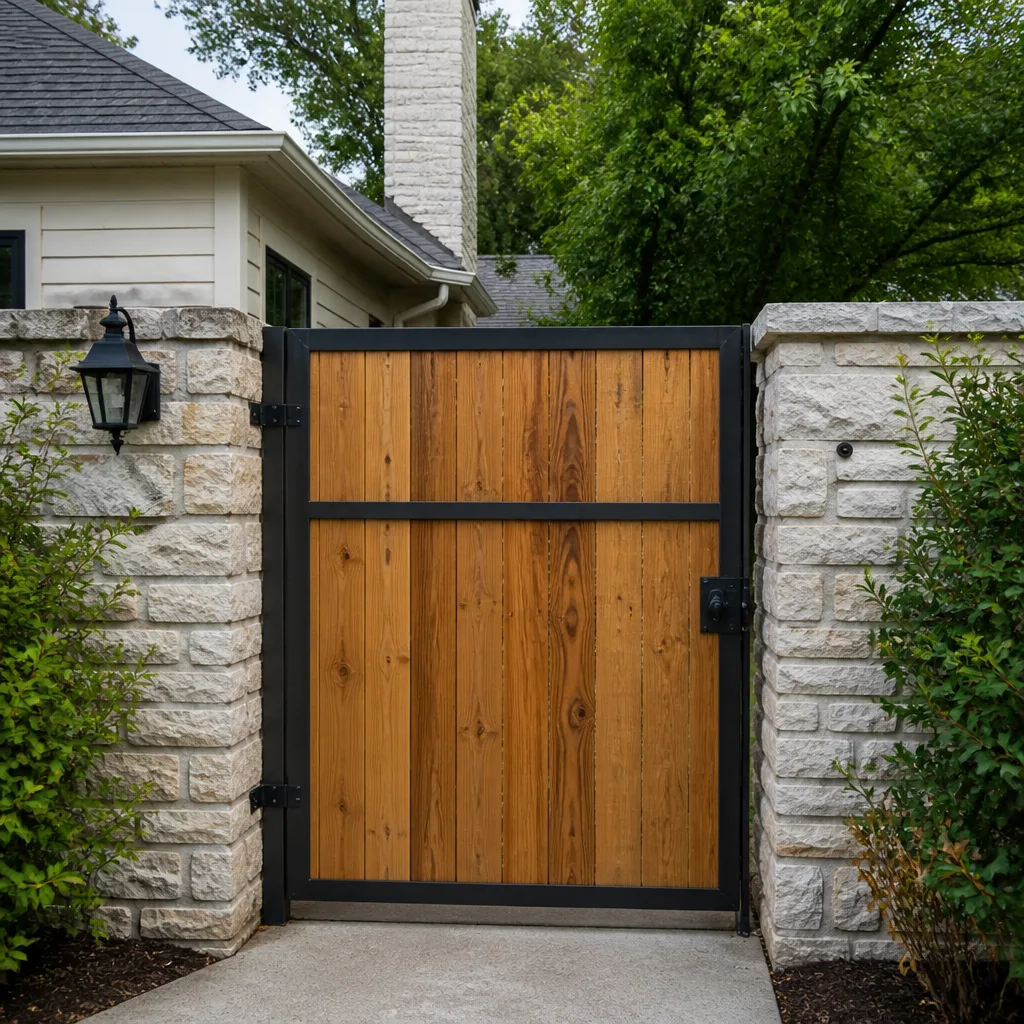 Wood & steel frame
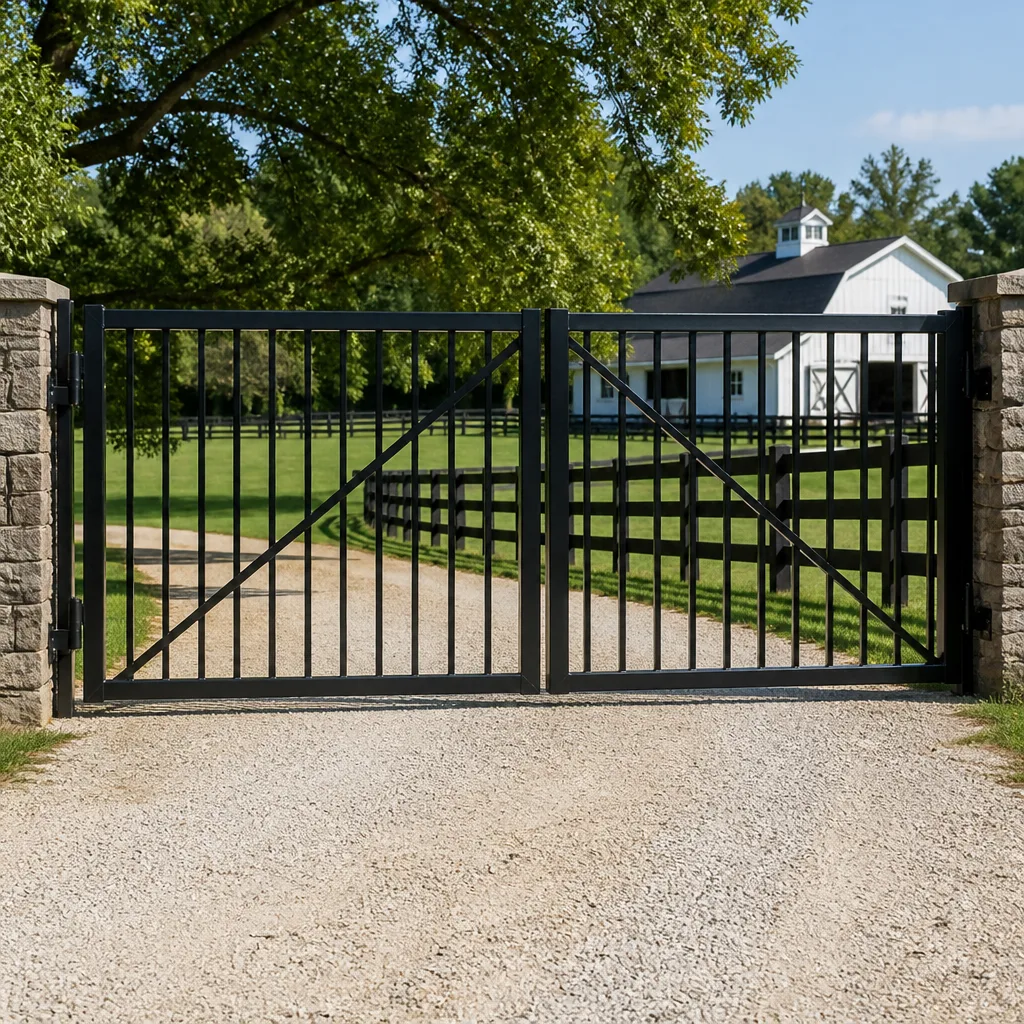 Farm & ranch
 Sliding driveway gates
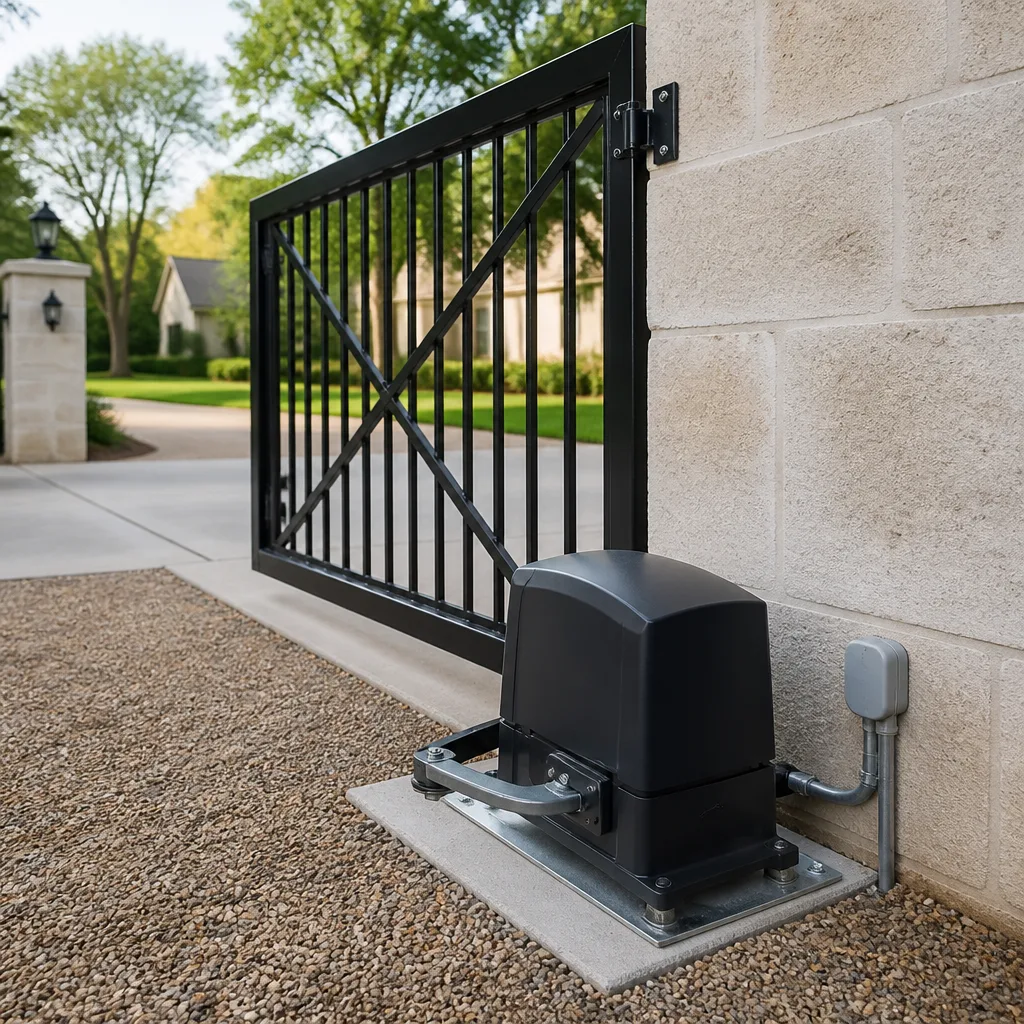 LiftMaster operators
Free on-site gate assessment - hinges, posts, and your LiftMaster or Nice gate operator checked before anything is quoted
The assessment is free and the quote is the invoice.
Get your free estimateGate Repair Maintenance Schedule: What to Do and When
The biggest gate failures we see in Hampton don’t happen in the middle of a storm. They happen in the calm stretch afterwards, when a system that limped through spring finally gets stressed and gives out completely. A gate that was squeaking in April becomes a seized operator in September. Prevention has a season, and around here that season starts earlier than most homeowners think.
This guide lays out a maintenance calendar built around Hampton’s actual weather: the buildup before hurricane season, the inspection window right after a storm passes, the heat that pushes hydraulic operators harder through July and August, and the winter moisture that works its way into control boxes and hinges. You’ll get the tasks, the timing, the lubrication specs that matter, and a logging system that makes diagnosis faster when something finally does break.
Quick Answer
A gate maintenance schedule for Hampton should follow the local climate, not a generic quarterly reminder. The short version: inspect and lubricate in early spring before hurricane season, test battery backup and clear drainage before the summer storm peak, do a full post-storm inspection after any named system passes, and check for moisture intrusion and cold-weather strain as temperatures drop in late fall. Year-round, log every adjustment and symptom so a technician can trace a fault instead of guessing at it.
Styles & brands we work with
- Wrought iron
- Wood & steel frame
- Farm & ranch
- Sliding driveway gates
- LiftMaster operators
Table of Contents
- The Hampton Gate Maintenance Calendar: Month by Month
- Pre-Hurricane Season: What to Check Before June
- After the Storm: The Post-Storm Inspection
- Summer Heat and Hydraulic Operators
- Lubrication by Component: The Right Grease for the Right Part
- Battery Backup Maintenance in Hampton’s Outage Pattern
- How to Log Maintenance So It Actually Helps
- The Three Tasks That Void Most Gate Warranties When Skipped
The Hampton Gate Maintenance Calendar: Month by Month
A maintenance calendar only works if it matches the weather the gate actually lives in. Hampton runs hot, humid summers, a real hurricane season from June through November, and winters cold enough to move metal and stiffen grease. Here’s how the year breaks down for a typical automated gate.
Late winter (February to March): This is your deep-clean and baseline month. Clear debris from the gate’s travel path, inspect hinges and rollers for play, and check the control box for any moisture that got in over winter. Cold weather stiffens lubricant and shrinks seals, so this is when you catch the small stuff before the busy season.
Spring (April to May): Pre-hurricane prep begins here. Lubricate moving parts to spec, test the operator’s manual release, and confirm the battery backup holds a charge. Check that the gate swings or slides freely by hand with the operator disengaged. A gate that binds by hand will strain the motor all summer.
Summer (June to August): Heat month. Hydraulic operators run hotter, batteries degrade faster, and control boards in a sun-baked box get stressed. Watch for slow operation, odd noises, and any change in how the gate reverses on obstruction.
Storm season (September to November): This is when deferred problems surface. Do a full post-storm inspection after any system passes, and re-check safety edges, photo eyes, and loop detectors that may have shifted.
Late fall (December to January): Inspect for moisture intrusion, tighten hardware that loosened over the season, and clean out drainage around the gate’s footing so water doesn’t pool at the posts.
The exact months shift a little with the year, but the sequence holds. Build the calendar around the stressors and the tasks fall into place. Our Gate Repair Hampton team works these systems all year and the pattern rarely surprises us anymore.
Pre-Hurricane Season: What to Check Before June
Hurricane season is the single biggest stress test a gate in Hampton faces. The prep window is spring, and the goal is to make sure the gate and its operator are in condition to survive wind loading, flying debris, and the power interruptions that come with a serious storm. Work through this list before June.
- Test the manual release. With the operator disengaged, the gate should move by hand with reasonable effort. If it drags or binds, the hardware needs attention before the motor has to fight it through a storm.
- Check anchor bolts and post stability. Sliding gate tracks and swing gate hinges take a beating in wind. Loose anchors let the gate shift under load and can turn a survivable gust into a bent frame.
- Inspect the safety edges and photo eyes. A gate that doesn’t reverse on obstruction is a hazard, and storm debris in the path is exactly the scenario those sensors exist for. Clean the lenses and confirm the reversal works.
- Confirm battery backup holds a charge. Power outages are common in a named storm. If the backup won’t carry the gate through an outage, the gate is stuck open or closed when you need it most.
- Clear drainage and debris from the travel path. Water pooling at the footing softens the ground and shifts posts over time. Clear gutters, drains, and the track itself.
- Test the operator under load. Run it open and closed a few times and listen. Grinding, straining, or a change in speed are early warning signs.
If any of this is beyond a visual check, or if the gate is a brand you’re not sure how to service, that’s a good moment to get a professional involved. We work on Mighty Mule, LiftMaster, FAAC, BFT, and five other automation brands, so the odds are good we know your system.
After the Storm: The Post-Storm Inspection
Every storm that passes through Hampton leaves a window for inspection. Most gate problems after a storm aren’t dramatic failures. They’re small shifts: a photo eye knocked slightly out of alignment, a limit switch nudged, a hinge that took a hit and now sits a few degrees off. Caught early, these are quick adjustments. Ignored, they turn into a motor that works harder than it should until it fails.
Run this inspection once the weather clears and it’s safe to be outside:
- Walk the full travel path. Look for debris, branches, and any damage to the track or the gate panels themselves.
- Check photo eye alignment. The safety sensors should face each other squarely. A storm that moves the gate can move the sensors too.
- Test the reversal. Put an obstruction in the path (carefully) and confirm the gate reverses. Don’t test with a person or a pet in the way.
- Listen to the operator. Run it open and closed. New noises after a storm usually mean something shifted.
- Inspect the control box. Look for water intrusion, loosened conduit, or a tripped breaker. If the box got wet, don’t power it up until it’s been checked by a technician.
- Check the footing and posts. Look for settling, cracking, or leaning. A shifted post is a structural issue, not a sensor issue.
If anything in this list looks off, or if the gate won’t run at all after a storm, call us. We answer 24/7. Fast dispatch from 7am to 7pm, Sunday through Friday. A post-storm call now beats a full electric gate repair later.
Summer Heat and Hydraulic Operators
Summer in Hampton puts hydraulic gate operators under real strain. Heat does two things to a hydraulic system: it thins the oil, and it expands the fluid inside a sealed unit. Thinner oil moves faster through the system, which changes how the gate behaves, and expanded fluid puts extra pressure on seals that are already the weak point on any hydraulic operator.
What to watch for from June through August:
- Slow operation. If the gate opens or closes noticeably slower in July than it did in April, the fluid or the pump is telling you something.
- Weeping at the seals. A small hydraulic leak gets worse in heat. Check the ground under the operator for oil.
- Strain sounds. Grinding, whining, or a change in how the motor sounds under load is a signal it’s working harder than it should.
- Shade and airflow. If the operator sits in full sun in a closed housing, it runs hotter than the manufacturer intended. Ventilation or a sun shade can extend its life.
Mechanical operators don’t escape the heat either. Metal expands in the sun, which changes tolerances on hinges, rollers, and limit switches. A gate that runs smooth in spring can start catching on its track by August. If your gate is a LiftMaster or a BFT system and you’ve noticed a change in how it moves this summer, that’s worth a look before it turns into a repair.
The fix for most heat-related issues is small: fresh hydraulic fluid, a new seal, a limit adjustment, a bit of ventilation. What you don’t want to do is ignore it until a seal blows and the operator runs dry, because that’s a full operator replacement instead of a service call.
Lubrication by Component: The Right Grease for the Right Part
The wrong grease on a rack-and-pinion drive causes more damage than no grease at all. That’s not an exaggeration. Using a heavy chassis grease on a rack-and-pinion drive attracts grit, and grit becomes a grinding paste that wears the teeth down faster than dry metal would. Lubrication is component-specific, and getting it right is one of the easiest ways to add years to a gate’s life.
Here’s the breakdown by component type:
- Rack-and-pinion drive: Use a light, dry-film lubricant or a purpose-made rack grease, not a heavy wheel-bearing or chassis grease. The rack teeth need a coating that repels grit, not one that captures it. Apply a thin film, not a heavy coating. Reapply on the spring and late-summer pass.
- Hinges: A medium-weight lithium or silicone grease works well here. Apply to the hinge pins, not the surrounding metal. Wipe off excess so it doesn’t collect dust.
- Rollers and wheels: Silicone spray or a dry lubricant on the bearing surface. Avoid oil-based lubes, which attract debris that jams the roller.
- Slide track: A dry-film or silicone-based lubricant along the track surface. Keep the track clean of debris first; the lube goes on a clean track, not over grit.
- Chains (if your gate uses one): A dedicated chain lubricant, applied sparingly. A chain that runs in an outdoor gate should not be packed with heavy grease.
- Lock cylinders and latches: Graphite or a dry lock lubricant. Oil-based lubes capture dust and gum up the mechanism over time.
One rule that holds across every component: clean before you lubricate. Lubricating a dirty part just seals the grit in. And avoid over-lubrication in every case. A thin, even film does the job; a thick coat turns into a magnet for debris. In Hampton’s humid summers, too much grease on a component also traps moisture against the metal, which is the last thing you want.
Battery Backup Maintenance in Hampton’s Outage Pattern
Heat degrades backup batteries faster than the manufacturer’s estimate suggests. The typical number you see on a spec sheet assumes moderate conditions. In a Hampton summer, a battery that sits in a sun-baked control box or operator housing runs much hotter than that, and heat is the number one killer of the lead-acid and lithium batteries that back up gate operators. A battery rated for a multi-year service life in a cool climate may need replacement sooner here, and the only way to know is to test it, not guess at a date.
The cadence that works in this climate:
- Test the backup every quarter. During an extended storm season, that’s monthly. Testing means killing the main power and confirming the gate still runs on battery, then restoring power and confirming it charges back up.
- Test before and after any named storm. A battery that tests fine in May can be dead after a heat wave in August.
- Watch for slow operation on battery. If the gate crawls when running on backup, the battery is on its way out.
- Inspect for swelling, leaks, or corrosion. Lead-acid batteries that have been overheated can swell or leak. A swollen battery should be replaced, not recharged.
- Keep the battery terminal clean. Corroded terminals cause charging problems. A wire brush and a light coat of terminal protector keeps the connection solid.
- Replace proactively, not reactively. If the battery is showing signs of weakness, replace it before storm season, not after the gate fails to open during an outage.
If your system uses a DoorKing or Linear operator, the backup testing procedure is the same, but the specific battery type and access point vary. That’s worth writing down in your log so the next test is quicker. If you’re not sure how to test your battery, we cover it on gate repair calls and can walk you through the process.
How to Log Maintenance So It Actually Helps
A maintenance log is only useful if it captures the right things. A notebook that just says “gate serviced” on a date does nothing for the next technician who needs to trace a fault or the property manager who needs to prove due diligence. The log should record symptoms, not just completed tasks.
What to log every time:
- Date and weather. A fault that shows up in July heat and disappears in October tells a technician something specific.
- Symptom, precisely. “Gate slow on closing, more in the afternoon” is a real record. “Gate acting up” isn’t.
- What you did. If you lubricated the rack, note the product. If you adjusted a limit switch, note which direction and how far.
- Battery test results. Voltage, run time on backup, and whether the test was before or after a storm.
- What you noticed but didn’t fix. A slight leak, a noise, a loose bolt. Write it down. Future-you will thank present-you.
- Who did the work. Whether it was you or a technician, and which service.
For property managers: The same log does double duty. If a gate fails and someone gets hurt, or if an insurer asks what maintenance was done, a dated log with specific entries is your evidence that you took reasonable care. A log that shows quarterly inspections, battery tests, and post-storm checks is worth far more than a pile of receipts. We’ve worked with HOAs and commercial property managers in Hampton who keep this kind of record, and it makes the whole service relationship easier, because the technician arrives knowing what’s been done and what hasn’t.
For homeowners: Even a five-minute log after each check pays off. When you finally do call for help, the more you can tell the technician about the symptom and its timing, the faster the diagnosis goes.
The Three Tasks That Void Most Gate Warranties When Skipped
Most gate and operator warranties have conditions. Miss the wrong one and the manufacturer can deny a claim when something fails. The three that cause the most problems are lubrication to spec, keeping debris out of the travel path, and testing the safety systems. None of these are hard. All of them get skipped because nothing visible breaks when you miss them.
1. Lubrication to the manufacturer’s spec. The warranty language usually says something like “lubricate per the maintenance schedule.” What that means in practice is the right product on the right component at the right interval. Wrong grease on a pinion drive isn’t just unhelpful, it’s a documented reason to deny a wear claim, because the manufacturer can point to improper lubrication as the cause. Use the product the manual names, apply it thinly, and log what you applied and when.
2. Debris-free travel path. Operators are rated for a gate that moves freely. If the gate is fighting gravel, weeds, or a warped track, the motor is working outside its rated load, and that voids most motor and gearbox warranties. Keep the path clear, and address any binding or dragging before it damages the operator.
3. Functioning safety systems. Photo eyes, safety edges, and loop detectors are life-safety equipment. A warranty that covers electrical components will not cover a failure caused by a bypassed or malfunctioning safety system. Test these every time you service the gate, and never disable a safety edge to “make it work.”
Do these three correctly and most warranty claims stay valid. Skip them and you can find yourself covering a repair the warranty would have paid for. If you’re not sure what your manual specifies, we can look it up for you. We work on nine automation brands, including Mighty Mule, LiftMaster, FAAC, BFT, Linear, Viking, Ghost Controls, DoorKing, and Elite, so the odds are good we know your system’s requirements.
Common Mistakes to Avoid
- Servicing on a generic quarterly schedule. A calendar built for a mild climate doesn’t match Hampton’s storm season and heat. Time the big checks to the local stressors, not the seasons on a box.
- Using the wrong grease on a rack-and-pinion drive. Heavy chassis grease captures grit and wears the teeth. Use the light dry-film or purpose-made product your manual names.
- Testing the battery backup by date, not by function. A battery that hits its nominal replacement age might still be fine; one that’s a year old in a hot box might be done. Test it, don’t guess.
- Disabling a safety sensor to “make the gate work.” Bypassing a photo eye or safety edge is a hazard and a warranty issue. Find the fault, don’t hide it.
- Ignoring a small hydraulic leak in the heat. A weeping seal in July becomes a failed operator by September. Fix the small problem while it’s small.
- Not logging anything. Without a record of symptoms, timing, and completed work, every diagnosis starts from zero. The log saves time and money.
- Skipping the post-storm inspection because the gate “looks fine.” Most post-storm failures are shifted sensors and loosened hardware that don’t show up until the gate has to work. Look, don’t assume.
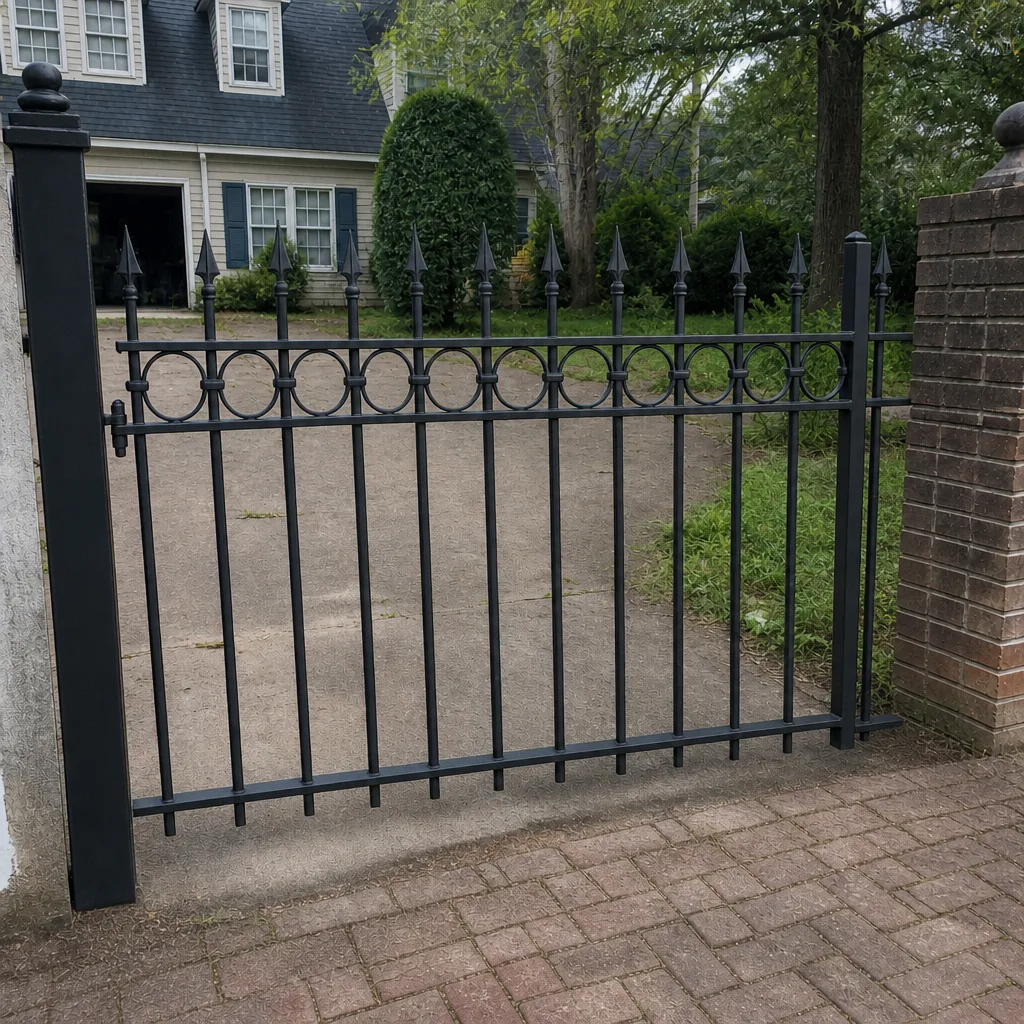
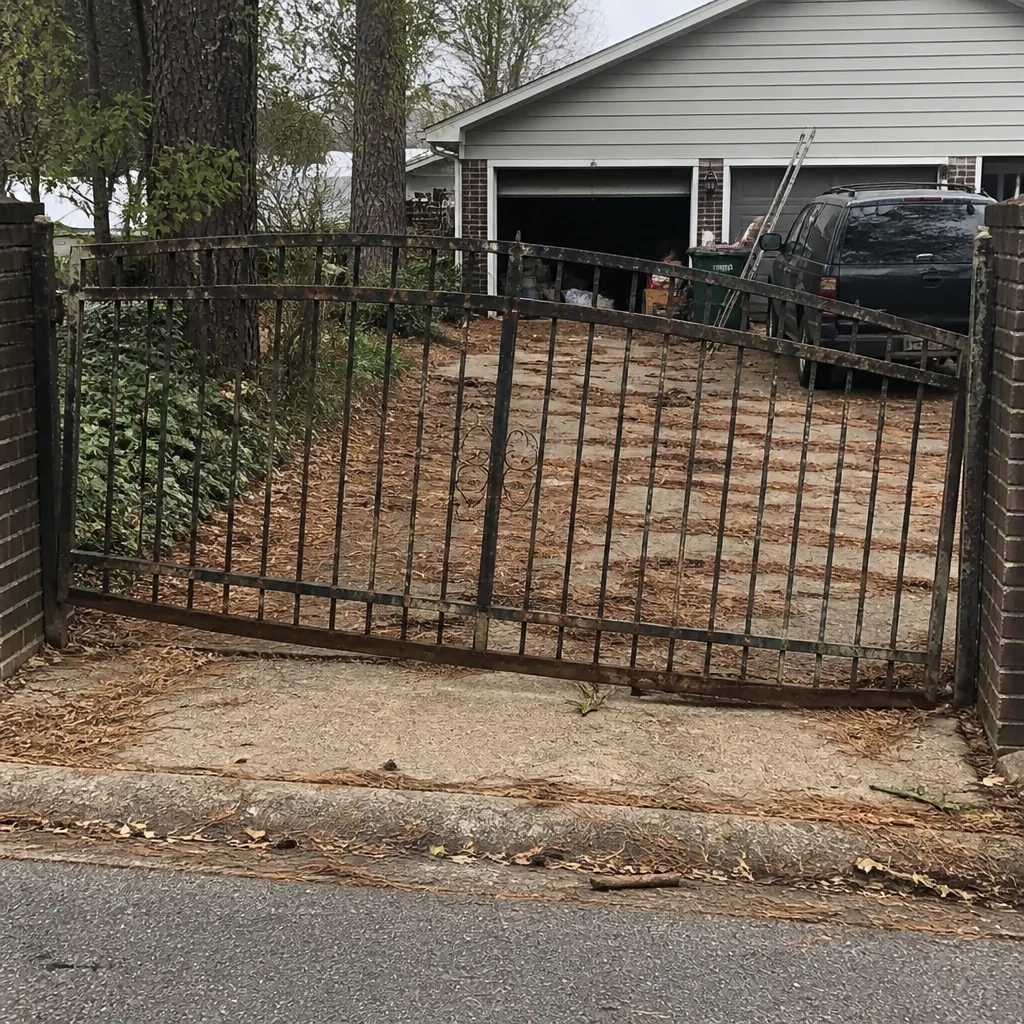
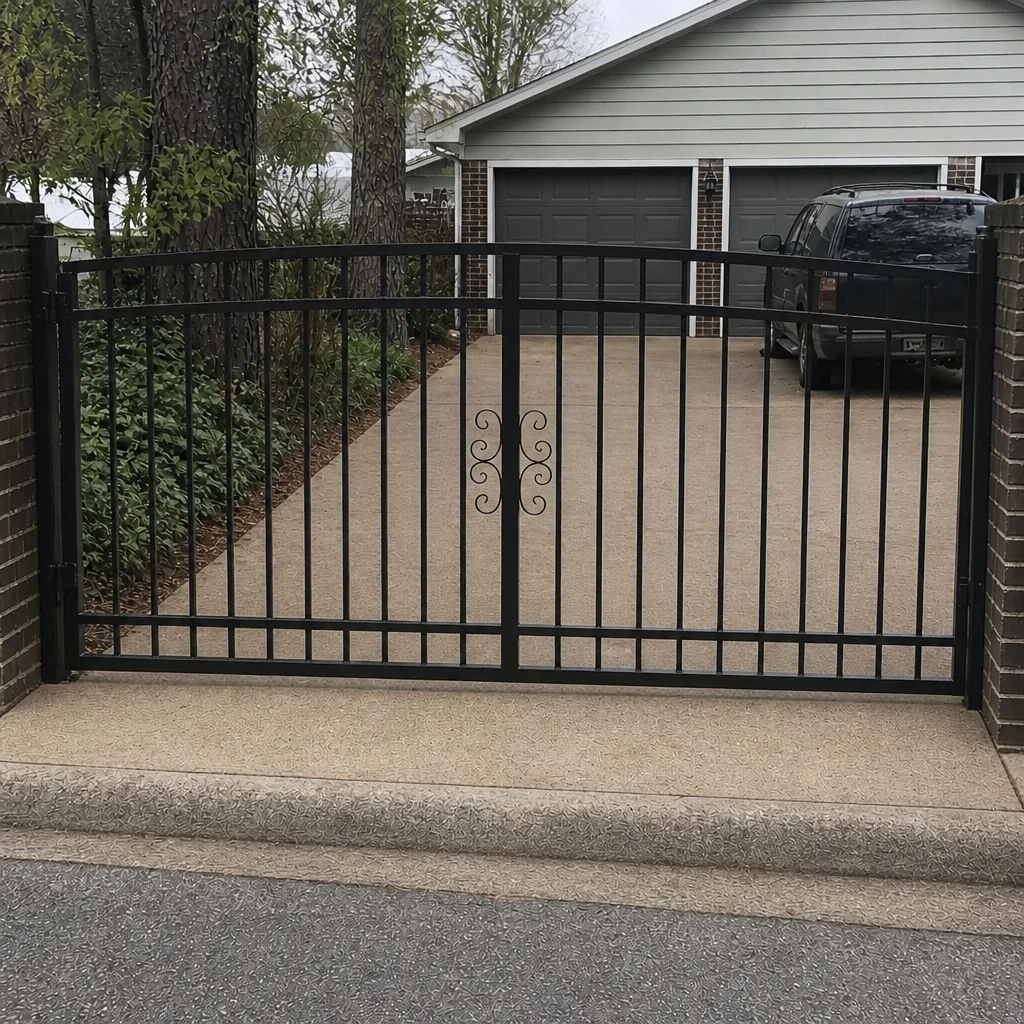
See the difference
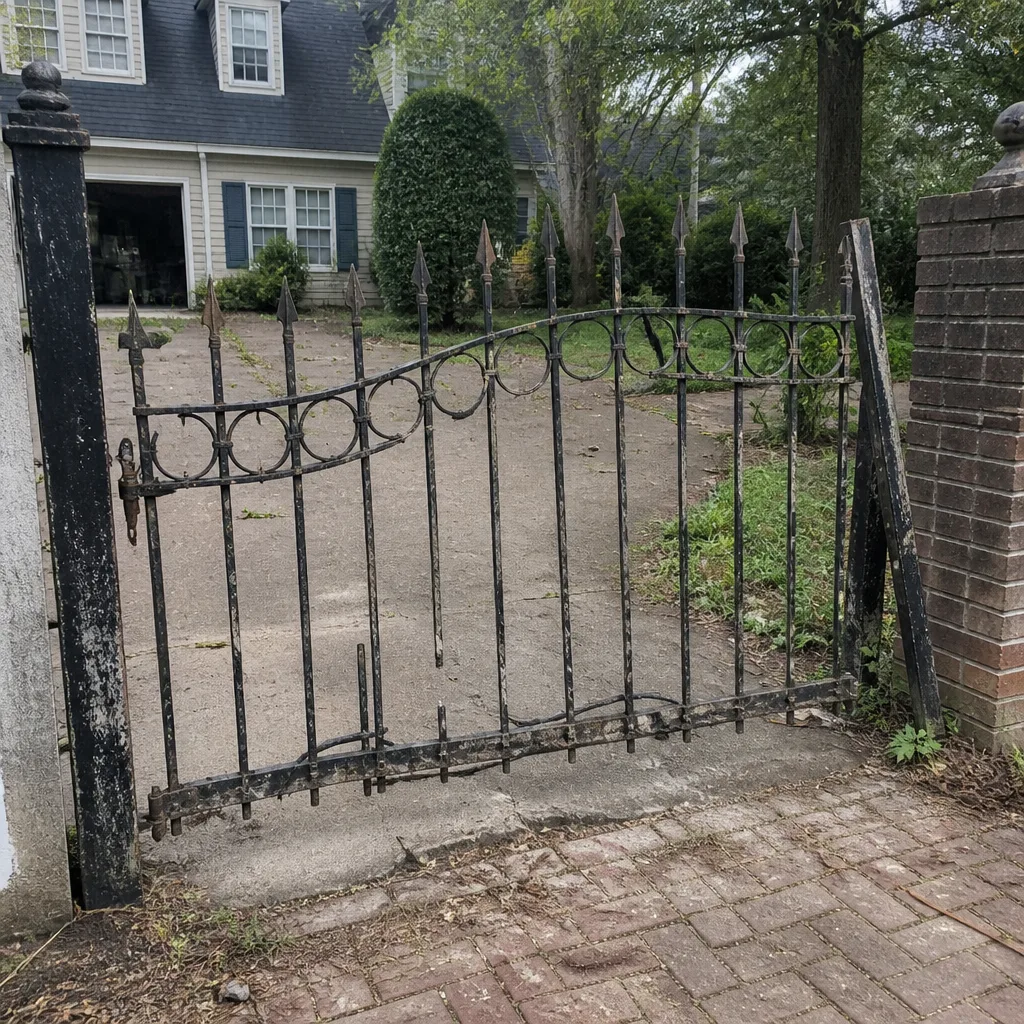 Before
 After
 Before
 After
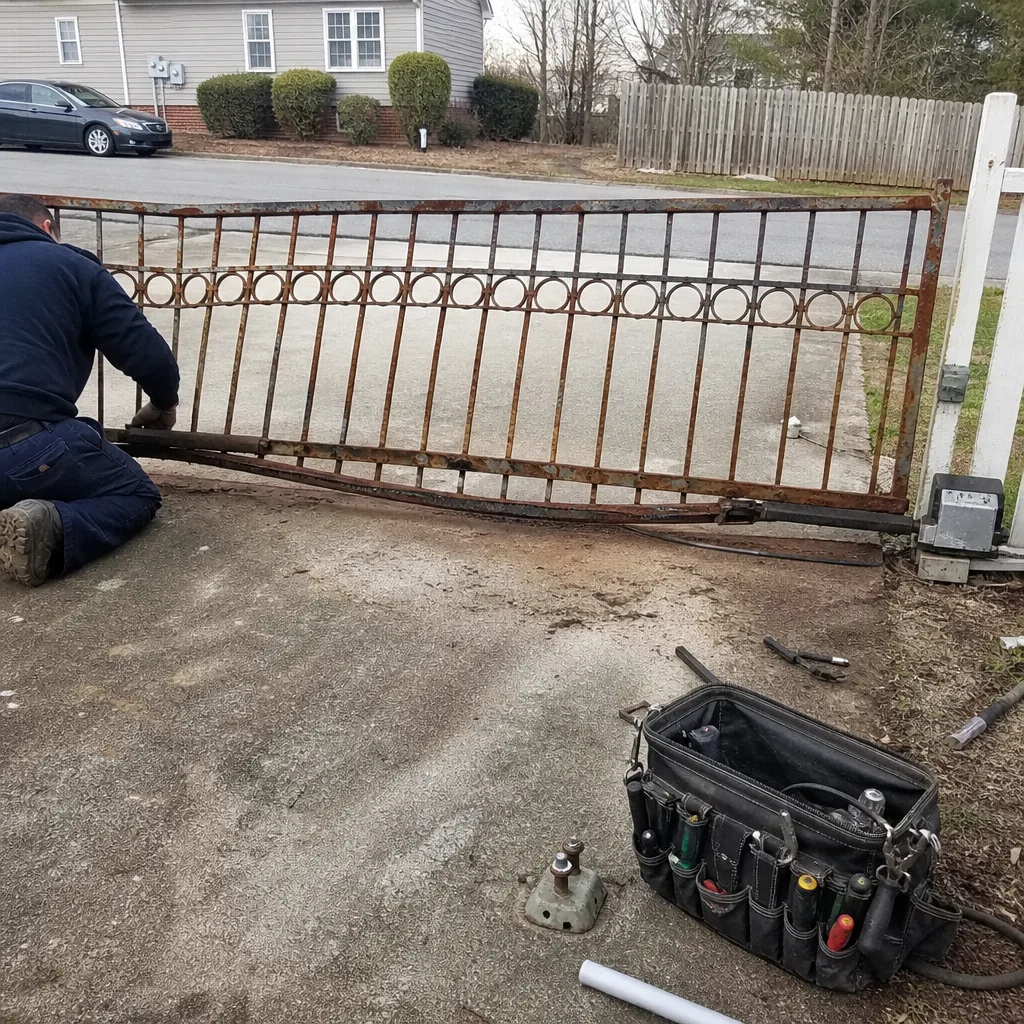 Before
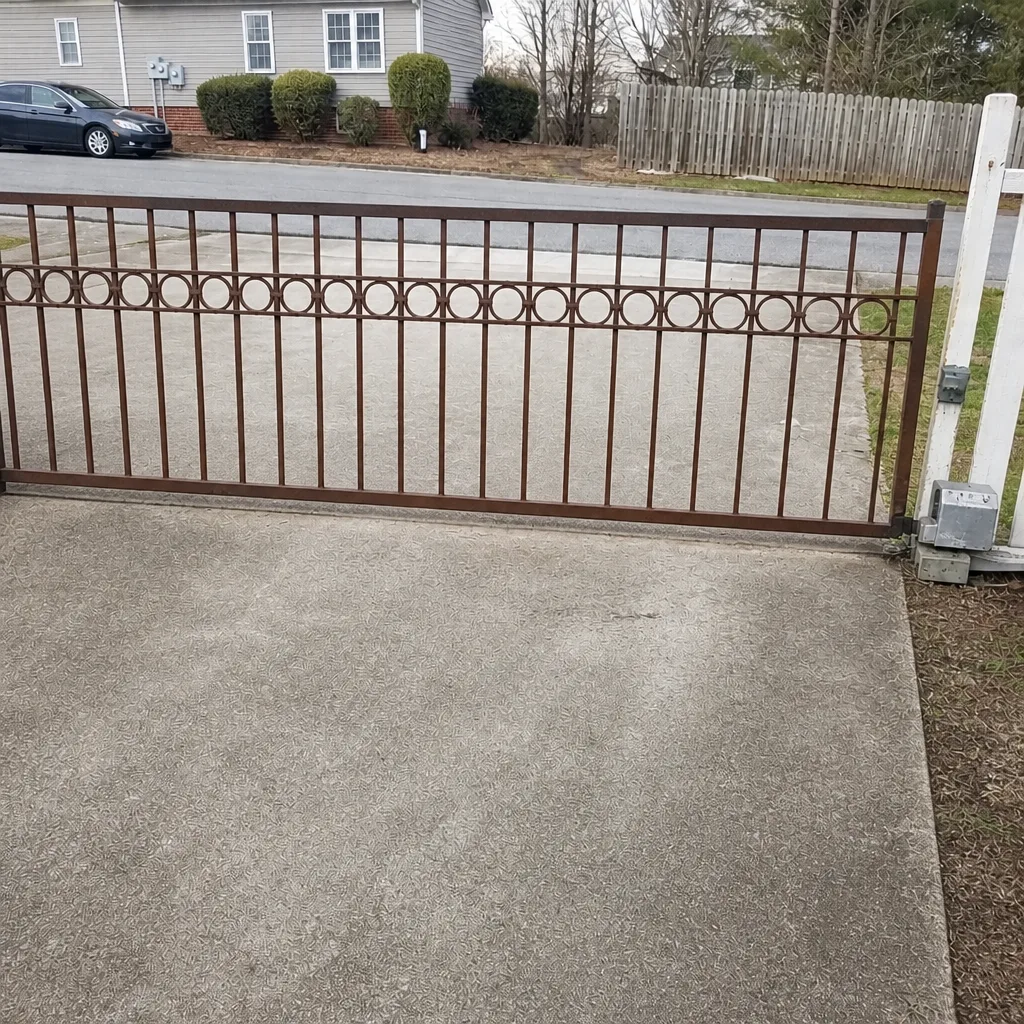 After
When to Call a Professional
Some tasks belong in your log, and some belong with a technician. Call for help if the operator smells hot, if you see hydraulic fluid under the unit, if the gate won’t reverse on obstruction, if the battery backup won’t hold a charge after a test, or if the gate won’t run at all after a storm. Electrical faults, control board issues, and loop detector problems also need a trained hand, because the wiring demands a proper diagnosis and the wrong guess makes the fault worse. If your gate is behaving erratically and you’re not sure why, Hampton homeowners can call us for a look. Gate Repair Hampton offers free estimates in Hampton – call (855) 686-7069. We answer 24/7.
Frequently Asked Questions
Twice a year is the minimum, with an extra full inspection after any named storm. The spring service should cover lubrication, battery testing, and pre-hurricane prep. The late-season service should cover moisture checks, hardware tightening, and drainage. In between, monthly visual checks during storm season keep small problems from growing into repairs.
Testing the battery backup. Power outages during storm season are common in Hampton, and a backup that won’t hold a charge leaves the gate stuck exactly when you need it. Test quarterly and before every named storm. If you can only do one thing, do this one. Call (855) 686-7069 for help testing yours.
Yes. The wrong grease on a rack-and-pinion drive turns into a grinding paste of grit and metal that wears the teeth down faster than a dry rack would. Use the light product your manual specifies, apply it thinly, and clean the part before you apply. If you’re unsure what your gate needs, we can take a look and get you on the right product.
Start with the symptoms. Slow operation, new noises, or a gate that won’t reverse on obstruction usually point to a maintenance issue before a full failure. If the friction comes from a binding hinge, a dry roller, or a dirty track, a service call fixes it. If the motor smells hot, leaks oil, or won’t run on battery, you’re looking at a repair. Call (855) 686-7069 and describe what you’re seeing. Estimates are free.
The tasks are similar but the stakes are higher. A commercial or HOA gate runs far more cycles than a residential unit, so the inspection cadence should be tighter, and the log matters more because it documents due diligence. Property managers who keep a dated log can show what was done and when, which is exactly what an insurer or an attorney asks for. We handle residential and light commercial systems.
Only the specific claim, but the specific claim is often the expensive one. An operator that fails from a worn pinion drive that was never lubricated to spec can be denied. A safety sensor that was disabled and caused a failure can be denied. Do the lubrication, keep the travel path clear, and test the safety systems, and you keep the warranty intact. Call (855) 686-7069 for a check on yours.
The Bottom Line
A gate maintenance schedule in Hampton should follow the local weather, not a generic reminder on a calendar. Prep in spring, stress-watch in summer, inspect after every storm, and tighten up before winter. Get the lubrication specs right by component, test the battery backup by function rather than by date, and keep a log that records symptoms and timing, not just dates. Those habits extend the operator’s life, keep the safety systems working, and preserve the warranty. When something does go wrong, our technicians have up to 9 years of experience diagnosing systems across nine automation brands, and one call covers repair, diagnosis, and installation.
Call (855) 686-7069 for a free estimate. We answer 24/7. Fast dispatch from 7am to 7pm, Sunday through Friday.
Written by the team at Gate Repair Hampton.