
Last updated November 16, 2026
 Wrought iron
 Wood & steel frame
 Farm & ranch
 Sliding driveway gates
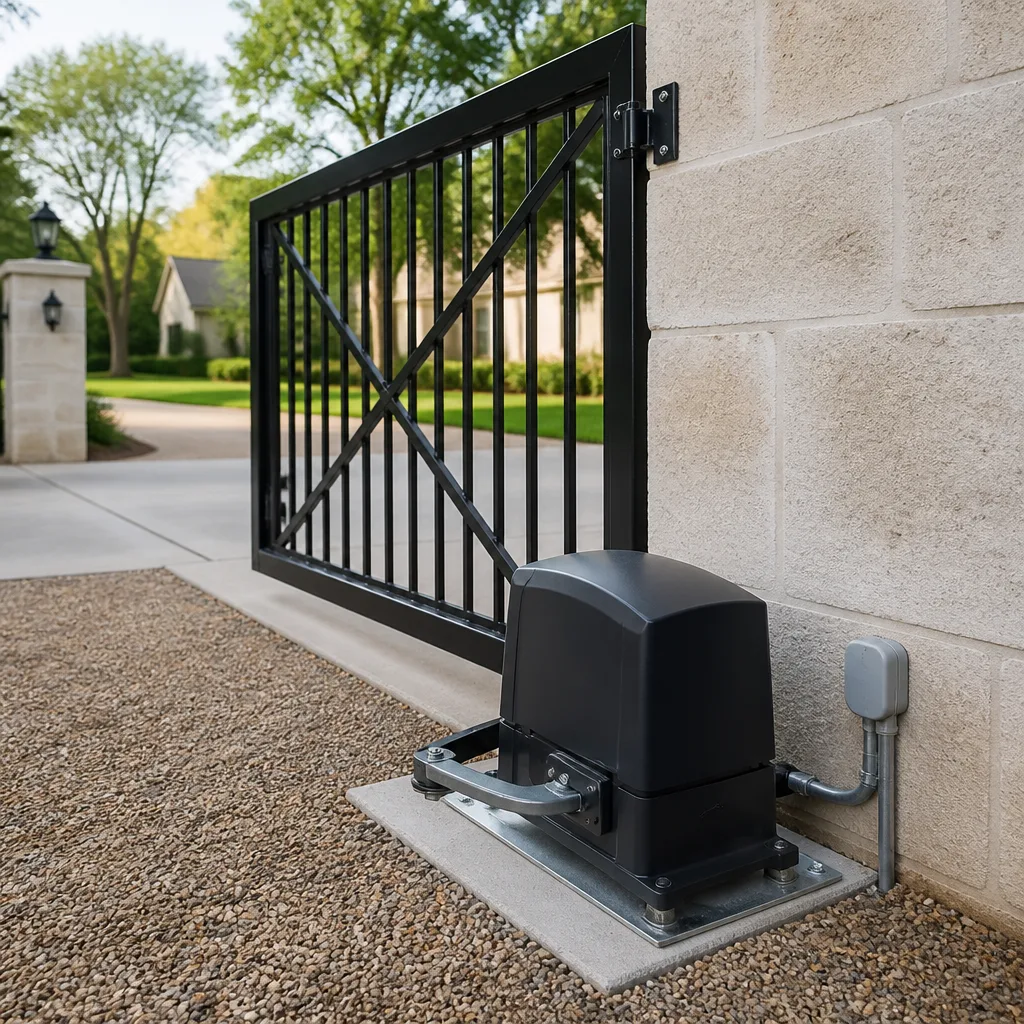 LiftMaster operators
Free on-site gate assessment - hinges, posts, and your LiftMaster or Nice gate operator checked before anything is quoted
The assessment is free and the quote is the invoice.
Get your free estimateGate Repair Troubleshooting in Hampton: Common Problems and How to Fix Them
A gate that reverses before it fully opens isn’t a motor problem. It’s almost always a misaligned safety sensor or a phantom obstruction in the photo-eye path, and replacing the motor won’t fix it. Misreading that symptom is how homeowners end up paying for an operator they never needed. The same confusion runs through most gate failures we diagnose in Hampton: the symptom points one direction, the actual fault sits in a different subsystem entirely. This guide teaches you to read your gate’s behavior the way a technician does, so you know what you’re dealing with before anyone shows up. You’ll learn the five root causes behind nearly every failure, how Hampton’s humidity accelerates specific components, what diagnostic codes really mean, and which fixes are safe to attempt yourself.
Quick Answer
Most gate failures in Hampton trace back to one of five root causes: a misaligned or dirty safety sensor, a failed limit switch, a worn hinge or roller, a control board fault, or a dying motor. Matching the exact symptom to the right subsystem is what saves money. A gate that reverses mid-travel usually has a sensor problem, not a motor problem. A gate that stops dead in one spot usually has a limit or control issue. Getting that first diagnosis right is the difference between a small adjustment and an unnecessary operator replacement.
Styles & brands we work with
- Wrought iron
- Wood & steel frame
- Farm & ranch
- Sliding driveway gates
- LiftMaster operators
Table of Contents
- Symptom-to-Cause Mapping: Read Your Gate’s Behavior
- How Hampton’s Humidity Accelerates Gate Failures
- What Your LED Diagnostic Codes Actually Mean
- Limit Switch vs. Motor: Two Symptoms That Look Identical
- Safety Sensors, Loop Detectors, and Photo-Eyes
- What’s DIY-Safe and What Should Stop You Cold
- Brand-Specific Behavior: Linear, Viking, Ghost Controls, DoorKing
- Seasonal Maintenance for Hampton Gate Systems
Symptom-to-Cause Mapping: Read Your Gate’s Behavior
The fastest way to understand a gate failure is to stop watching the gate and start watching how it fails. Different failure modes leave different signatures. A technician reads those signatures before touching a single bolt, and you can learn the same skill. Here’s the map we use when we arrive at a property in Hampton.
- Reverses before fully opening: safety sensor obstruction, misalignment, or a failing photo-eye. The operator is doing exactly what it’s designed to do, which is stop and reverse when it senses something in the path.
- Dead stop mid-travel: limit switch position error, a binding hinge, or a control board losing track of position memory. The motor is fine; the brain or the frame isn’t.
- Grinding or scraping: worn rollers, a dry or seized hinge, or a bent track on a slide gate. Mechanical wear, not electrical.
- Slow, labored operation: motor capacitor degrading, low voltage at the operator, or heavy mechanical drag from corrosion. On older systems in humid climates, it’s usually a combination.
- No response at all: power supply, control board fuse, or a failed receiver if the remote stopped working but the wall button still works.
Each signature points to a different subsystem, and each has a very different repair profile. A sensor realignment is a short diagnostic visit. A control board replacement is a parts order. A motor swap is a considered job. Confusing one for the other is the single most common reason people overpay for gate work in Hampton. When you understand which behavior you’re seeing, you know whether to expect a five-minute adjustment or a scheduled repair. That’s the whole point of troubleshooting before you call.
If your gate is doing something that doesn’t fit any of these five patterns, a technician can usually identify the fault within a short on-site diagnosis. We work on the full range of systems you’ll find across Hampton neighborhoods, and our gate repair service starts with reading the symptom, not guessing at it.
How Hampton’s Humidity Accelerates Gate Failures
Hampton’s summer humidity and afternoon thunderstorms create a failure profile that inland gate guides never mention. The air holds moisture through long stretches of the year, and that moisture finds every exposed joint, connector, and control enclosure on your gate. Where a gate in a dry climate might go a decade without hinge trouble, a gate here shows corrosion at the hinge pins and pivot points years sooner. That’s not a quality problem with your gate. It’s the local environment working on it.
Three failure points take the brunt of it in Hampton:
- Hinge pins and rollers: moisture settles into the pivot points, and grease breaks down faster. Once a hinge seizes, the operator has to push through the drag, which wears the motor and stresses the frame.
- Control board oxidation: the low-voltage terminals on the control board oxidize, and connections that were tight start to carry resistance. This shows up as intermittent behavior, especially after a humid stretch or a storm.
- Photo-eye and sensor lenses: condensation and dirt film on the lenses cause phantom obstructions that trigger false reverses.
The fix isn’t constant maintenance. It’s knowing which components need a look after a wet stretch and which ones you can leave alone. A seized hinge caught early is a lubrication and adjustment visit. Caught late, it’s a worn operator. In a place with Hampton’s rain patterns, catching things early is most of the battle. We diagnose the system, not just the symptom, which matters more here than in a drier market.
What Your LED Diagnostic Codes Actually Mean
Most modern operators flash a diagnostic code on the control board when they fault. The manual gives you a table, and that table is a starting point, not the answer. In practice, a single code can mean several things depending on the brand and the state of the system. Reading the code is step one; reading the gate is step two. The brand on your operator changes both.
Here’s how the codes behave on the systems we work on most:
- Linear: codes usually track obstruction or limit faults, but a limit error on a Linear operator often traces back to a swollen gate frame or a dragging hinge, not the limit switch itself.
- Viking: fault flashes frequently tie to safety-reverse conditions. A clean photo-eye and a clear path don’t guarantee the code is wrong; the sensor alignment may simply be off by a fraction.
- Ghost Controls: residential DIY-friendly operators that flash codes for battery and solar power conditions more than people expect. A code that looks like a motor fault can be a low-voltage supply issue.
- DoorKing: commercial and multi-unit systems log codes for loop detector and access control events that the manual describes in abstract terms. In practice, a loop fault usually means the detector sees a phantom vehicle, not that the loop is broken.
The lesson across all four brands is the same: the code tells you which subsystem reported a fault, not which part failed. A technician with brand experience reads the code, then tests the subsystem. That’s what we mean by diagnosing the system rather than the symptom. Our technicians have up to 9 years of experience with these platforms, and our electric gate repair work begins with a code read and a physical test, not a parts order.
Limit Switch vs. Motor: Two Symptoms That Look Identical
A gate that stops short and won’t complete its travel can have a failed limit switch or a failing motor, and the two look almost the same from the driveway. The repair costs are not the same. A limit switch is a small component. A motor is a major one. Knowing the difference before anyone quotes you the job is worth understanding, because the wrong call on this one is expensive.
- Listen to the motor when it stops. A limit fault usually cuts the motor cleanly, mid-hum or silent, at the same spot every cycle. A failing motor strains, hums, or clicks before it gives up, often worse under load or on a slope.
- Try to move the gate by hand (power off). If the gate moves freely but the operator won’t drive it past a point, the mechanical side is fine and the fault is in the limit or control logic. If the gate itself is stiff, the motor may be fighting drag.
- Check whether the stop point is consistent. A limit switch fails at the same position every time. A motor that’s losing power fails where the load is heaviest, which may be different spots depending on temperature and drag.
- Look at the control board fault. If the board logs a limit or position error, the odds shift toward the limit switch. If it logs an overload or current fault, the motor or the drag is suspect.
This is where brand knowledge earns its keep. On a Linear or a Viking operator, the limit cam and the current draw are separate, testable systems. On a commercial DoorKing system, the position logic works differently again. We work on your brand, which means the diagnosis follows the actual platform rather than a general guess. Getting this one right is the difference between a small fix and a motor replacement you didn’t need.
Safety Sensors, Loop Detectors, and Photo-Eyes
Safety and detection systems are the most common source of false faults on automatic gates, and they’re also the components most people tinker with when they shouldn’t. The photo-eye pair on a swing or slide gate is a beam that must stay aligned across the gate opening. A knock to the housing, a settled post, or a fogged lens breaks that beam and the operator reverses. That’s the gate protecting what’s in its path, not malfunctioning.
On commercial or multi-tenant gate systems, the loop detector adds another layer. An induction loop buried in the pavement tells the operator a vehicle is present. When the loop wire develops a break, or the detector’s sensitivity drifts, the gate will hold open, refuse to close, or cycle erratically. A driver who pulls too far forward, or a vehicle parked on the loop, produces the same behavior as a real fault. In Hampton properties that share a driveway or an HOA entrance, this is a frequent false alarm.
- Clean the sensor lenses before assuming a failure. Condensation and pollen film cause phantom triggers.
- Check that the photo-eye housings are square and aimed at each other. A settled post throws off alignment.
- Never straddle a loop detector when parking. The gate will hold open as designed.
- If the loop itself is suspect, testing the detector is a job for someone trained to work around the wiring and the pavement.
Everything that touches a loop detector, a low-voltage photo-eye circuit, or the control board terminals is electrical work. Leave it to a technician. Camera and intercom systems tie into the same access chain, and a small wiring error there can take a whole system down. If your gate has an intercom or access-control panel, an on-site diagnosis is the right first step.
What’s DIY-Safe and What Should Stop You Cold
Some gate fixes are genuinely within reach of a careful homeowner. Others can hurt you or void a warranty, and the line between them is clear. Know where it is before you pick up a tool. As a rule, anything mechanical and low-risk is fair game for a look. Anything involving electricity, stored force, or heavy moving mass belongs to a professional.
Safe to check or handle yourself:
- Clearing debris, branches, and leaves from the gate path and track.
- Cleaning sensor lenses with a soft cloth.
- Confirming the remote batteries are good and testing the wall control.
- Visual inspection for bent hinges, loose bolts, or a misaligned track.
- Checking that the gate swings freely by hand with the power off.
Stop and call a technician for:
- Any work inside the operator housing or on the control board, including terminal checks.
- Loop detector testing, wiring, and pavement work.
- Adjusting or replacing limit cams on a live system.
- Anything involving the power supply run, safety edges, and photo-eye wiring.
- Heavy panels, slide gates that have jumped the track, or any gate that could fall or crush.
The reason this line matters is simple. Automatic gates combine electricity, machinery, and a lot of stored kinetic energy. A gate that moves is a gate that can injure. Electric work and anything that could free-fall or crush should stop you cold. If you’re not certain which side of the line you’re on, that’s your answer. Call (855) 686-7069. We answer 24/7, and we can tell you what the job likely involves before anyone comes out.
Brand-Specific Behavior: Linear, Viking, Ghost Controls, DoorKing
Gate operators aren’t interchangeable, and the same complaint on two brands can have two different causes. A general handyman works on the symptom. A specialist works on the platform. Here’s the practical difference on four systems we handle routinely.
Linear operators are common on residential swing and slide gates and are known for limit and position faults. When a Linear system reports a travel fault, the operator is often fine and the gate frame is dragging. Checking the swing and the hinges first saves a parts order.
Viking systems run on residential and light commercial properties and lean heavily on their safety-reverse logic. False reverses on a Viking usually trace to sensor alignment or a marginal photo-eye, not a control failure. The fix is often a small adjustment rather than a replacement.
Ghost Controls sits on the DIY-friendly end of residential automation and frequently runs on battery or solar supply. Voltage issues there produce symptoms that masquerade as motor faults. Confirming supply voltage is step one on a Ghost Controls diagnosis.
DoorKing handles commercial and multi-unit access, where loop detectors, intercoms, and access panels are part of the system. Diagnosing a DoorKing means tracing the whole access chain, because a fault in the intercom or a loop can present as a gate failure. This is where property managers want one source for the whole system rather than a series of vendors.
These four brands (plus the rest of the major platforms we cover) behave differently because they’re built for different jobs. Brand-specific knowledge means accurate parts sourcing and faster resolution than a generic repair attempt. If you’re managing a property in Hampton and want one reliable point of contact for Linear, Viking, Ghost Controls, and DoorKing systems side by side, that’s exactly the gap we fill.
Seasonal Maintenance for Hampton Gate Systems
The most useful troubleshooting you can do happens before the gate fails. In Hampton, the seasons do specific things to a gate system, and a short walk-around at the right time of year prevents most of the failures in this guide. None of this requires tools or wiring knowledge. It’s inspection, not repair.
- After a wet stretch: open and close the gate by hand with power off and listen for grinding. Lubricate hinge pins as the manufacturer specifies. Feel for binding at the pivot.
- Before storm season: clear the gate path of limbs and debris, confirm the photo-eyes aren’t obstructed, and make sure water drains away from the operator housing and control box.
- Monthly: clean the sensor lenses, test the safety reverse by holding a hand in the beam, and check the remote batteries.
- Seasonally: inspect the track on a slide gate for debris and wear, and check that the gate wheels and rollers sit properly.
- Annually: have a technician inspect the operator, control board, and safety chain. Corrosion on a control board caught early is a cleaned terminal; caught late, it’s a replaced board.
Hampton’s rain and humidity make the wet-stretch check the most valuable one on the list. Two minutes with a lubricant after a wet week keeps a hinge from seizing and the operator from carrying the strain. Our technicians have up to 9 years of experience spotting these patterns, and a single maintenance visit priced per job after we look at the gate can head off a motor replacement later. For a free estimate on a full diagnostic, call us.
Common Mistakes to Avoid
- Replacing the motor when the real fault is a sensor. A gate that reverses on open is protecting itself from a perceived obstruction. The motor is doing its job. Check the photo-eyes and the path first, and you’ll avoid a parts bill you didn’t need.
- Ignoring a dragging hinge. In a climate with Hampton’s rain patterns, a seizing hinge is a common starting point for motor wear. Lubricate the pivot points and keep the frame moving freely. A stiff gate is a motor working overtime.
- Straddling the loop detector. If you park a vehicle directly over a buried loop at an HOA or commercial entrance in Hampton, the gate holds open as designed. That’s not a fault; move the vehicle and confirm.
- Chasing the LED code instead of the system. A fault flash tells you which subsystem reported a problem, not which part failed. On a Linear or Viking system, the code often leads to the frame or the sensor, not the component the code names.
- Opening the operator housing to save a phone call. Anything inside the control box, on the terminal strip, or near the loop wiring is electrical. A small mistake there can take down the whole system and is a real shock risk.
- Skipping the wet-stretch check. Most of the corrosion-driven failures on Hampton gates start after a rain stretch. A quick hand-test and a lubricant pass after wet weather prevents the majority of them.
- Assuming all brands behave the same. A Ghost Controls battery fault and a DoorKing loop fault are both electrical, but diagnosing them the same way wastes time. Know the platform before you test it.
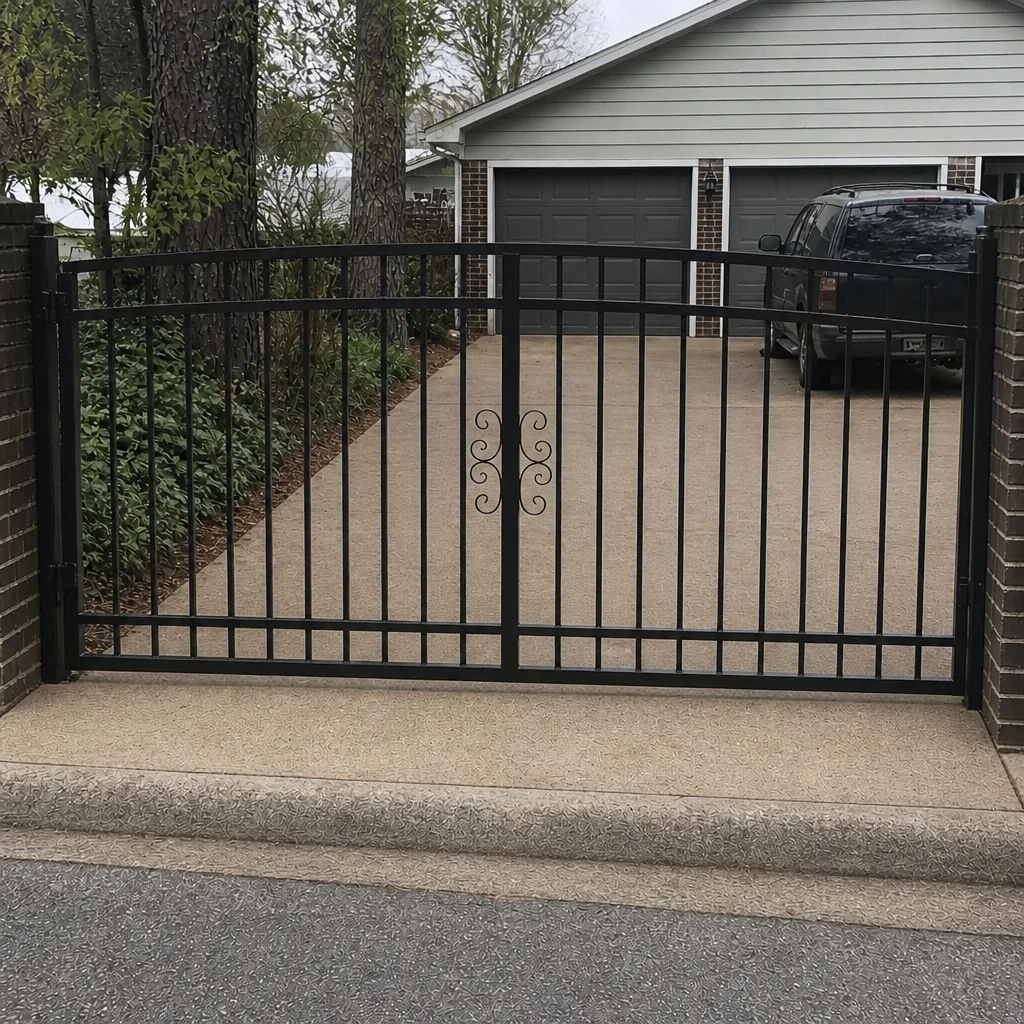
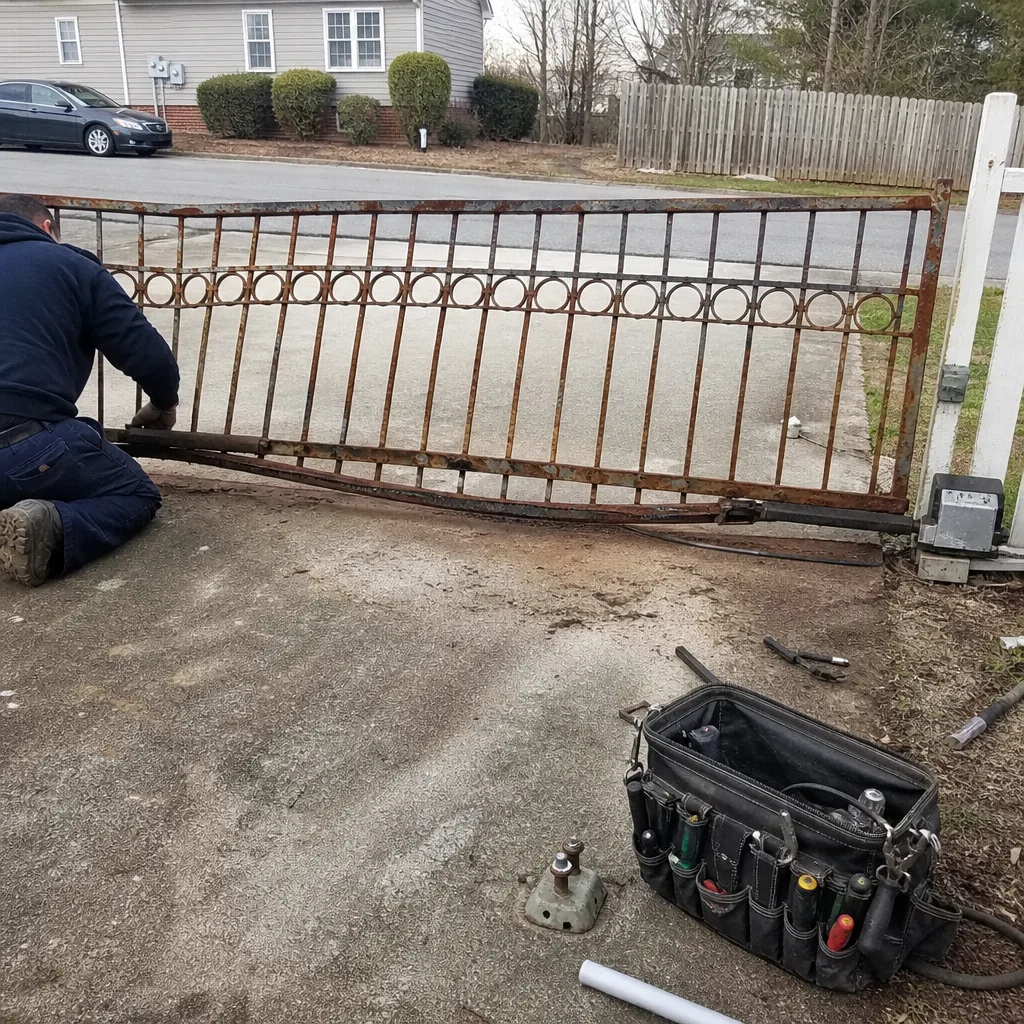
See the difference
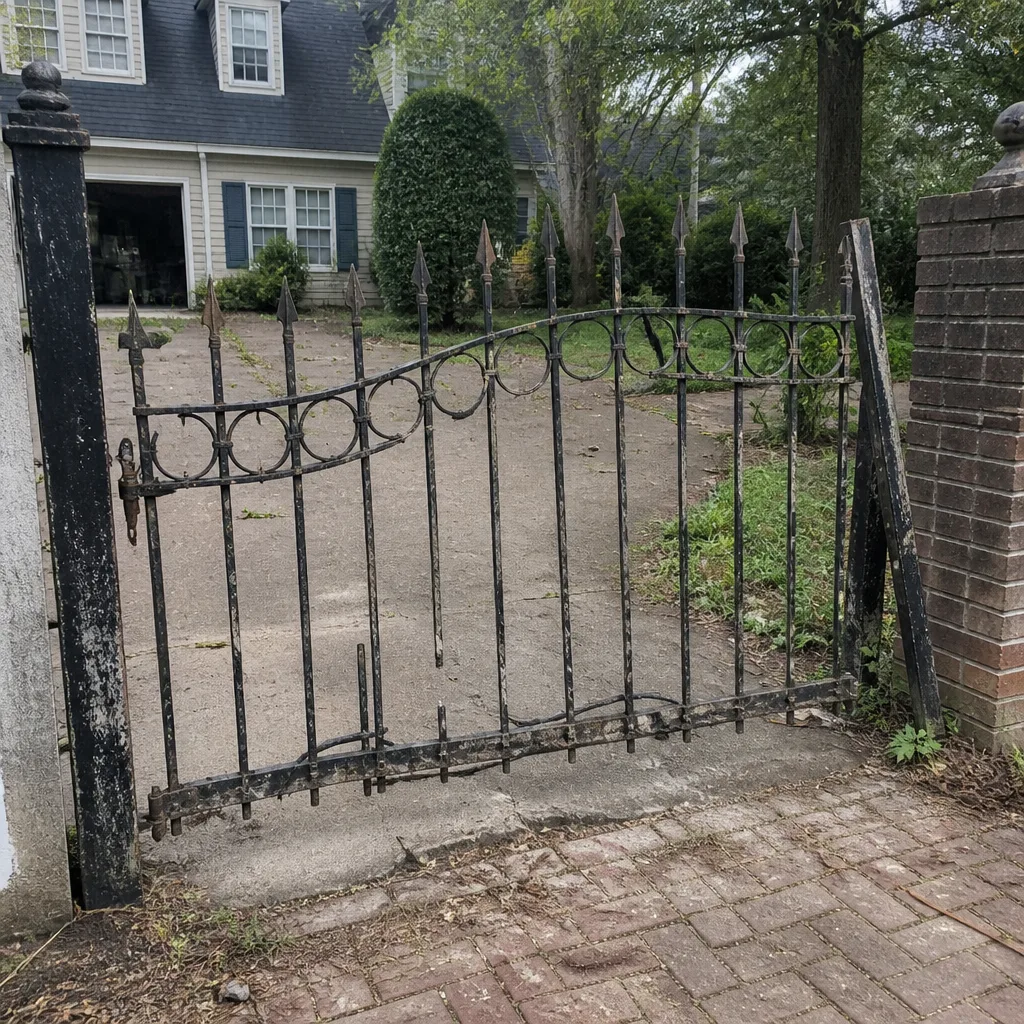 Before
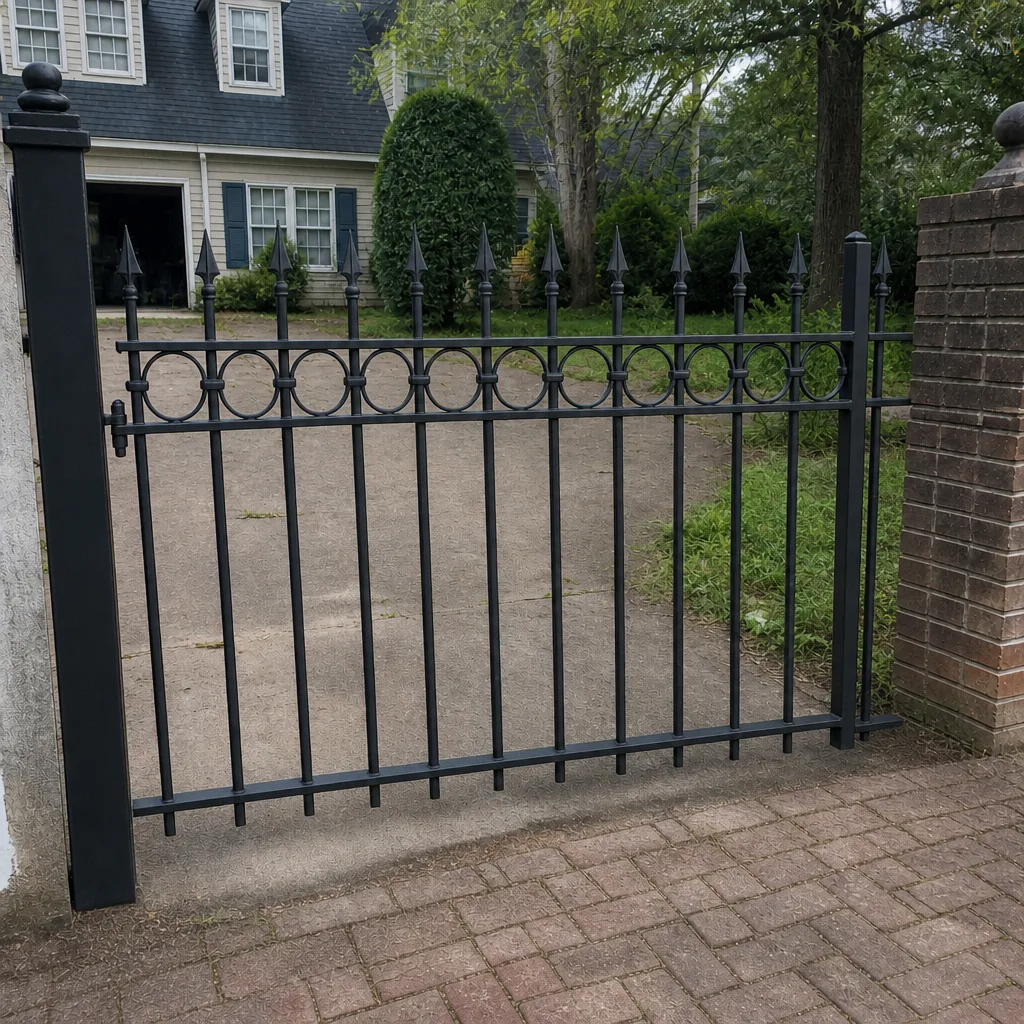 After
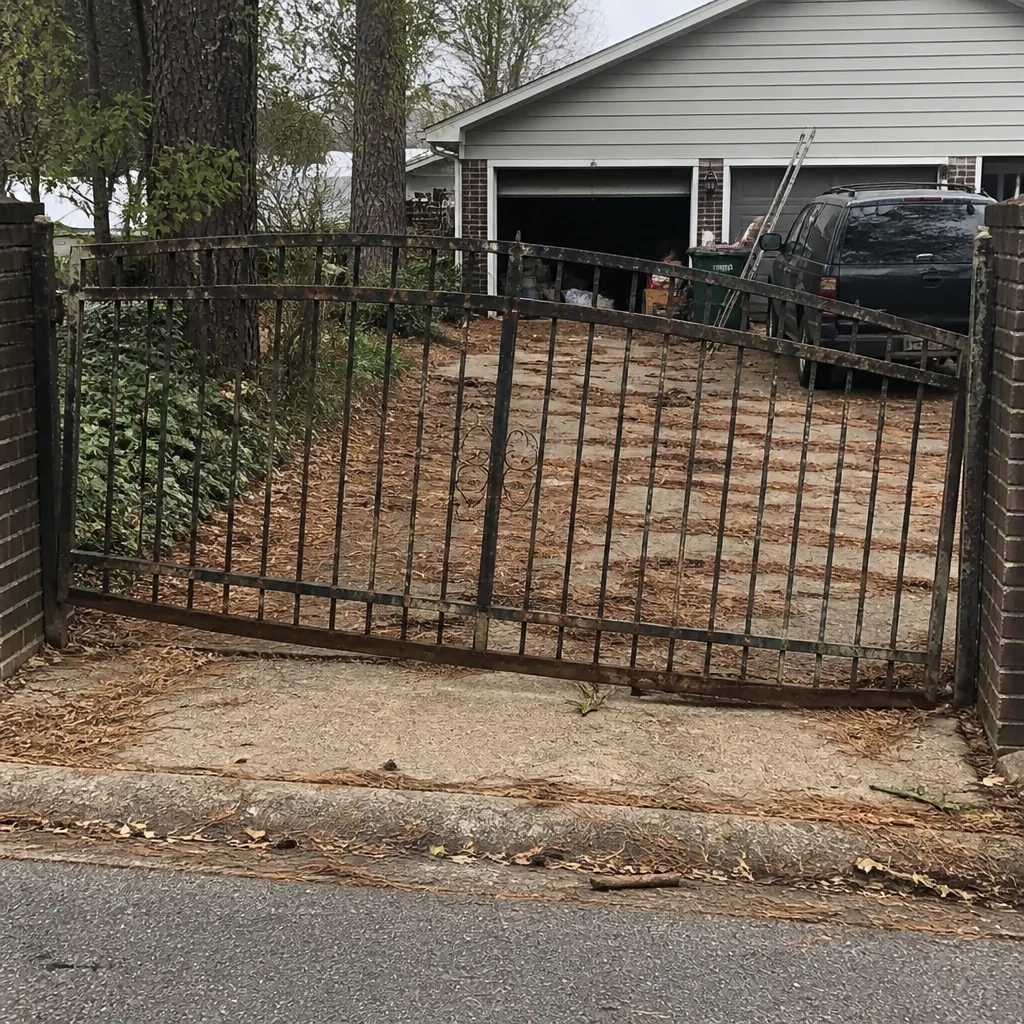 Before
 After
 Before
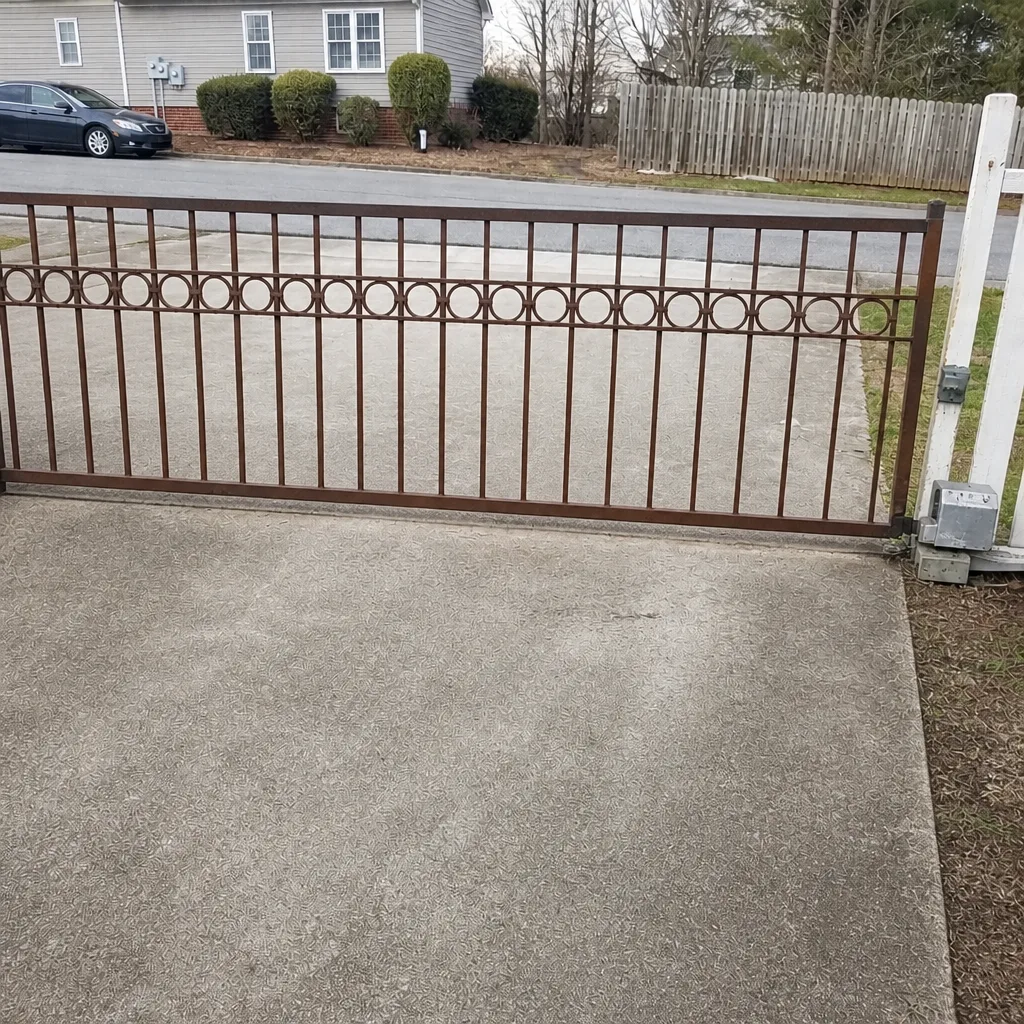 After
When to Call a Professional
Call a professional when the symptom involves electricity, a heavy moving panel, or a fault you can’t pin to a single subsystem from the driveway. That covers anything inside the operator housing, all loop detector and photo-eye wiring, a gate that has jumped its track, a motor that strains under load, and any repeated fault the manual’s table doesn’t explain. Also call if the gate is an automated commercial system at a multi-tenant property in Hampton, because tracing a DoorKing access chain is a job for someone who works on it regularly. If you’ve already checked the path, cleaned the sensors, and the gate still behaves erratically, that’s your signal. Gate Repair Hampton offers free estimates in Hampton. Call (855) 686-7069. We answer 24/7 with fast dispatch from 7am to 7pm, Sunday through Friday.
Frequently Asked Questions
A gate that reverses before fully opening almost always has a safety sensor issue: a misaligned photo-eye, a dirty or fogged lens, or an obstruction in the beam path. The operator is doing exactly what it’s designed to do and stopping for a perceived hazard. Clean and realign the sensor pair before suspecting the motor. If it still reverses, call (855) 686-7069 for a free estimate.
Repair is usually the right call when the fault is in a single subsystem like a limit switch, a sensor, or a hinge, because those are small components that don’t affect the rest of the system. Replacement makes more sense when the operator itself has failed and the gate is at the end of its service life. A technician can tell you which situation you’re in during a diagnostic visit. Call (855) 686-7069 for a free estimate.
The LED flashes tell you which subsystem reported a fault, not which part failed. On a Linear or Viking system, a limit code often traces to a dragging frame or a sensor rather than the switch itself. Use the code as a starting point and test the subsystem. Call (855) 686-7069 and we can talk through the code before anyone comes out.
We work on your brand across the major platforms, including LiftMaster, FAAC, BFT, Linear, Viking, Ghost Controls, DoorKing, Elite, and Mighty Mule. Brand-specific knowledge means accurate parts sourcing and a faster resolution than a general repair attempt. If you’re not sure which platform you have, call (855) 686-7069 and we’ll help identify it.
A gate that holds open is usually reacting to a loop detector that senses a vehicle, or a detector whose sensitivity has drifted or whose wire has a fault. In humid conditions, the low-voltage connections are also a common culprit. This is electrical work, so it’s a job for a technician. Call (855) 686-7069 for a free estimate.
Clearing the path, cleaning sensor lenses, and checking remotes are safe to handle yourself. Anything involving the operator housing, control board, loop detector, photo-eye wiring, or a heavy panel should stop you cold, because it combines electricity with stored mechanical force. If you’re unsure which side of that line you’re on, call (855) 686-7069.
The Bottom Line
Gate troubleshooting comes down to reading the symptom accurately before you spend money on the wrong part. A gate that reverses has a sensor problem, a gate that stops dead has a limit or control problem, and a gate that grinds has a mechanical one. In Hampton, humidity speeds up corrosion at the hinges and the control board, so the wet-stretch check after rain prevents more failures than any other habit. Keep your own inspection to the safe, mechanical basics, and leave the electrical work and heavy panels to a professional. When you know what you’re looking at, you ask better questions, and you avoid paying for an operator you never needed.
Gate Repair Hampton handles gate repair, electric gate repair, and gate installation for residential and light commercial systems across Hampton, and we diagnose the system, not just the symptom. From broken hinges to failed motors and everything in between, one call covers repair, diagnosis, and installation. If you’re in our service area, you can learn more about Hampton, and if you’d like a broader look at our services, visit Gate Repair Hampton.
Ready to get your gate working properly? Call (855) 686-7069 for a free estimate. We answer 24/7 with fast dispatch from 7am to 7pm, Sunday through Friday. The price is quoted and agreed before any work starts, and the written estimate sets the final price. Whether it’s a sensor realignment or a full operator replacement, we’ll tell you what your system actually needs.
Written by the team at Gate Repair Hampton.