
Last updated November 16, 2026
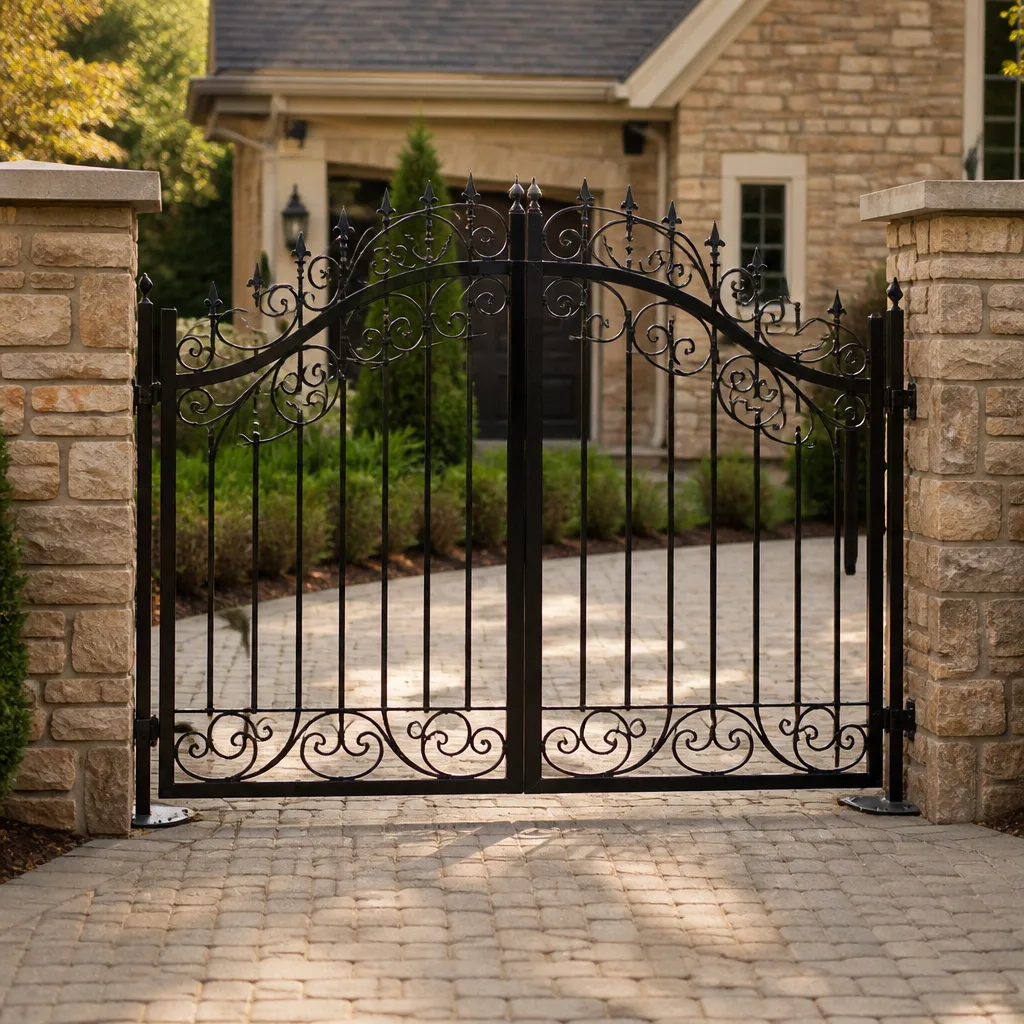 Wrought iron
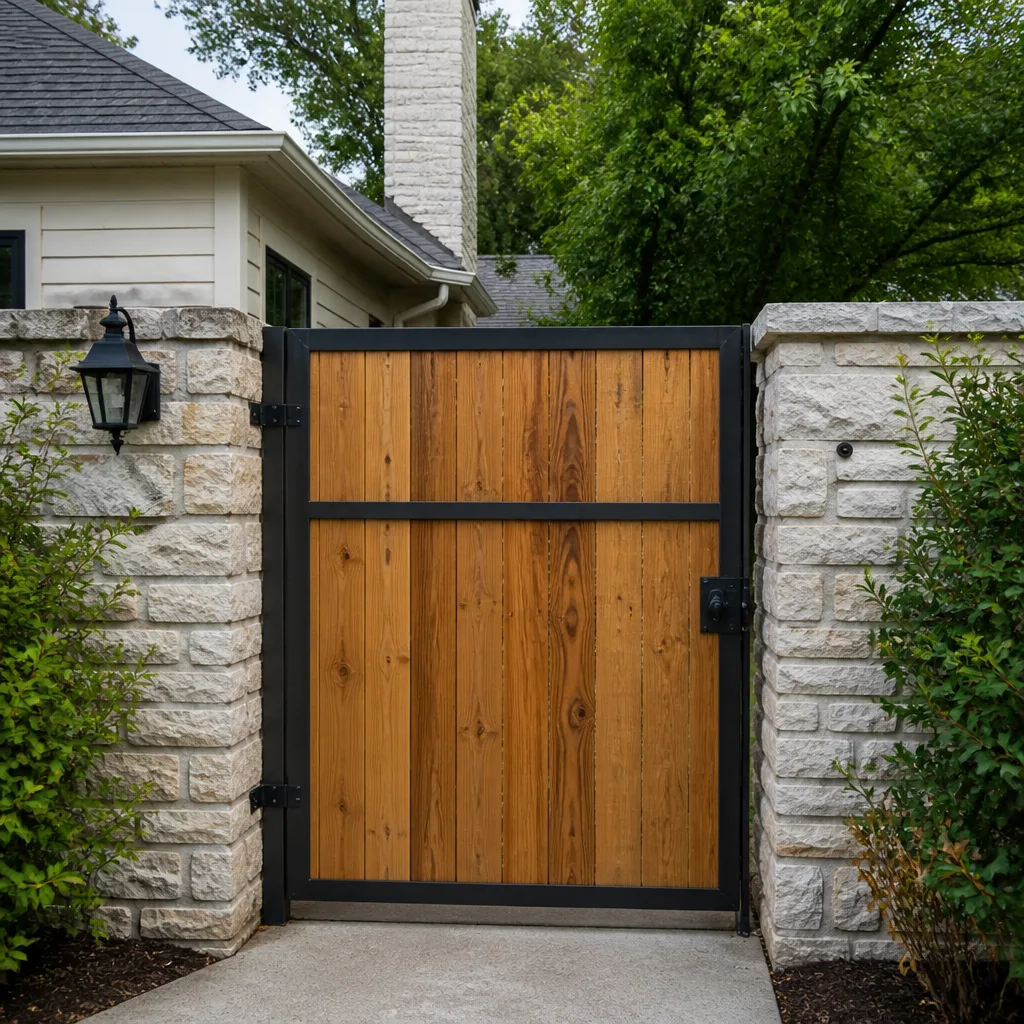 Wood & steel frame
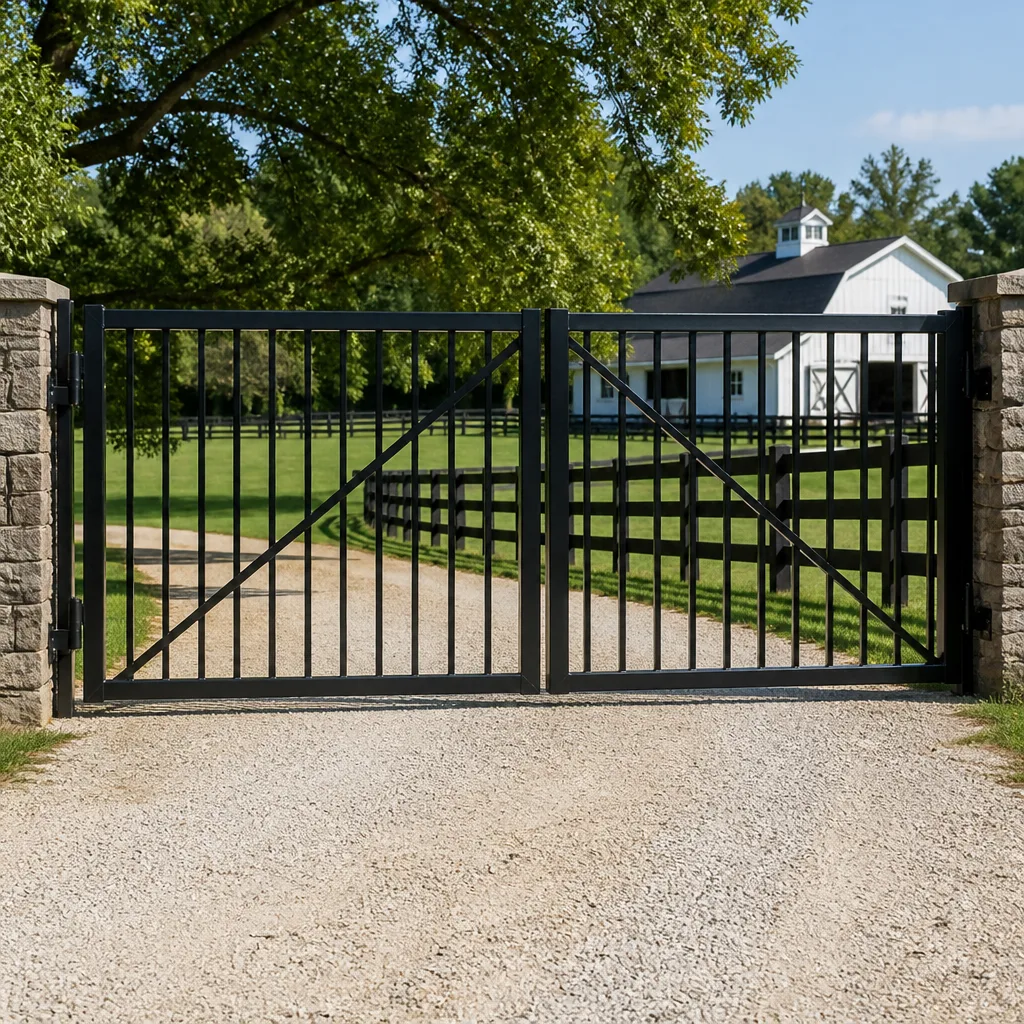 Farm & ranch
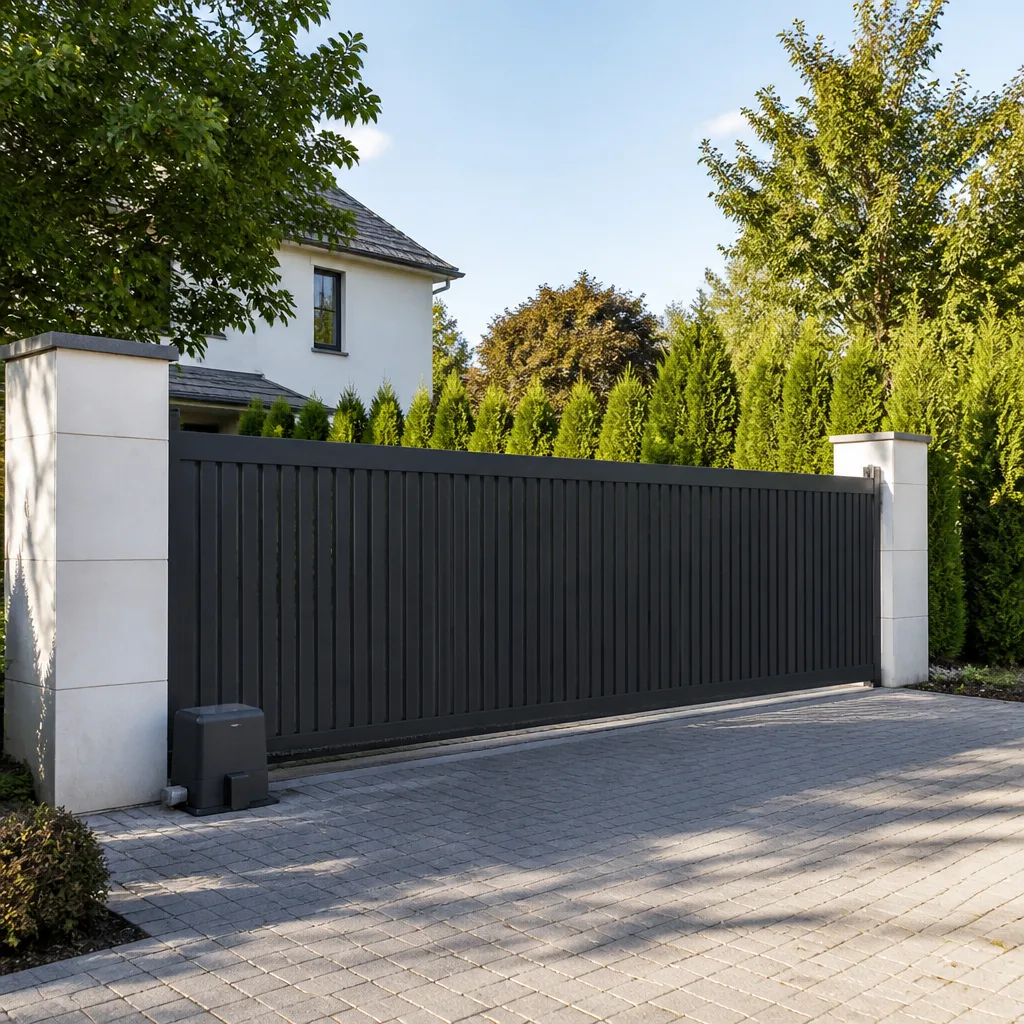 Sliding driveway gates
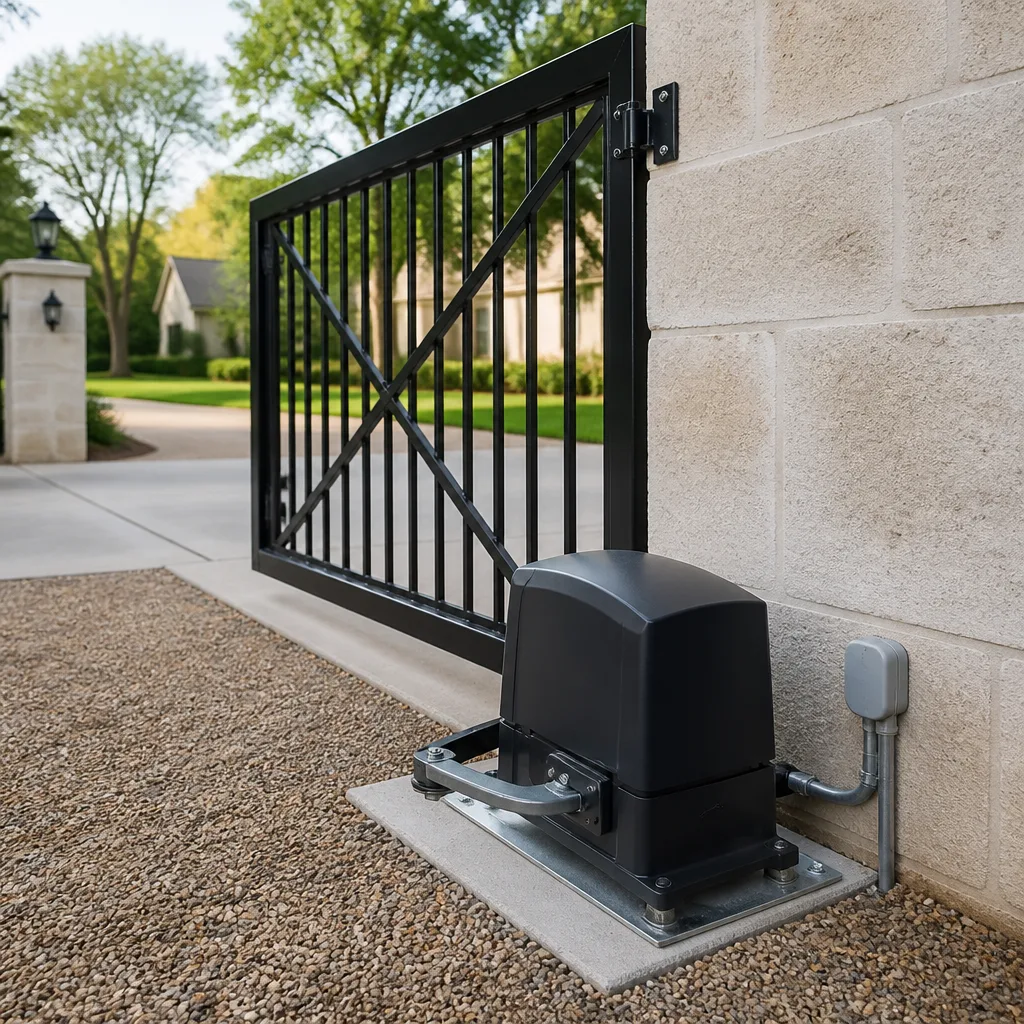 LiftMaster operators
Free on-site gate assessment - hinges, posts, and your LiftMaster or Nice gate operator checked before anything is quoted
The assessment is free and the quote is the invoice.
Get your free estimateHow to Hire a Gate Repair Contractor in Hampton: A Step-by-Step Guide
The most expensive gate repair mistake in Hampton isn’t skipping maintenance. It’s paying a general handyman to open a brand-specific control board he’s never seen, then paying a real specialist to fix what he broke. Gate operators from Linear, Viking, Ghost Controls and DoorKing each fail differently, and each needs a different diagnostic path. A contractor who works on “gates” isn’t the same as one who works on yours. This guide gives you the exact questions, verification steps and contract language to sort the specialists from the guessers, so the first visit is the only one you pay for.
Quick Answer
To hire a gate repair contractor in Hampton, verify three things before anyone touches your system: current Virginia contractor licensing and general liability insurance, documented brand-specific experience with your actual operator make and model, and a written scope that names the parts being replaced and the price agreed before work starts. Skip any one of those, and you’re gambling on a second visit. The right contractor diagnoses the system, not just the symptom.
Styles & brands we work with
- Wrought iron
- Wood & steel frame
- Farm & ranch
- Sliding driveway gates
- LiftMaster operators
Table of Contents
- Step 1: Start With Licensing and Insurance in Virginia
- Step 2: Verify Brand-Specific Experience Before Work Starts
- Step 3: Read the Quote for Red Flags
- Step 4: Structure the Job Scope in Writing
- Why Property Managers Need a Stricter Standard
- What Electric Gate Diagnostics Should Actually Cover
- The Questions to Ask on the Phone
Step 1: Start With Licensing and Insurance in Virginia
In Virginia, any contractor performing work above a modest threshold must hold a valid contractor license from the Department of Professional and Occupational Regulation, and gate work on automated systems almost always crosses it. Ask for the license class and verify it yourself through the state’s public license lookup. A contractor who hesitates here is telling you something useful.
License is only half of it. Ask for a certificate of general liability insurance, and ask that the certificate name you or your property as certificate holder. A one-page COI is normal, and a legitimate contractor produces it without friction. If the response is “we’ve never had a claim,” that’s not proof of coverage.
Then ask about workers’ compensation. This matters more than most homeowners realize. If an uninsured helper is injured on your property, the liability question gets pointed at you. For a property manager or HOA, that same question can land on the association.
- Contractor license: ask for the class number, verify it through the state lookup, and note the expiration date.
- General liability: request a certificate, confirm limits, and confirm the policy is current.
- Workers’ comp: ask whether the people who show up are covered or are subcontractors, and get it in writing.
- Business identity: the name on the license should match the name on the quote and the invoice.
None of this is unusual paperwork. It’s the baseline that separates a business from a guy with a truck. Our technicians are experienced professionals, and confirming the credentials of anyone who works on your gate in Hampton is a five-minute exercise worth doing every time.
Step 2: Verify Brand-Specific Experience Before Work Starts
“Do you work on gates?” is the wrong question. Every handyman says yes. The right question is: “Do you work on my brand, and can you show me?” Gate operators are not interchangeable. A Linear control board, a Viking operator and a Ghost Controls residential swing arm share almost no diagnostic logic, and a technician who learned on one will guess at the others.
Ask specifically about your make: Linear, Viking, Ghost Controls, DoorKing, or whatever is on your post. Then ask the follow-up that separates the real thing from the bluff: “What does a typical failure look like on that model, and what parts do you source?” A specialist will answer in specifics – control board revisions, limit switch behavior, loop detector wiring, operator motor brushes. A generalist goes quiet.
- Ask the brand question directly. “Which gate automation brands do you work on regularly?” Naming one or two with confidence is better than naming all of them vaguely.
- Ask for documentation. Training records, manufacturer certifications, or work history on your specific operator family. A specialist can show you something.
- Ask about parts sourcing. “Where does the replacement board come from, and how long does it take?” Fast, brand-accurate sourcing means fewer return trips.
- Ask about diagnostics versus replacement. A brand-agnostic diagnostic approach identifies what the system actually needs, regardless of make or model, rather than pushing a new operator because the old one is unfamiliar.
This is the difference between electric gate repair and a costly experiment. If your Hampton gate is acting up – opening halfway, reversing for no reason, buzzing at the control box – the brand knowledge is what saves you the second visit.
Step 3: Read the Quote for Red Flags
A quote is a diagnostic document, not a price tag. Read it the way you’d read a mechanic’s estimate. If it says “repair gate, $450,” you’ve learned nothing about what’s wrong or what you’re paying for. A proper quote names the failed component, the replacement part, the labor, and the price before work starts.
Line-item red flags
- Vague line items. “Repair gate” or “service operator” without naming the part is a blank check.
- No parts sourcing mentioned. If the quote doesn’t say which part is going in and where it comes from, ask. A specialist knows.
- Labor-only pricing that hides parts markup. If labor is quoted separately but parts are “extra,” the total is unknown until the invoice arrives.
- Replacement proposed with no diagnosis. “Your operator’s shot, you need a new one” without a diagnostic explanation is a sales pitch, not a repair.
- No mention of the actual failure. The quote should say what’s broken: control board, motor, safety loop, limit switch, hinge, roller.
- Verbal-only estimates. If nobody writes it down, nobody’s held to it.
What a clean quote includes
- The diagnosed failure, in plain language.
- The exact part or parts to be replaced, by name and source.
- Labor, stated as a line.
- A total price, agreed before work starts.
- A statement of what happens if a second, related failure is found after the first repair.
Price is set per job by the written estimate. That’s the whole point. Get it in writing, compare it line by line to the second quote you should always collect for a job above a few hundred dollars, and don’t let the job start until the numbers match the diagnosis.
Step 4: Structure the Job Scope in Writing
The most common dispute after a gate repair isn’t about price. It’s about whether the second visit for the same problem is covered. That gap is closed by one thing: the scope agreement, written before work begins.
A proper scope for automated gate work covers the symptom, the diagnosis, the repair, and the boundary between “fixed” and “a new, separate problem.” If the gate failed to close because of a misaligned safety loop, and a week later it fails to close because the operator motor is failing, that’s two different problems. The scope should say which one you’re paying for and what the warranty on the completed work covers.
- Symptom statement. “Gate reverses intermittently during close cycle” – not “gate broken.”
- Diagnosis statement. The cause identified on-site, written into the scope.
- Repair list. Specific parts and labor.
- Warranty term on the completed repair. In writing, with start date and what voids it.
- Second-visit policy. If the same failure returns within the warranty, the visit is covered. If a different failure appears, it’s a new job. Both should be spelled out.
For a property manager, this document is also the repair log entry. That’s why we recommend every scope be filed alongside the original install paperwork and the operator manual. When an HOA board or a landlord asks why the gate was down, the paperwork answers the question without anyone having to remember the details.
Why Property Managers Need a Stricter Standard
Residential homeowners get one gate fixed. Property managers get the same gate fixed repeatedly across a portfolio, and the vetting standard reflects that. You’re not choosing a repair for one afternoon. You’re choosing a vendor who will be on the account for years.
The commercial questions go past license and insurance into operational reliability. Response time matters more than a low hourly rate, because a stuck gate at a rental property is an access problem for every tenant behind it. Multi-unit billing needs to be clean – one invoice per site, per job, referencing the work order. And documented repair logs aren’t optional; they’re how you prove due diligence to an owner or board.
The property manager vetting checklist
- Response time expectation. Agree in writing on how quickly a call gets scheduled and how quickly a technician arrives for a down gate.
- Dispatch window. Phones are answered and a technician can be scheduled during a defined window, so tenants know what to expect.
- Multi-unit billing. One invoice per property, itemized, with the work order number referenced.
- Documented repair log. Every visit generates a written scope and completion note that goes into the property file.
- Brand coverage across the portfolio. If your properties use different brands – DoorKing on one, Linear on another – the vendor should handle both without subcontracting.
- Single-source coverage. One call covers repair, diagnosis and installation, so there’s no handoff when a repair turns into a replacement.
Ask for a sample scope and a sample invoice before you need one. If the documents are clean on a quiet week, they’ll be clean when the gate is stuck and the tenant is calling.
What Electric Gate Diagnostics Should Actually Cover
“Electric gate repair” is thrown around loosely. On an automated gate, the failure could be mechanical, electrical, or both, and the diagnostic step determines which. A thorough diagnostic touches five areas, and the technician should be able to describe what was checked and what was ruled out.
- Operator and motor. Is the motor running, is it straining, is it making the noise it used to make? Motor brush wear, gearbox noise and operator overheating all present differently.
- Control board. The board is where most brand-specific knowledge lives. A Linear board and a DoorKing board fail in different ways and are tested by different means. This is where a non-specialist does the most damage.
- Safety loops and edges. A gate that stops mid-cycle or reverses for no reason is often telling you a safety loop or photo eye has failed or is misaligned. That’s a safe diagnosis and an inexpensive repair, but only if it’s checked.
- Intercom and access control. Where the gate has an intercom or access system, wiring and call-box faults can look like gate faults. Testing as a system prevents a wasted visit.
- Mechanical: hinges, rollers, hinges on swing gates, track alignment on slide gates. A panel dragging on worn rollers can trip a safety system and look electrical. Diagnosis should always confirm mechanical alignment before parts are swapped.
Safety matters here. Gate operators and their wiring carry live current, and a heavy swing or slide panel can crush or pin. Do not open an operator cabinet or a control box yourself. The safe move is to isolate power at the designated point if you can do it without touching wiring, keep people clear of the gate travel path, and call a trained technician. That’s a duty of care, not a sales line.
The Questions to Ask on the Phone
Most of the vetting gets done in the first phone call. The goal isn’t to catch anyone out. It’s to hear how the contractor talks about the work. Specialists describe failures and diagnostics; generalists describe prices and availability. Listen for which one you’re getting.
Ask these questions, in this order:
- “What’s the make and model on your gate?” A specialist will ask this before anything else.
- “Do you work on that brand regularly, and can you tell me how it usually fails?” The answer is the test.
- “What does your written estimate include?” If the answer is a number and nothing else, ask what’s in it.
- “Who does the work, and who’s insured for it?” Confirm employees versus subcontractors and confirm coverage.
- “What’s your warranty on the completed repair, in writing?” A specialist states a specific term.
- “When can you come out?” Confirm the dispatch window and confirm the estimate is free.
If you’re in Hampton and the gate is an automated one – swing or slide, residential or light commercial – the brand question is the one to hold to. Take a photo of the operator housing and the control box label before you call. Any contractor worth the job can work from those. If they can’t identify the brand from a photo, that’s your answer before you ever spend a minute on the phone.
Common Mistakes to Avoid
- Hiring on price alone. The lowest quote on a brand-specific control board is often the one followed by the second, higher quote to fix the damage. Compare line items, not totals.
- Skipping the license and insurance check. It takes five minutes online in Virginia. A contractor who won’t give you a certificate of insurance before you agree to work is telling you everything you need to know.
- Accepting a verbal estimate. In Hampton, a written scope with parts, labor and a total is the standard, and it’s the only document that protects you if the invoice differs.
- Not asking about the brand before the visit. A generalist will arrive, diagnose the obvious, propose a replacement, and you’ll find out later that he wouldn’t have worked on your Linear operator for any price.
- Treating a safety loop failure as a mechanical fault. A gate that reverses for no apparent reason is usually a loop or photo eye issue, and it should be diagnosed as one – not billed as a motor replacement.
- Letting the scope leave the warranty vague. If the written scope doesn’t say what happens when the same failure returns within the warranty term, that gap will be argued about later.
- Forgetting the repair log. Homeowners miss this less than property managers do, but if the gate is part of shared access or a rental property, the log is what proves the work was done properly.
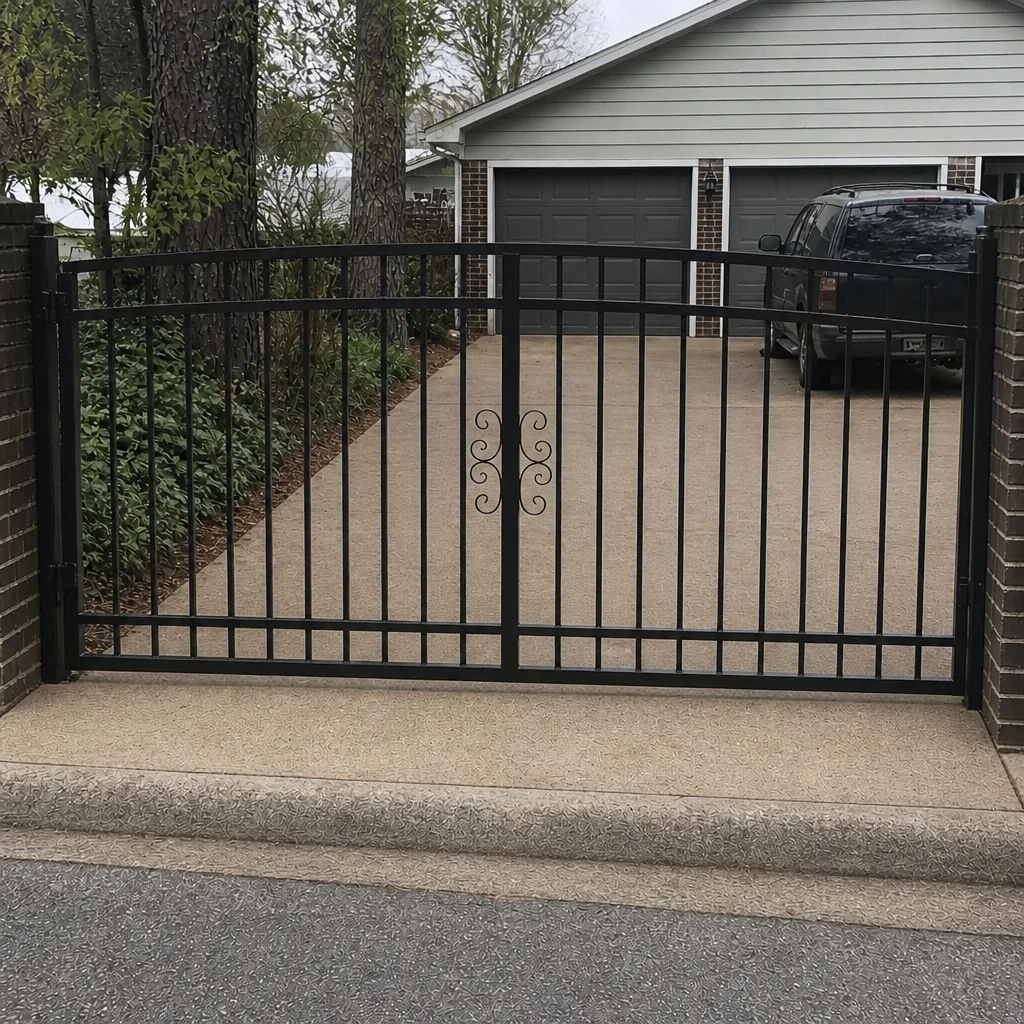
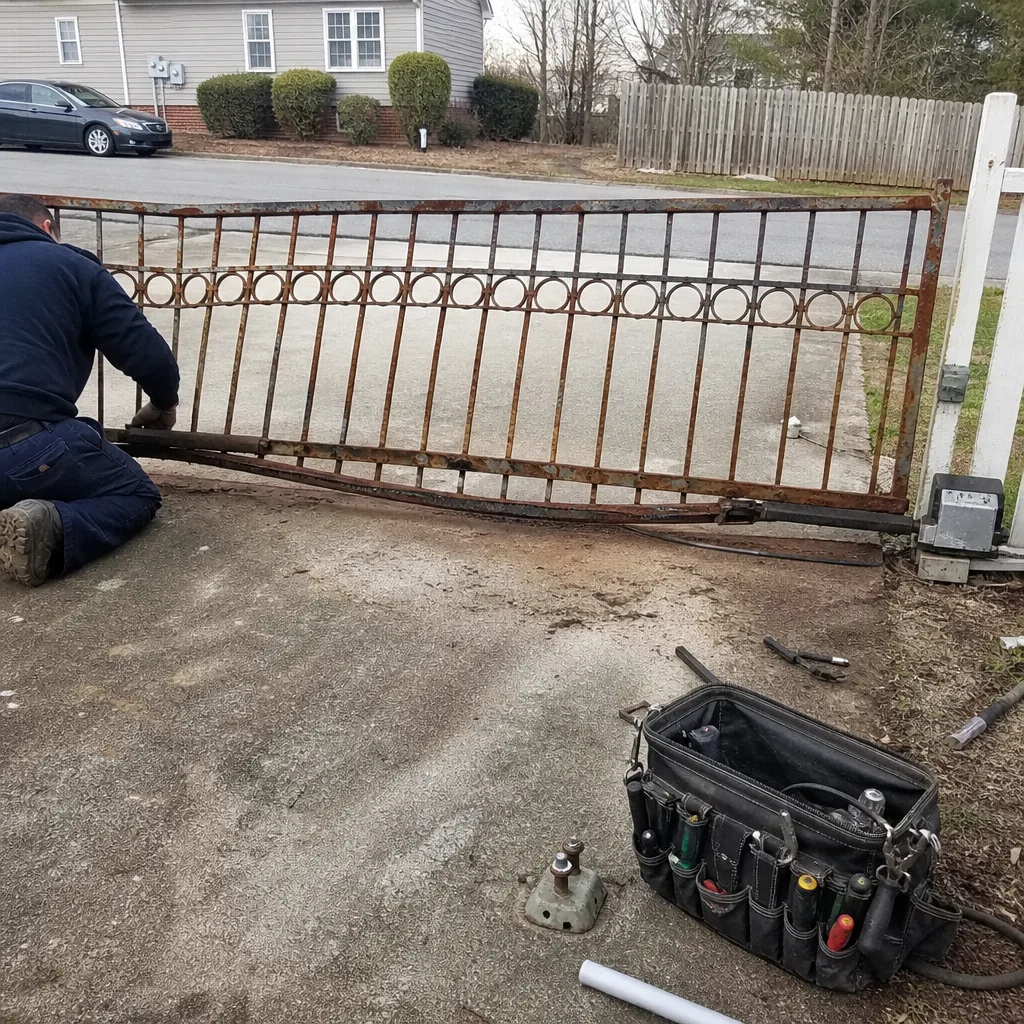
See the difference
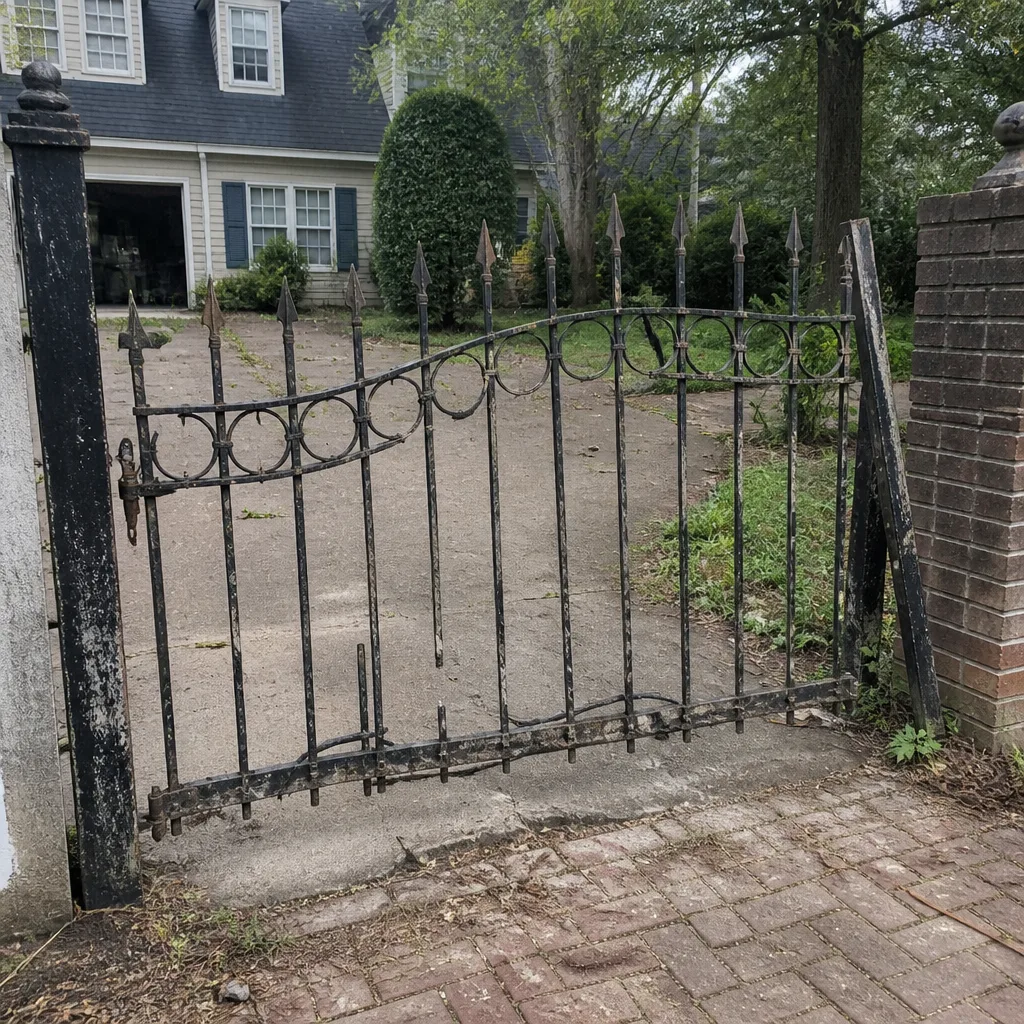 Before
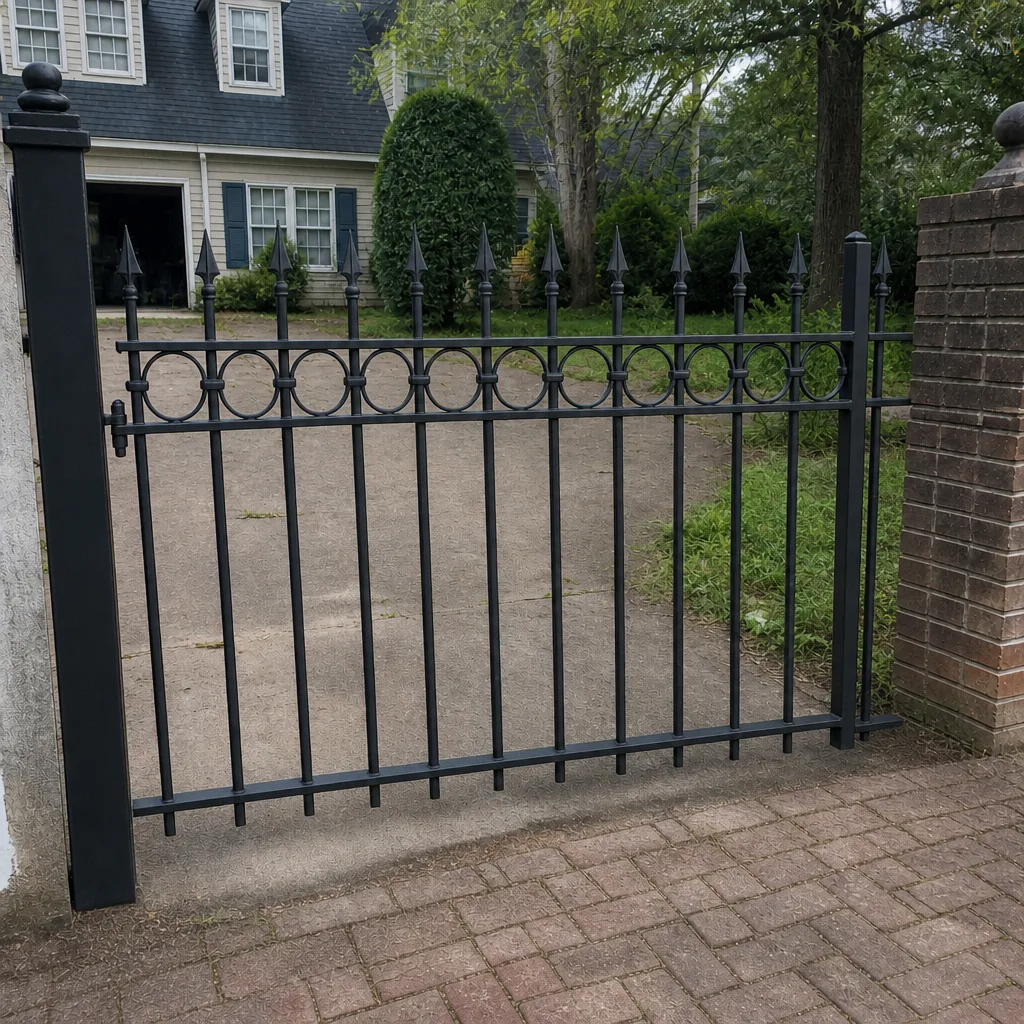 After
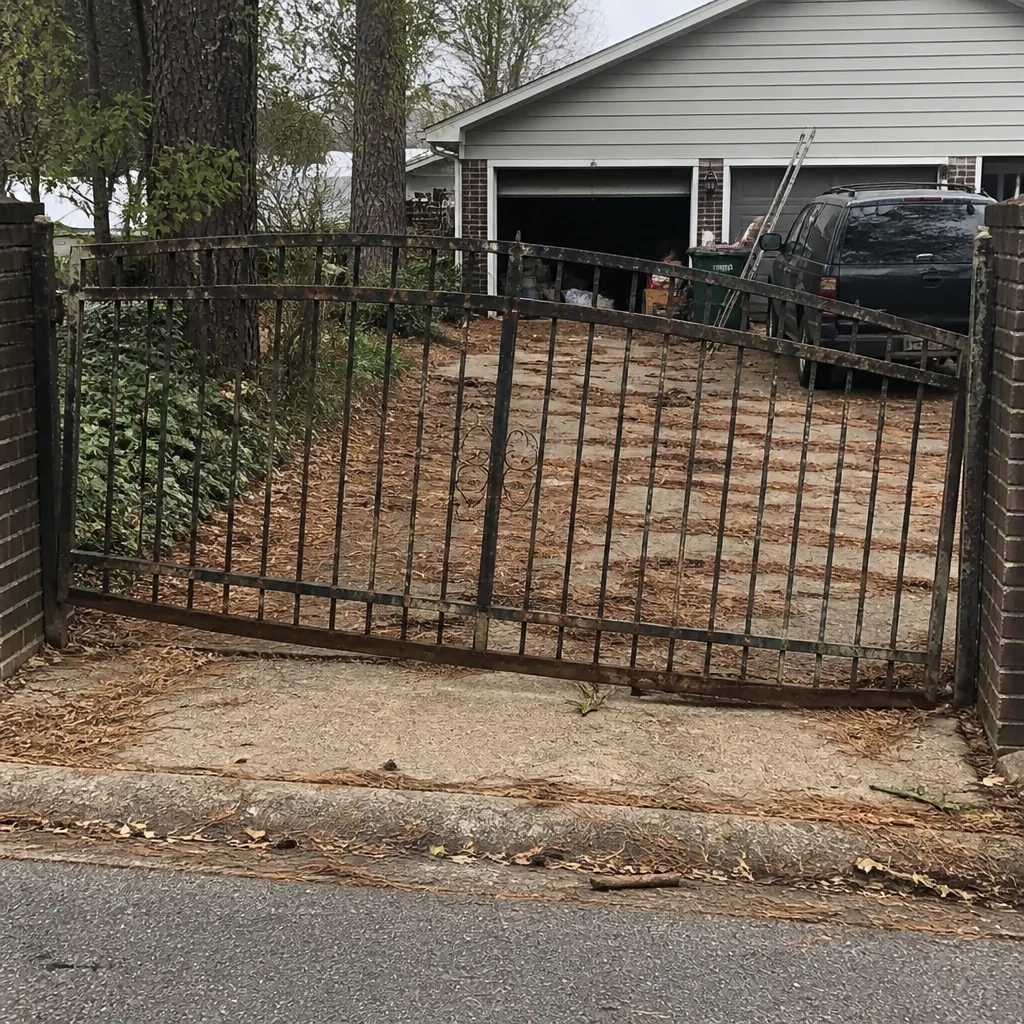 Before
 After
 Before
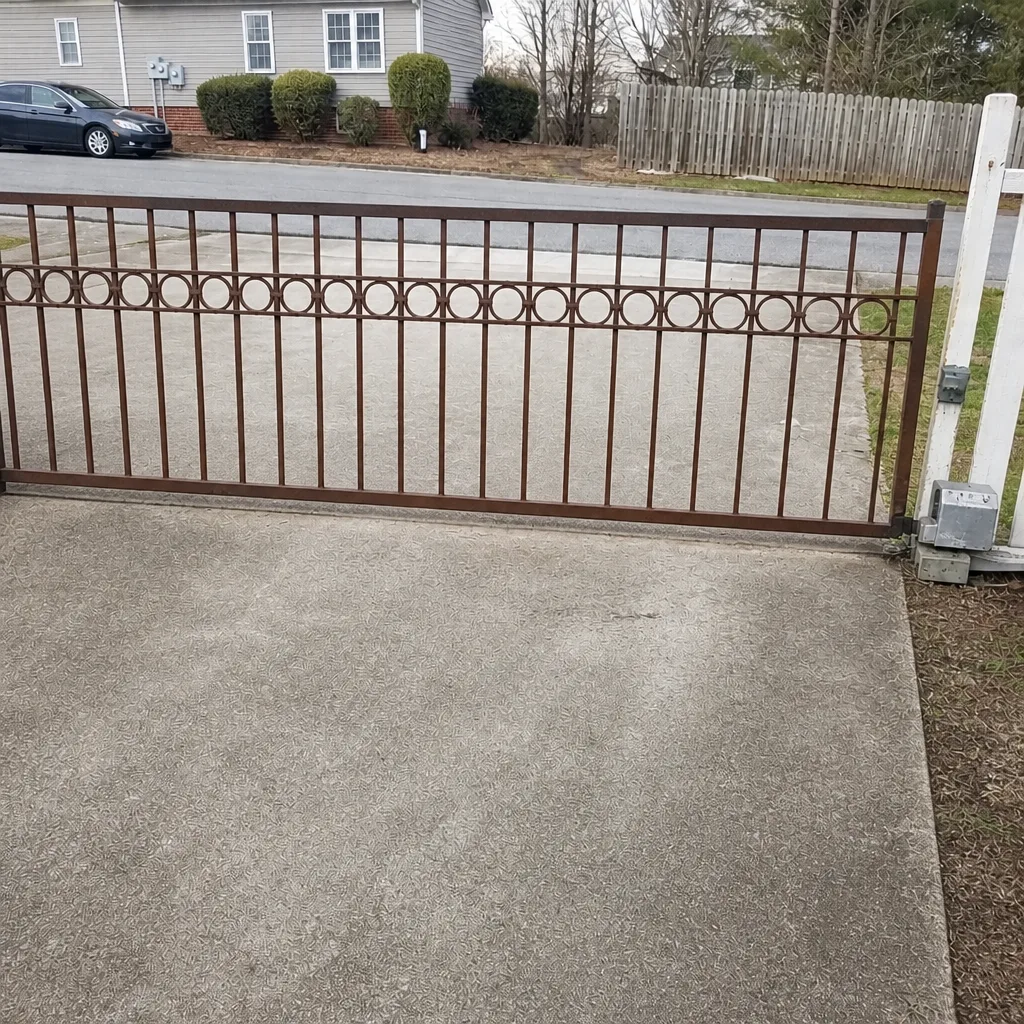 After
When to Call a Professional
Some gate problems are worth a look yourself – a remote that needs a battery, a hinge that needs lubrication, a panel that’s been bumped by a car and is resting on the track. Everything past that is a job for a professional. Call for a gate that stops mid-cycle, reverses for no reason, makes a new grinding or buzzing sound, won’t respond to the remote or keypad, won’t open for a visitor, or has a visible sag or misalignment. Call immediately if the gate is stuck open on a property that relies on it for security, or if you see a damaged operator cabinet or exposed wiring – power down at the designated point if you can do so without touching wiring, and keep people clear of the gate. Gate Repair Hampton offers free estimates in Hampton – call (855) 686-7069. We answer 24/7. Fast dispatch from 7am to 7pm, Sunday through Friday.
Frequently Asked Questions
Gate repair in Hampton is priced per job, set by a written estimate after a technician diagnoses the actual failure. A misaligned safety loop or a failed hinge is a small job; a control board replacement on a brand-specific operator is a larger one. The estimate is free, and the price is agreed before work starts. Call (855) 686-7069 for an exact quote.
Same-day service is available for gate repair in Hampton, depending on the day’s schedule. We answer 24/7, and fast dispatch runs from 7am to 7pm, Sunday through Friday; we’re closed Saturday. A call outside that window is booked into the next opening. Call (855) 686-7069 and we’ll confirm the earliest window.
We work on your brand. Specifically, we’re trained on nine gate automation brands: LiftMaster, FAAC, BFT, Linear, Viking, Ghost Controls, DoorKing, Elite and Mighty Mule. That covers everything from DIY residential openers to heavy commercial access systems. If your operator is on that list, we can diagnose it. Call (855) 686-7069 with the make and model.
Ask for the license and insurance certificate, the brands they work on regularly with documentation, the parts sourcing path for your operator, the warranty on the completed repair, and a written scope that names the failure and the price before work starts. If any answer is vague, ask again. The call costs nothing, and it prevents the second visit.
Hire a gate specialist for any automated gate. Control boards, safety loops and intercom systems are brand-specific, and a generalist guessing at a brand he doesn’t know is how control boards get damaged. For simple mechanical work on a manual gate, a generalist can be fine. For electric gates, single-source specialty is the safer path. Call (855) 686-7069 to talk through your system.
Property managers need a vendor who can handle multi-unit billing, documented repair logs and a clear response window, plus brand coverage across a portfolio. One call covers repair, diagnosis and installation, so there’s no handoff when a repair becomes a replacement. To read more about how gate repair works across residential and commercial sites, start there. For a quote on a Hampton property, call (855) 686-7069.
The Bottom Line
Hiring a gate repair contractor in Hampton comes down to three verifications: license and insurance, brand-specific experience with your actual operator, and a written scope that names the parts, the price and the warranty before anyone starts work. Add the line-item review of the quote, ask the brand question early, and keep the repair log for any property you manage. The guide is short because the principles are simple. The alternative – a non-specialist guessing at your control board – is what turns a small repair into a bigger one. For a brand-specific diagnosis on your gate in Hampton, read more about Gate Repair Hampton, learn about our Hampton coverage, and call (855) 686-7069 for a free estimate. We answer 24/7. Fast dispatch from 7am to 7pm, Sunday through Friday. Our technicians have up to 9 years of experience.
Written by the team at Gate Repair Hampton.