
Last updated November 16, 2026
 Wrought iron
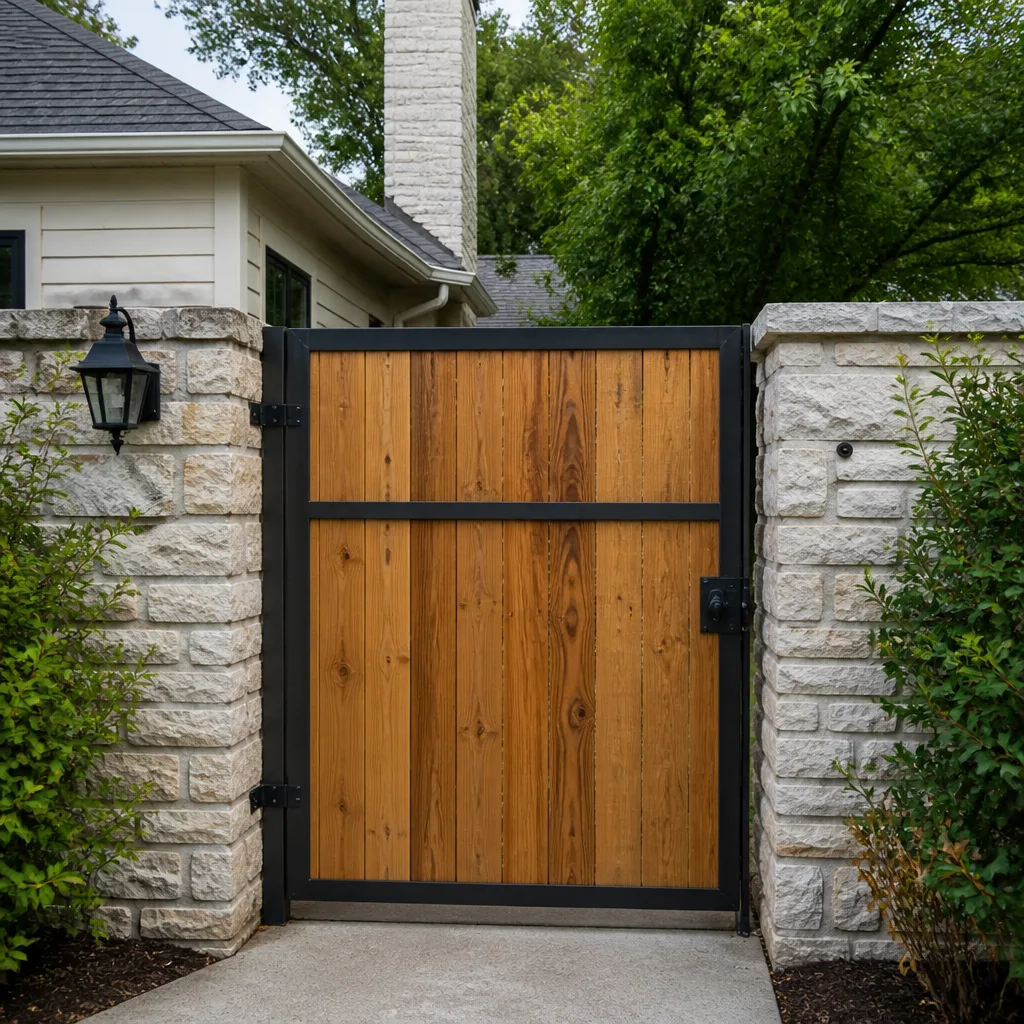 Wood & steel frame
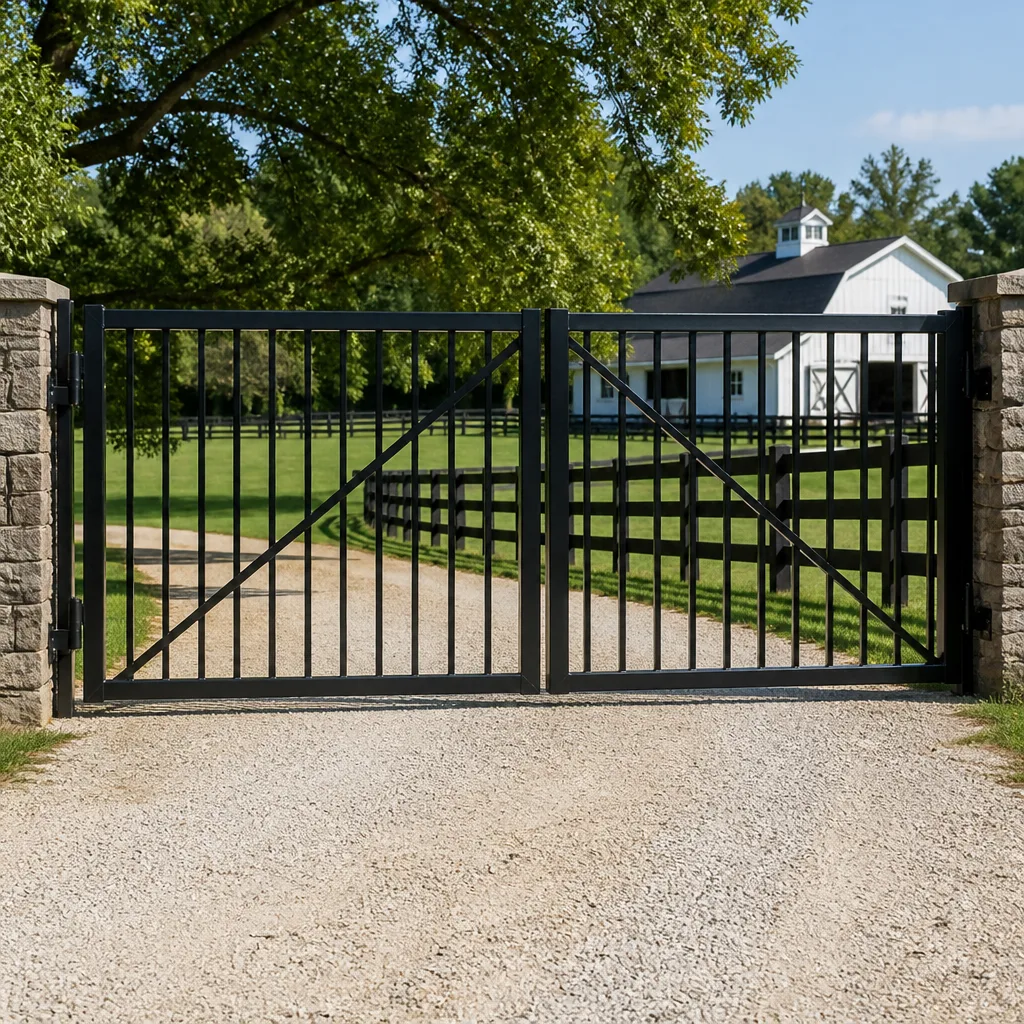 Farm & ranch
 Sliding driveway gates
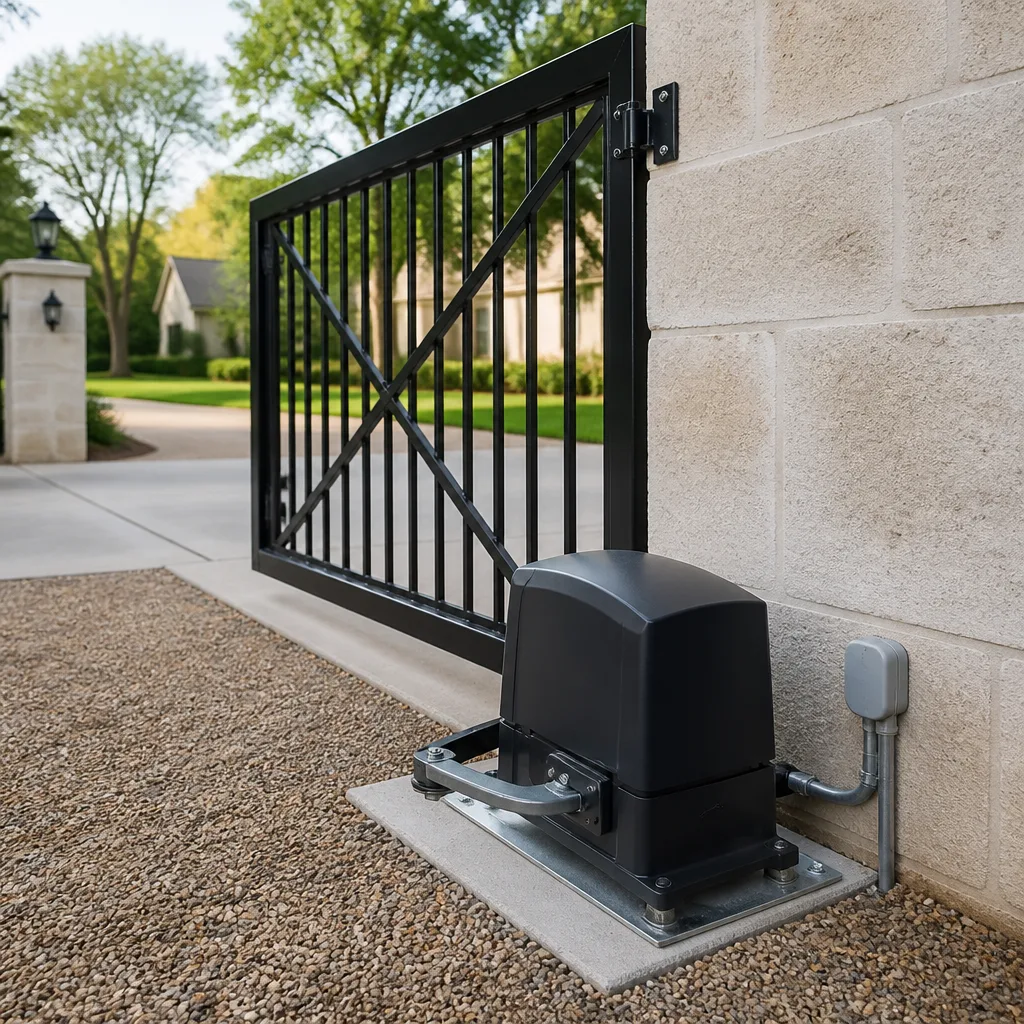 LiftMaster operators
Free on-site gate assessment - hinges, posts, and your LiftMaster or Nice gate operator checked before anything is quoted
The assessment is free and the quote is the invoice.
Get your free estimateGate Repair Permits, Codes & Inspections in Hampton, VA: What You Need to Know
A homeowner swaps a burned-out gate motor for a newer LiftMaster or Mighty Mule unit and calls it a repair. Months later, a home inspector checks the access system, sees wiring that no one signed off on, and the issue lands in the middle of a sale negotiation. Here’s the part most people miss: not every gate repair in Hampton is a permit-free maintenance task, and the difference matters. This guide breaks down which gate work triggers a city permit, what Virginia’s electrical rules mean for your operator, how inspections actually run, and how to fix unpermitted work before it becomes a problem.
Quick Answer
Minor gate repair like hinges, latches, rollers, or swapping a like-for-like operator is usually treated as repair and doesn’t need a building permit in Hampton. Work that changes the structure or the electrical circuit does: relocating a post, adding a new power run, changing an operator’s wiring or disconnect, or installing a new automated gate typically requires permits for the structural and electrical portions. The exact trigger depends on your scope, so confirm with the city’s building department and, for the electrical side, with a licensed electrician before work starts.
Styles & brands we work with
- Wrought iron
- Wood & steel frame
- Farm & ranch
- Sliding driveway gates
- LiftMaster operators
Table of Contents
- Which gate repairs need a permit in Hampton?
- What gate work is code-exempt maintenance?
- Virginia electrical code: grounding, wiring, and disconnect switches
- How HOA covenants layer on top of city code
- What the inspection process actually looks like
- How to permit gate work that was done without permits
- How to choose a gate specialist for permitted work
- Common mistakes to avoid
Which gate repairs need a permit in Hampton?
A gate repair needs a permit when it changes the structure, the electrical supply, or the location of the gate operator. A straight repair that restores the gate to how it was originally built does not. The dividing line is “restore versus change,” and knowing which side of it you’re on saves a lot of grief.
In our experience across Hampton neighborhoods, the work that usually triggers permits breaks down like this:
- Post relocation or replacement – moving a gate post or pouring a new one is structural work.
- New electrical supply to the operator – running a new power circuit to a gate, or adding a dedicated disconnect, is electrical work that needs its own permit.
- Changing the operator type or location – going from a manual gate to an automated one, or shifting where the operator sits, is a change of scope.
- New automated gate installation – a brand-new access system is treated like any other new structural and electrical assembly.
- Widening or reconfiguring the opening – any change to the gate’s footprint or travel.
Changing out a failed control board, realigning a gate after a storm, or replacing a broken hinge typically falls outside permit territory. If your operator is a brand we know – we work on Mighty Mule, LiftMaster, FAAC, BFT, DoorKing, and several others – a diagnostic visit tells you whether the fix is a repair or a change that needs paperwork. Better to know on the first visit than at resale. If you want a fast read on which bucket your job falls into, Gate Repair Hampton can assess it during a free estimate.
What gate work is code-exempt maintenance?
Code-exempt maintenance is any repair that returns your gate to its existing approved condition without adding structure, moving the operator, or interfering with the electrical circuit. In plain terms: like-for-like fixes on the mechanical parts.
Typical exempt items we handle on Hampton gates:
- Replacing hinges, hinges pins, latches, and handles
- Straightening a bent panel or rail
- Adjusting a gate that’s dropped off the slide track
- Swapping a like-for-like operator motor or control board where the electrical supply stays untouched
- Replacing a limit switch, photo-eye, safety edge, or loop detector
- Retensioning a gate wheel or roller assembly
The trap is the “like-for-like” label. An owner will often think a new operator is a swap, but if the replacement draws more power than the existing circuit can supply, or if it moves the disconnect switch to a new location, you’re now doing electrical work that needs a permit. Same goes for a slide gate that’s been widened to fit a longer driveway: if the track and opening change, so does the permit picture.
If you’re not sure which column your project sits in, our team can look at the gate and tell you straight: repair, or permit territory. That’s the kind of specific answer a general handyman can’t always give, which is why many Hampton homeowners use us for gate repair once they reach the point of needing a real diagnosis.
Virginia electrical code: grounding, wiring, and disconnect switches
Virginia’s electrical code, adopted from the National Electrical Code (NEC), applies to gate operator wiring the same way it applies to any outdoor equipment: the operator needs a proper supply circuit, a grounded connection, and a means of disconnect that a technician or inspector can reach. This is the part most gate installers gloss over, because they treat the operator like a plug-in appliance instead of a permanently wired electrical device.
Here’s what to expect on a properly wired automated gate:
- A dedicated supply circuit. The operator runs off its own circuit protected by a breaker sized to the operator’s requirements, not shared with lighting or a shed outlet.
- Grounding. The operator housing, the control enclosure, and any metal cabinet on the access system all need to be bonded and grounded.
- A disconnect switch. A clearly labeled disconnect means someone servicing the gate can kill power without going back to the main panel. This matters for anyone working near the operator, and it’s a common inspection item.
- Weather-tight connections. Outdoor junction boxes, conduit, and connector seals rated for wet locations. Loose fittings and exposed wire nuts are top failure points.
- Low-voltage safety devices wired correctly. Photo-eyes, safety edges, and loop detectors are low voltage but they still need to be wired into the operator’s control inputs as the manufacturer specifies, or the gate can behave unpredictably.
If any part of that is missing, a licensed electrician has to correct it. Electric gate wiring carries mains voltage and a real shock hazard, so this is not a job for a homeowner with a multimeter and a YouTube tab. When your system fails electrically – motor grinding, control board dead, safety edge not stopping the gate – a proper diagnose-first approach matters more than throwing parts at it. That’s exactly what our electric gate repair service is built for: reading the system, not guessing at it.
How HOA covenants layer on top of city code
HOA covenants in Hampton communities often require an extra layer of approval that has nothing to do with a city permit. A gate can be perfectly legal under Virginia code and still violate your HOA’s architectural standards, and the HOA has its own enforcement separate from the city.
The usual HOA triggers for gate work are:
- Changing gate style or material. A different panel style, a new color, or an added mesh screen can require architectural review committee approval.
- Changing gate height or footprint. An HOA often restricts how high a gate can be or how close it can sit to a shared property line, and the rule may be stricter than the city’s.
- Adding automation to a shared or front-facing gate. Many associations want signage and safety devices to match a community standard.
- Intercom and access control changes. A new DoorKing entry system for a community gate usually needs HOA sign-off on the design and placement before anyone starts wiring.
This is where a lot of backyard and side-yard projects quietly go sideways. A homeowner gets a city permit, has the work done, and then an HOA letter arrives because the architectural committee was never asked. The fix is usually just paperwork, but it can mean undoing cosmetic choices you’d already paid for. Before work starts, ask your HOA what its review process requires for your specific scope, and get the approval in writing. If you’re in an association, read the covenant language about gates, fencing, and “access structures” carefully; the same clause that covers a fence often covers a gate.
What the inspection process actually looks like
The inspection process for a permitted gate job runs in three typical stages: a rough-in inspection while the work is open, a final inspection when it’s complete, and, for electrical, an electrical inspection separate from the structural one. The homeowner’s job is not to know the code; it’s to make sure the inspection is scheduled and passed before the work is closed up.
Here’s the sequence a permitted gate installation usually follows:
- Permit application. You or your contractor submits the scope, plan, and (for electrical) the circuit and disconnect details to the city’s building department.
- Rough-in inspection. For electrical work, the wiring, conduit, grounding, and disconnect are inspected before anything is buried or enclosed. This is the inspection that catches bad grounding and undersized conduit.
- Structural inspection. New posts and footings are checked for depth and stability before the gate panel is mounted.
- Final inspection. The completed gate is checked for function, clearance, mounting, and the safety devices. This is where inspectors verify the operator’s safety features are in place and wired as specified.
- Sign-off. Once the inspections pass, the permit is closed. Keep the record; you’ll want it when you sell.
What inspectors check in practice is not what homeowners expect. Homeowners tend to worry about aesthetics; inspectors look at structure and safety. They check that the disconnect kills power, that grounding is continuous, that footings are adequate, that the gate’s safety devices are functional, and that the finished assembly matches the approved plan. If the plan called for a specific operator and you installed something else, that’s an inspection problem. This is why we keep the approved plan current and use it to guide the installation scope; if you’re in the market for a new system, our Hampton installation page walks through what a permitted install includes.
How to permit gate work that was done without permits
Unpermitted gate work can usually be permitted retroactively by applying for the permits after the fact and having the work inspected – but sometimes the smarter move is to leave it alone, depending on how old the work is and how it was done. The decision hinges on whether the work would pass an inspection as-is.
The retroactive path usually looks like this:
- Get a professional assessment. Have someone qualified look at the work and say whether it would pass an electrical and structural inspection as it sits.
- Pull the permits with the correct scope. Submit the application describing what’s actually there, not what the original paperwork says.
- Open up anything that needs to be inspected. Wiring that’s been buried or sealed into a post may need to be exposed or re-run.
- Correct deficiencies. Fix grounding, add a proper disconnect, re-set a shallow post, or rewire a control box as needed.
- Pass inspection and close the permit. Keep the record with your home documents.
When is it worth pursuing? When you’re selling, refinancing, or carrying an active claim on the property. An unpermitted electrical system on an automated gate is the kind of item that shows up in a resale inspection and becomes a negotiating tool. When is it not worth it? For very old work that wouldn’t have been inspected under current rules anyway, and for minor mechanical work that was never permit-triggered in the first place. Even then, get a professional to look at the electrical portion: a gate wired incorrectly is a hazard whether or not someone papers it. If you’ve inherited a system from a previous owner, our walkthrough of gate repair in the area is a good place to start the conversation, and a free estimate visit can flag what needs addressing.
How to choose a gate specialist for permitted work
The right gate specialist for permitted work is one who can scope the job correctly, knows the brand, and doesn’t consider the permit paperwork someone else’s problem. A general handyman can mount a hinge; a gate specialist can tell you whether the job needs a permit, an electrician, or both.
What to ask before you hire:
- Do you diagnose the system or just the symptom? A specialist traces the failure back to the actual cause (control board, loop detector, motor draw, intercom wiring) instead of swapping parts.
- Are you familiar with my brand? LiftMaster, FAAC, BFT, Linear, Viking, Ghost Controls, DoorKing, Elite, and Mighty Mule all have their own wiring quirks and code behaviors. Brand experience speeds diagnosis and parts sourcing.
- Who handles the electrical permit? If the job needs a new supply or a disconnect, a licensed electrician has to be involved; ask how the work is coordinated.
- Do you provide a written scope? You should get a written scope and a written price before any work begins, not a ballpark verbal.
- Do you respect the safety edges and photo-eyes? Anyone who treats these as optional is not installing to code.
Our technicians have up to 9 years of experience with automated and manual gate systems, and we cover residential and commercial work. Property managers and HOAs can use one source across multiple systems and brands; individual homeowners get the same diagnostic rigor on a single gate. We don’t subcontract the electrical work, but we work alongside the licensed electrician who signs off on the circuit. Free estimates are standard, and you’ll always see a written price before work starts.
Common Mistakes to Avoid
- Assuming a motor swap needs no permit. A new motor is a repair only if the electrical supply stays identical. If the circuit, breaker, or disconnect location changes, the job has moved into permit territory.
- Skipping HOA approval for a color or style change. Aesthetic changes in Hampton associations can trigger architectural review even when the city has no opinion. Get the HOA’s sign-off in writing before ordering panels.
- Buried wiring without an inspection. Once conduit is covered, the rough-in inspection can’t happen. Plan the inspection before the trench gets closed.
- Leaving the disconnect off the plan. A disconnect is not an optional extra. Inspectors look for it, and a service tech needs it for safety.
- Disabling a photo-eye or safety edge because it “keeps stopping the gate.” Those devices exist to stop the gate on an obstruction. Bypassing them is both a safety hazard and an inspection failure.
- Letting a damaged post get re-set too shallow. A post that settles can pull the gate out of alignment and eventually off the track. Depth matters, and shallow is a permanent problem.
- Doing unpermitted structural work and hoping it doesn’t come up. Unpermitted gate work can often be corrected, but doing it right the first time is always cheaper than correcting it later.
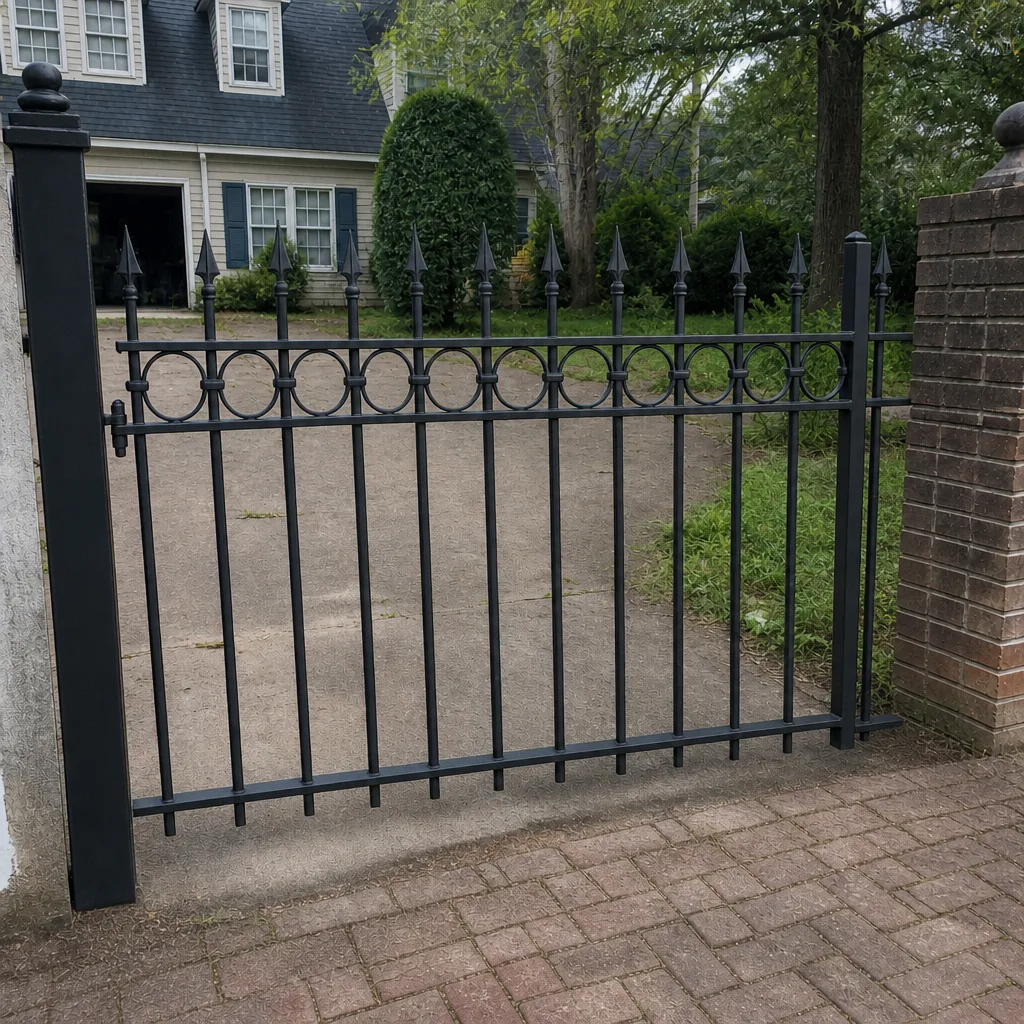
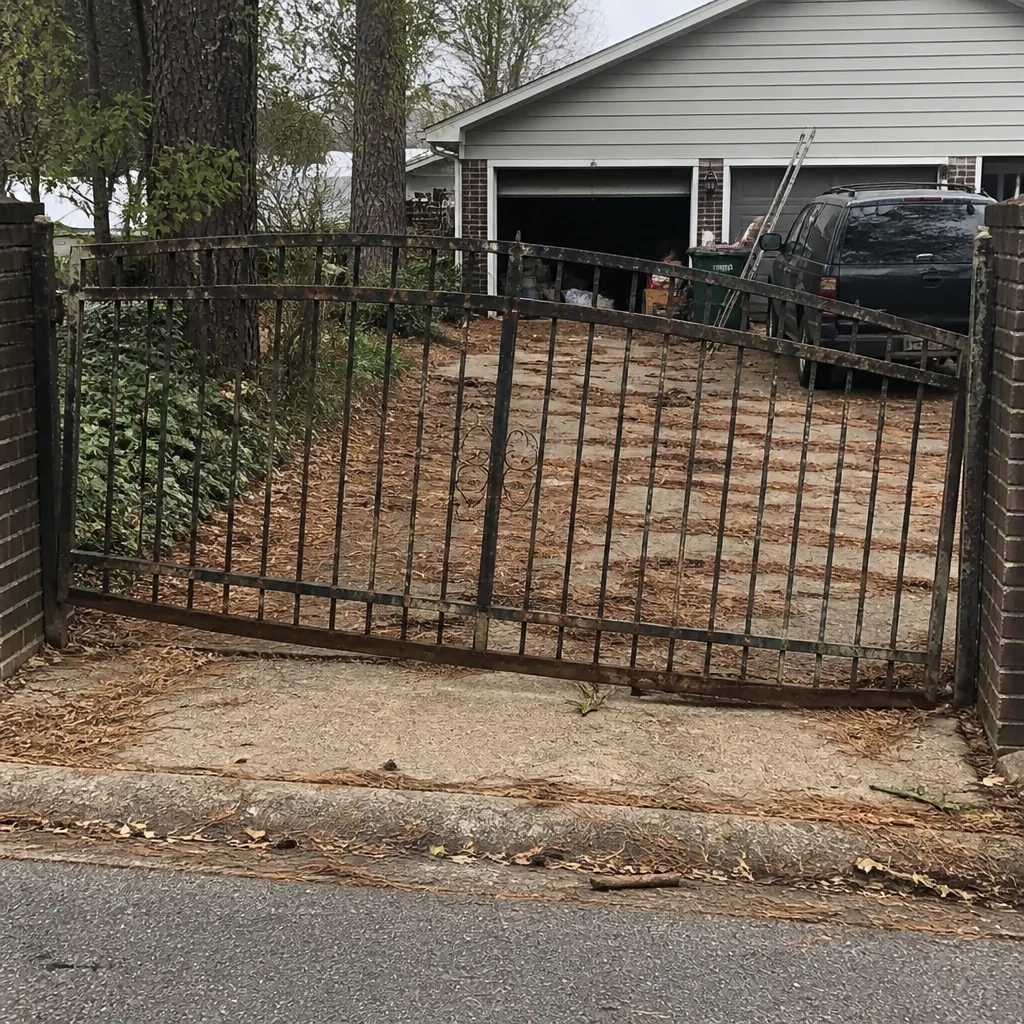
See the difference
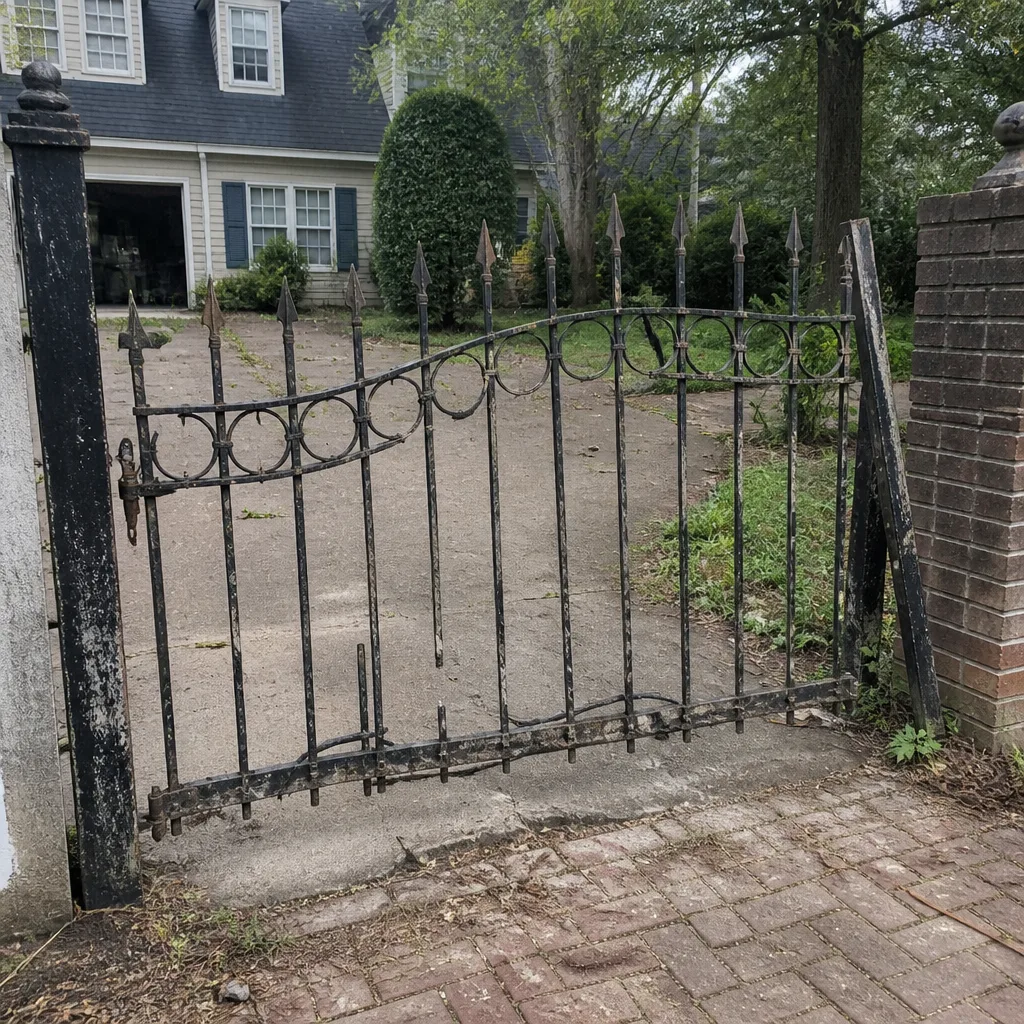 Before
 After
 Before
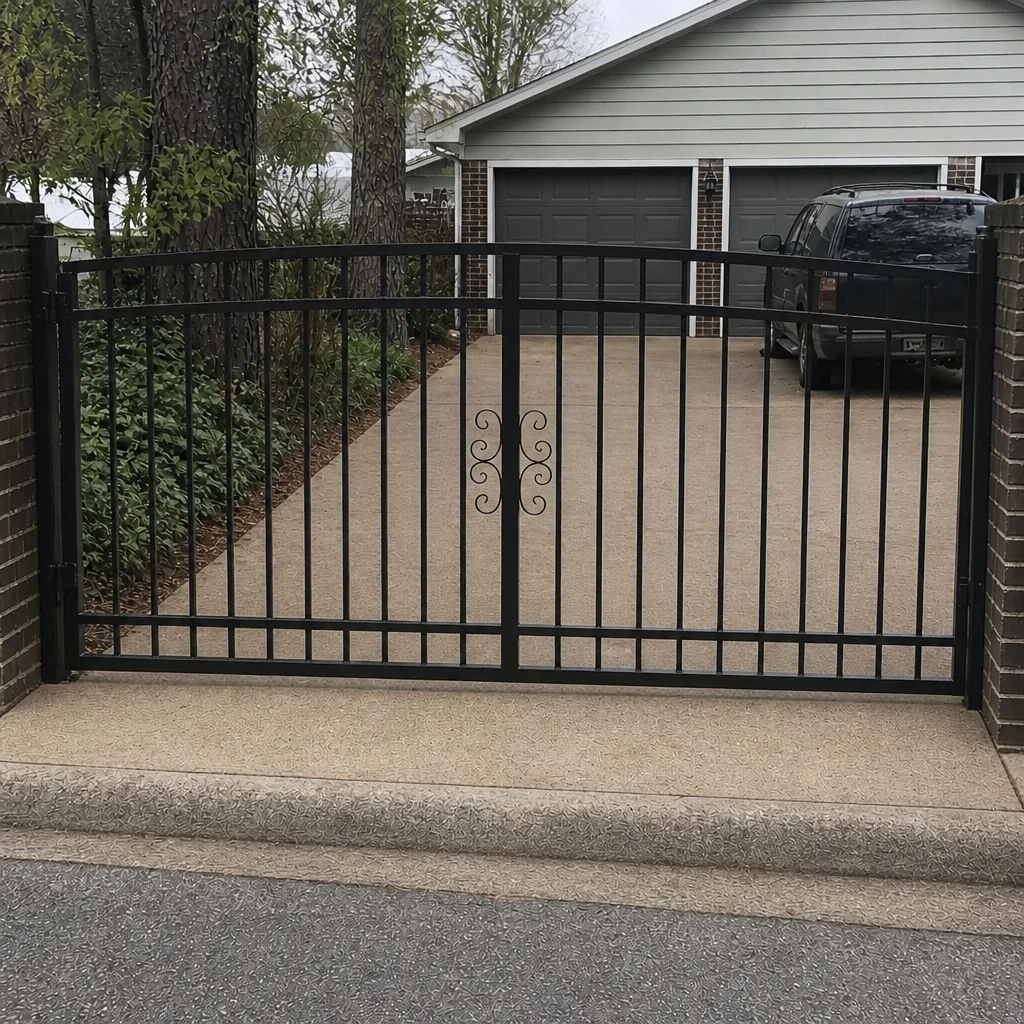 After
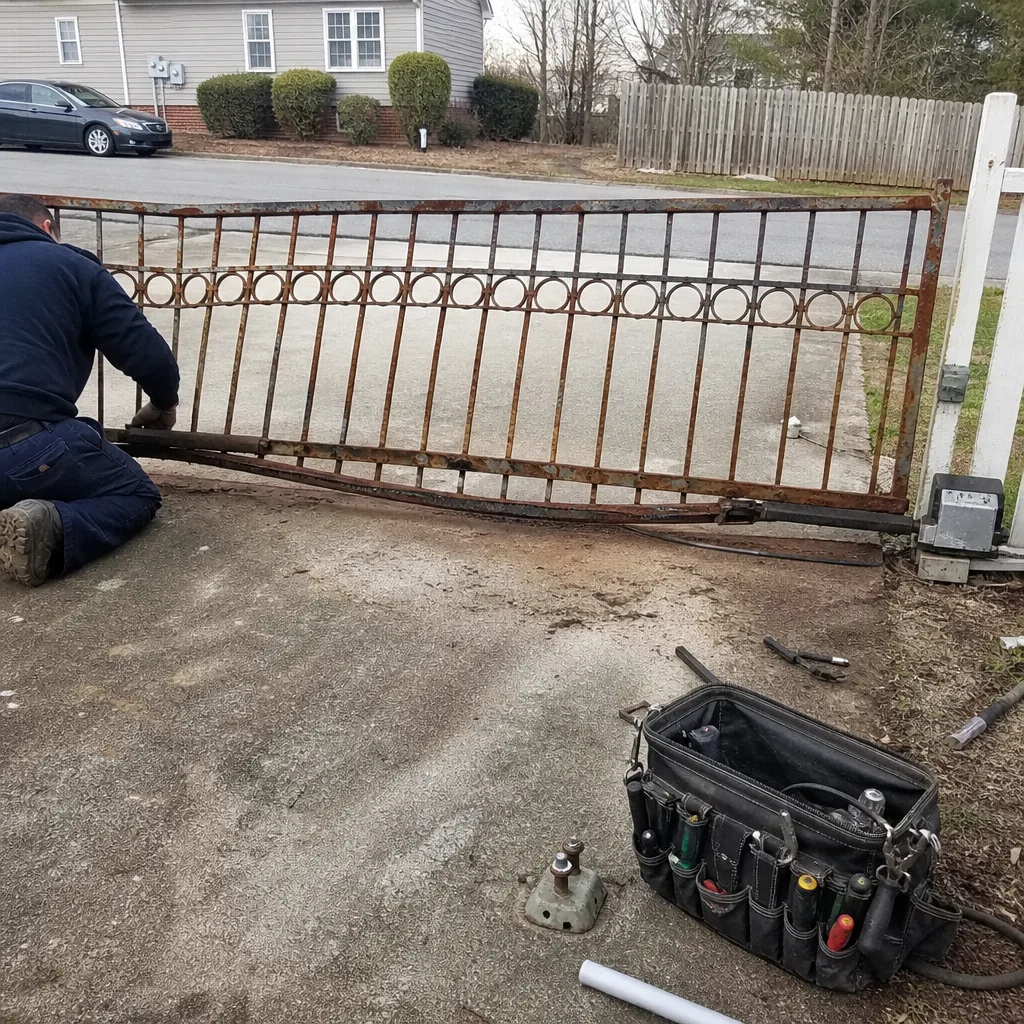 Before
 After
When to Call a Professional
Call a professional when the gate won’t open reliably, when the operator trips a breaker or loses power intermittently, when the safety edge or photo-eye has been bypassed or isn’t stopping the gate, or when a slide gate has come off the track. Also call when you’re changing anything structural – a post, the opening width, the operator location – or when you’re installing automation on a manual gate for the first time. Electric gate work is the most common case where a do-it-yourself fix turns into a permit and inspection problem. Gate Repair Hampton offers free estimates in Hampton: call (855) 686-7069. We answer 24/7, and fast dispatch from 7am to 7pm, Sunday through Friday, has a technician at your gate to diagnose the system and tell you whether you’re looking at repair, a permitted project, or both.
Frequently Asked Questions
Not always. Replacing a failed motor with a like-for-like unit that uses the existing supply circuit and leaves the disconnect in the same place is typically a repair. If the new motor draws more power, or if the circuit, breaker, or disconnect location has to change, the electrical portion needs a permit and a licensed electrician. Call (855) 686-7069 for a free estimate; we’ll tell you which it is before you buy parts.
Yes. Virginia’s electrical code, based on the NEC, applies to any permanently wired gate operator, residential included. The operator needs a dedicated circuit, grounding, a reachable disconnect, and weather-tight outdoor connections. Low-voltage safety devices have to be wired into the control board correctly too. Wiring carries mains voltage and a real shock hazard, so have a licensed electrician handle the electrical portion and find a gate specialist for the mechanical and diagnostic work.
Inspectors check structure and safety, not looks. They verify continuous grounding, the disconnect switch, adequate post footings, the gate’s mounting and clearance, functional safety devices, and that the finished work matches the approved plan. Aesthetic choices like panel color rarely come up in a city inspection; they’re the HOA’s business. Having the approved plan current and every safety device working before the inspector arrives is what gets a clean sign-off.
No. A city permit and an HOA approval are two separate things, and you often need both. The city permit covers code compliance; the HOA’s architectural review committee covers the community’s appearance and design standards. Get the HOA’s written approval before ordering panels, colors, or hardware, even if the city has no opinion on the change.
Usually yes. You can apply for permits retroactively and have the existing work inspected. Whether it’s worth doing depends on whether the work would pass as-is and whether you’re selling, refinancing, or carrying a claim on the property. Minor mechanical work that was never permit-triggered doesn’t need it; unpermitted electrical work is the one to look at professionally. Call (855) 686-7069 for a free estimate assessment before you commit to a paperwork path.
Most repairs we can diagnose and fix same-day. Common failures like a dead control board, a failed limit switch, a photo-eye stopped by debris, or a hinge failure are usually resolved on the first visit. Complex electrical work, new installation, and anything that needs a permit and inspection is scheduled, not forced into a same-day slot. We answer 24/7, with fast dispatch from 7am to 7pm, Sunday through Friday. Call (855) 686-7069 for an exact quote; estimates are free.
Key Takeaways
- Repair versus change is the line: like-for-like fixes on hinges, latches, panels, and operators typically don’t need a permit in Hampton; changes to structure, electrical supply, or operator location do.
- Virginia’s electrical code applies to any wired gate operator. Dedicated circuit, grounding, disconnect, and weather-tight connections are the four points inspectors look at.
- HOA covenants in Hampton communities layer on top of city code. Get the architectural committee’s written approval before ordering materials.
- Retroactive permitting is usually possible, and it’s often worth pursuing before a sale or refinance.
- Branded systems like LiftMaster, FAAC, BFT, and Mighty Mule each have their own wiring quirks. Brand experience makes diagnosis faster and more accurate.
- Safety edges and photo-eyes are functional, code-relevant safety devices. Never bypass them.
The Bottom Line
Gate work in Hampton isn’t neatly divided into “needs a permit” and “doesn’t.” The real dividing line is whether you’re restoring the gate to its existing condition or changing the structure, the electrical supply, or the operator’s location. Get that scoping right and the permit, inspection, and HOA pieces fall into place. Get it wrong and you can end up doing paperwork at the worst time. If you’re not sure which side of the line your job sits on, a professional diagnosis is free and takes the guesswork out of it. Call (855) 686-7069 for a free estimate. We answer 24/7, with fast dispatch from 7am to 7pm, Sunday through Friday. Our technicians have up to 9 years of experience across LiftMaster, FAAC, BFT, Linear, Viking, Ghost Controls, DoorKing, Elite, and Mighty Mule, and we’ll tell you exactly what needs a permit, what doesn’t, and what to do next.
Written by the team at Gate Repair Hampton.